




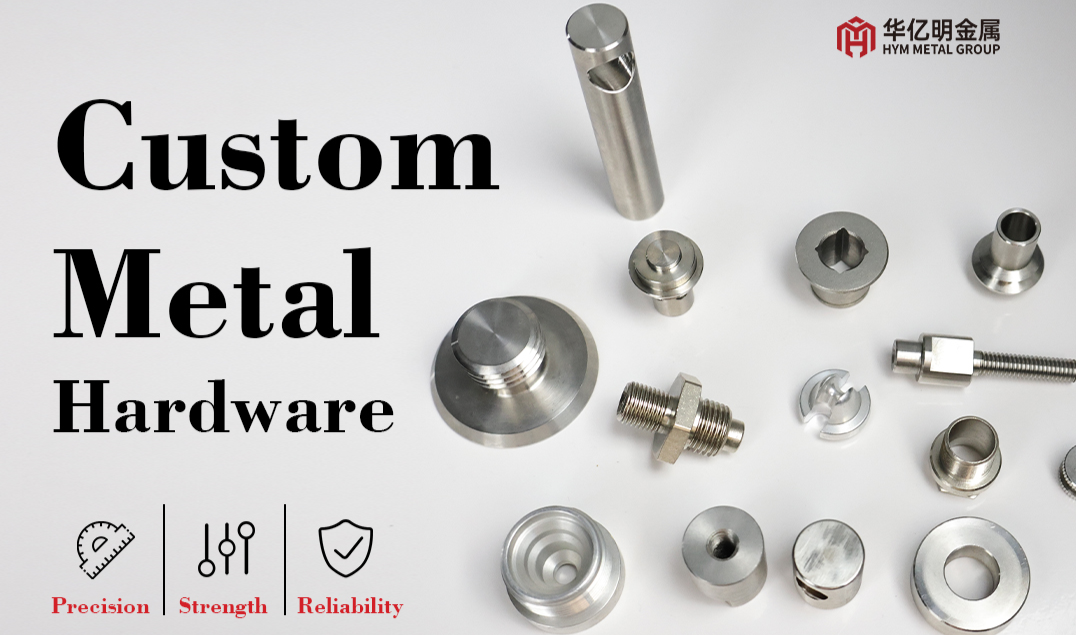
The modern world is built on components that cannot fail. From the aerospace parts that keep a jet engine humming to the medical devices that save lives, every piece of hardware has a crucial role to play. In this demanding landscape, the right custom metal parts are the difference between a product that simply works and one that excels, offering unwavering reliability and lasting performance. I've spent my career in the world of metal fabrication, translating complex digital blueprints into physical realities, and I've learned that a part's true value isn't just in its form, but in its ability to endure.
The problem I often see is a significant gap between design and reality. Engineers have a clear vision and a flawless CAD model, but they worry about how that will translate to a finished part. Business owners need to know that their supply chain is secure and that every component will be consistently high-quality, avoiding costly production delays. Even the passionate prototyper wonders if their dream can withstand the rigors of the real world. Many believe that all metal shops are the same, simply turning raw material into a final shape. They couldn't be more wrong.
The methodology I apply is simple but unwavering: to engineer every component for maximum longevity. Through a combination of meticulous material selection, advanced CNC machining techniques, and a rigorous, multi-stage quality control process, I ensure that the strength, tolerance, and finish of every single part meet the highest international standards. My promise is not just a finished product; it's a component you can trust.
In this article, I want to take you on a journey inside my shop and my mind. I'll share my personal insights and the methods I've perfected over years of hands-on experience. By the end, you'll have a new perspective on what makes a part truly durable, and you’ll be equipped with the knowledge to demand true precision and reliability for your own projects. This is my guide to unlocking the true potential of custom metal parts.
My Expert Eye: The Foundational Decisions for Ultimate Durability
Every great part starts with a crucial decision: the material. It's the very soul of the component, defining its strength, weight, and resistance to the elements. For me, this is not a one-size-fits-all choice. It's an expert-level analysis of the application's specific needs. I’ve found that a deep understanding of materials, far beyond what you can find in a spec sheet, is what separates a good part from a great one.
Decoding the Material: Why I Choose 7075 Aluminum for High Stress, Not Just 6061
When it comes to aluminum grades for CNC machining, many people default to 6061. It's incredibly versatile, easy to machine, and widely available. It's an excellent choice for general-purpose applications and prototyping. But when a project demands superior performance—like a critical bracket on a UAV or a load-bearing component in robotics—I almost always recommend 7075.
This is a decision I make based on my practical experience. I've seen firsthand how 7075, with its higher zinc content, delivers a significantly better strength-to-weight ratio. I once worked on a project where a client was designing a lightweight mounting plate for a high-vibration camera system. Their initial prototypes, made from 6061, showed hairline cracks after just a few hours of testing. My solution was to switch the material to 7075. After re-machining, the new component passed the stress tests with flying colors. It’s this kind of real-world knowledge that informs my material selections. It’s about choosing the right tool for the job, and in this case, 7075 is the high-performance tool you need when you can't afford a failure.
The Hymmetal Method: Achieving Micro-Level Precision for Maximum Longevity
The right material is just the starting point. The difference between a simple machined part and a true high-performance component lies in the process. My methodology is a culmination of years of technical expertise and a relentless pursuit of perfection. This is where I go beyond the basics to ensure every part I create is engineered for longevity.
Tackling Tough Tolerances: The Tools and Techniques I Use to Get It Right Every Time
Holding tight tolerances is a non-negotiable part of my process. I am well-versed in the CNC machining tolerance guide, but it's not just about meeting the numbers on a blueprint; it's about exceeding them. The tools I use, from advanced five-axis mills to calibrated micrometers, are just a part of the equation.
The real secret lies in my technique and my attention to detail. I meticulously calibrate my machines before every run, accounting for thermal expansion and tool wear. I use specialized cutting fluids and tool coatings to minimize friction and heat, which are the main culprits behind inconsistent tolerances. For a recent project creating a complex housing for a medical diagnostic device, the client required a bore tolerance of just +/- 0.005 mm. To achieve this, I ran the final pass in a climate-controlled room to prevent thermal expansion and used a specific diamond-coated reamer. This level of dedication is what allows me to guarantee that your finished part will fit and function exactly as you designed it, every single time. It is the core of precision machining.
My Unwavering Promise: A Deep Dive into My Rigorous Quality Control Process
This is where I prove my trustworthiness. A company can make all the promises in the world, but without a rigorous, transparent quality control process, they're just words. My process is a non-negotiable final hurdle for every component that leaves my shop. It’s my personal guarantee that what you receive will perform as expected. This is the bedrock of my reputation as a reliable metal fabrication company.
The Final Gauntlet: My Personal Inspection Checklist Before a Part Ships
Once a part is completed, it enters the final stage of my process. I personally inspect every single part that leaves my shop. I use calibrated tools like micrometers, bore gauges, and even a Coordinate-Measuring Machine (CMM) for the most complex geometries. My checklist goes beyond a simple visual inspection.
A perfect example of this in action was a small production run for a custom batch of gears. A subtle, almost invisible, error was introduced in the tenth part of the batch—a minor misalignment of a single tooth. A quick visual check would have missed it, but my final inspection protocol flagged it immediately. I caught the issue, corrected the manufacturing process, and re-ran the part before the client even knew there was a potential problem. This proactive approach saved the client from a costly assembly line failure and reinforced our working relationship.
I never ship a part until I'm 100% confident it meets my high standards. This is my unwavering promise to you. When you get a part from me, you're not just getting a piece of metal; you're getting a component that has been meticulously crafted and thoroughly vetted to deliver the durability and performance you expect.