




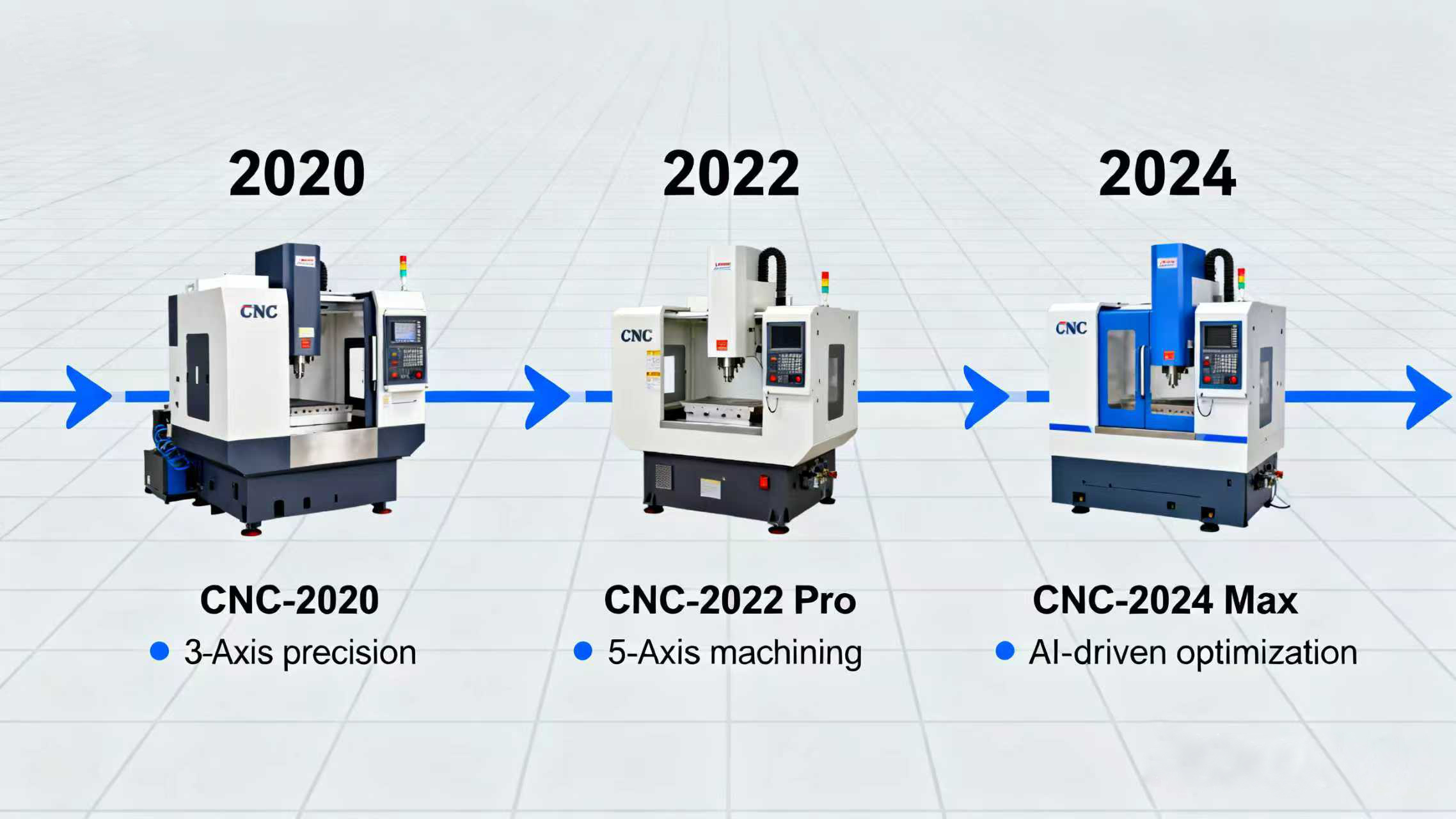
CNC, or Computer Numerical Control, is a cornerstone of modern manufacturing. It automates the control of machining tools using a computer. This technology is vital in industries like automotive, aerospace, and electronics.
CNC machines offer precision and efficiency. They can produce complex parts with high accuracy. This makes them indispensable in today's competitive market.
Understanding CNC is crucial for anyone in manufacturing. It involves learning about the machines, programming, and applications. CNC technology is constantly evolving, offering new opportunities and challenges.
CNC programming is a key skill. It involves creating instructions for machines to follow. This process ensures that parts are made to exact specifications.
CNC machinists are skilled professionals. They operate and maintain these sophisticated machines. Their expertise is essential for high-quality production.
CNC services are widely available. They range from custom milling to turning and cutting. Both local and online providers offer these services.
CNC technology continues to advance. It integrates new software and hardware innovations. This evolution keeps the manufacturing industry dynamic and efficient.
What Does CNC Mean? The Basics Explained
CNC stands for Computer Numerical Control. It's a method that automates machine tool operations. This technology uses programmed commands to control machinery and tools.
Originally, CNC was developed to improve manufacturing accuracy. It allows machines to be controlled by a computer, which increases efficiency. As a result, CNC systems have revolutionized production in many industries.
The core of CNC technology is its software. This software allows operators to input specific instructions. These commands guide machine tools through precise operations.
Several elements make up a CNC system. These include:
- A central computer
- Control software
- Machine tools
- Motors and drivers for movement
CNC machines are known for their versatility. They can perform a variety of tasks like cutting, milling, and drilling. Each task is pre-programmed, ensuring accuracy and consistency.
The advantages of CNC are numerous. It significantly reduces human error and manual labor. Additionally, it allows for complex production processes that manual operations could not achieve.
In summary, CNC technology automates the control of machine tools using computer programming. It enhances precision, efficiency, and production capabilities, making it a vital part of modern manufacturing industries. Understanding the basics of CNC can pave the way for a deeper appreciation of its complex mechanisms and broad applications across various sectors.
The History and Evolution of CNC Technology
The origins of CNC technology trace back to the 1940s and 1950s. Initially, manual machining was transformed by integrating computer technology. This led to the development of the first CNC machines.
CNC technology evolved significantly during the 1960s. This period saw improvements in computer technology and numerical control systems. By the 1970s, CNC machines began to incorporate advanced software, increasing their capabilities.
The 1980s marked a major turning point. During this time, CNC machines became more widely accessible. This expansion facilitated higher production rates and efficiency in industries worldwide.
Key milestones in CNC evolution include:
- Introduction of G-code in the 1950s
- Development of the first computer-controlled milling machine in 1952
- Spread of CAD/CAM integration in the 1980s
The development of CAD (Computer-Aided Design) and CAM (Computer-Aided Manufacturing) further advanced CNC applications. These software tools allowed for precise design and execution, enhancing manufacturing processes.
Today, CNC technology continues to evolve with the integration of artificial intelligence and IoT (Internet of Things). Modern CNC systems benefit from real-time data analysis and networked communication, allowing them to achieve unprecedented levels of precision and efficiency. The evolution of CNC technology has significantly transformed manufacturing, positioning it as a cornerstone in the modern industrial landscape.
Key Components of a CNC System
A CNC system is a sophisticated assembly that connects hardware and software elements. Each component plays a critical role in the machine's operation, ensuring precision and efficiency in manufacturing processes.
The heart of a CNC system lies in its control unit. This computerized control system is responsible for executing the commands from the programming software, directing the machine's movements accurately.
Core components of a CNC system include:
- Computer Unit: Processes and interprets machining instructions.
- Software: Converts design data into executable commands.
- Machine Tool: Executes operations like cutting or milling.
- Motors and Drives: Control movement along different axes.
- Feedback System: Monitors and ensures precision.
Motors and drives translate the signals from the control unit into precise mechanical movements. This action guides the machine tool along the predetermined paths with high accuracy.
The feedback system provides real-time data on machine operations. It ensures that deviations are quickly corrected, maintaining the machine's performance and precision throughout the manufacturing process.
By integrating these components seamlessly, CNC systems achieve unparalleled levels of precision. This integration allows for complex and intricate designs to be manufactured consistently and accurately, making CNC an essential technology in modern production.
How Does CNC Work? Step-by-Step Process
CNC technology automates complex manufacturing tasks with precision. Understanding how CNC machines operate offers insight into their remarkable efficiency and versatility.
The process starts with design software, often CAD (Computer-Aided Design), to create a digital model. This model acts as a blueprint for the CNC machine, outlining the necessary cuts and dimensions.
From here, the software converts the design into numerical code, typically G-code. This code is crucial as it dictates the machine's operations, determining movements, speeds, and tool paths.
The translated code is sent to the CNC control unit, which interprets the instructions. The control unit orchestrates the machine's mechanics, ensuring that the tool and workpiece align accurately with the programmed paths.
Key CNC operation steps include:
- Design Creation: Using CAD software.
- Code Generation: Producing G-code or M-code.
- Control Activation: Interpreting and executing code.
- Machining Execution: Moving tools to cut or shape materials.
- Feedback Loop: Correcting errors in real-time.
During the machining phase, motors and drives execute precise movements, while sensors provide feedback. This ensures the process remains accurate, even when producing intricate designs.
By following these steps, CNC machines transform digital designs into tangible products with exceptional precision. This automation reduces errors and increases productivity, revolutionizing modern manufacturing practices.
Types of CNC Machines and Their Functions
CNC machines come in various types, each designed for specific tasks. These machines automate the manufacturing process, performing functions with unmatched precision and speed.
One common type is the CNC mill. CNC mills cut and carve materials, creating complex parts with accuracy. They're essential in industries like aerospace and automotive.
Another vital machine is the CNC lathe. Lathes are designed for rotating workpieces, making them ideal for parts like shafts and cylinders. Precision turns are their specialty.
CNC routers are crucial for cutting softer materials. Wood, plastic, and even soft metals can be shaped effectively with routers. They are popular in furniture and signage industries.
Plasma cutters are perfect for cutting thick materials, especially metals. They use a high-powered plasma torch to cut with incredible speed and efficiency.
Laser cutters offer unparalleled precision, making them suitable for delicate and detailed work. They use focused light beams for intricate cuts in various materials.
Key CNC machine types include:
- Mills: For precise cutting and carving.
- Lathes: For shaping rotating parts.
- Routers: For softer materials.
- Plasma Cutters: For metal cutting.
- Laser Cutters: For detailed work.
Each CNC machine type serves distinct functions, contributing to diverse industrial applications. These machines enable mass production while maintaining consistent quality.
Understanding the functionality of each machine allows manufacturers to optimize production processes, ensuring the efficient creation of parts and products.
CNC Mills
CNC mills stand out for their ability to perform precise cuts and carvings. They utilize rotating tools to remove material, shaping parts with exact dimensions.
The versatility of CNC mills makes them invaluable in crafting components with intricate details. Industries like aerospace and automotive rely heavily on them for high-precision parts.
CNC Lathes
CNC lathes specialize in shaping cylindrical parts by rotating the workpiece against a fixed tool. This method produces consistent and precise finishes.
Ideal for items like shafts, CNC lathes are essential in manufacturing industries where accuracy is critical. Their ability to handle complex geometries boosts their utility.
CNC Routers, Plasma, and Laser Cutters
CNC routers are designed for cutting through softer materials such as wood or plastic. Their ease of use makes them suitable for crafting furniture and signs.
Plasma cutters excel in cutting through thicker materials, particularly metals, using an ionized gas. This makes them perfect for heavy-duty cutting tasks.
Laser cutters, known for their precision, use concentrated light beams to execute intricate cuts, ideal for detailed, delicate projects.
Common functions of these machines include:
- Routers: Crafting decorative pieces.
- Plasma Cutters: Heavy metal works.
- Laser Cutters: Precision detailing.
By selecting the appropriate machine, manufacturers can ensure the efficient production of both simple and complex components.
CNC Programming: Languages and Software
CNC programming is crucial for controlling CNC machines. It involves writing commands that guide machine operations. These commands determine how machines cut, carve, or turn materials.
A common language used in CNC programming is G-code. G-code consists of simple instructions that control various machine operations. It's like a universal language that machines understand.
In addition to G-code, there's M-code, which handles auxiliary functions. M-code controls actions like turning coolant on or off and changing tools during operations. Both are essential for machine functionality.
Software plays a pivotal role in CNC programming. Computer Aided Design (CAD) software helps create precise designs. Once a design is ready, it's converted to a format understandable by CNC machines.
Computer Aided Manufacturing (CAM) software then generates the G-code from CAD files. This seamless integration allows for efficient transitions from design to production.
Key elements in CNC programming include:
- G-code: Main operational language.
- M-code: Controls machine functions.
- CAD software: For creating designs.
- CAM software: Converts designs into G-code.
Understanding these programming components helps machinists fine-tune operations. Effective programming ensures that machines perform tasks accurately, reflecting the designer's intent.
CNC Machining Applications Across Industries
CNC machining is a versatile process, finding applications across numerous industries. Its precision and efficiency make it indispensable for various manufacturing needs.
In the automotive industry, CNC machining plays a vital role in producing high-quality car components. Engine parts, transmission systems, and even custom car accessories rely heavily on CNC processes.
The aerospace sector benefits from CNC technology's ability to work with lightweight metals and composite materials. Complex aircraft components, such as turbine blades and structural elements, are commonly produced using CNC methods.
In the medical field, CNC machining enables the production of precise and intricate components. This includes surgical instruments, implants, and other critical medical devices that require exact measurements and high-quality finishes.
Electronics manufacturing also extensively uses CNC machining for creating circuit boards and electronic enclosures. The ability to produce small components with precision is crucial in this fast-paced industry.
Beyond these, CNC technology supports industries like furniture making, providing custom and intricate woodworking solutions. CNC routers, in particular, are used for creating detailed and repeatable designs in wood.
Key industries utilizing CNC machining include:
- Automotive: Engine parts and accessories.
- Aerospace: Aircraft structural components.
- Medical: Implants and devices.
- Electronics: Circuit boards and enclosures.
- Furniture: Custom woodworking.
The adaptability and precision of CNC machining continue to unlock new possibilities and applications, proving invaluable in modern manufacturing.
The Role of the CNC Machinist and Operator
CNC machinists and operators are essential in the manufacturing process. They ensure that CNC machines run smoothly and efficiently.
A CNC machinist is responsible for setting up the machines and preparing them for operation. They interpret blueprints and drawings to configure the machinery correctly.
Operators play a critical role in the production phase by overseeing machine operations. They monitor the machines' performance, making adjustments as needed to maintain precision.
Both machinists and operators collaborate closely to optimize production quality. Their skills ensure that products meet exact specifications.
Key responsibilities of CNC machinists and operators include:
- Setup: Configuring machines based on detailed instructions.
- Monitoring: Observing machine operations for consistency.
- Adjustment: Tweaking settings to achieve precise results.
- Maintenance: Regularly checking and maintaining equipment.
Their expertise is vital for maintaining product quality and ensuring seamless production. As CNC technology evolves, their role continues to adapt, incorporating new techniques and processes.
Benefits of CNC Machining
CNC machining offers numerous advantages for modern manufacturing. Its precision and repeatability are unmatched, ensuring consistent product quality.
One significant benefit is the reduction of labor costs. Since CNC machines operate with minimal human intervention, they allow companies to optimize workforce usage.
CNC technology enhances production speed, enabling faster turnaround times. This efficiency allows businesses to meet tight deadlines and adjust production scales rapidly.
Furthermore, CNC machining supports high customization and complex designs. Manufacturers can create intricate parts that meet exact specifications without additional tooling.
Some key benefits include:
- Precision: High accuracy and tight tolerances.
- Efficiency: Quick production and reduced waste.
- Flexibility: Easily adaptable to various designs.
- Safety: Minimized operator exposure to hazards.
These advantages make CNC machining a preferred choice for industries demanding reliability and high quality. As technology advances, the benefits of CNC continue to expand, driving innovation across sectors.
Limitations and Challenges of CNC Technology
Despite its numerous benefits, CNC technology does have limitations. The initial investment is significant, with high costs for machinery and software. Small businesses may find this financial barrier challenging.
Complex programming is another hurdle. Designing precise instructions requires skilled programmers, and errors can lead to costly mistakes. Training new operators can also be time-consuming.
CNC systems require regular maintenance, which can disrupt production. Downtime affects productivity and may lead to delayed deliveries.
Here are some challenges with CNC technology:
- High Costs: Machinery and software investments are substantial.
- Skilled Labor: Requires specialized training and expertise.
- Maintenance Needs: Regular upkeep essential for optimal performance.
These challenges mean companies must weigh the pros and cons carefully when integrating CNC technology into their operations.
CNC Services: Local and Online Options
CNC services are widely accessible, ranging from local workshops to online platforms. These services cater to businesses needing precise and customized parts without investing in their own machinery.
Local CNC shops are valuable for immediate needs. They offer personalized support and quick turnaround times. Visiting a shop can provide insights and a hands-on feel for the materials and processes used.
Online CNC services are expanding rapidly. They offer convenience and flexibility, often with competitive pricing. Clients can upload designs and receive parts shipped to their doorsteps, saving time and resources.
Here are some options for CNC services:
- Local Workshops: Personalized service, quick turnaround.
- Online Platforms: Convenient, often cost-effective.
- Hybrid Solutions: Combining both local and online benefits.
CNC Training and Education: Classes, Courses, and Careers
CNC training is essential for those entering the manufacturing field. Various educational paths teach the skills needed to operate and program CNC machines. Understanding CNC fundamentals can open doors to promising career opportunities.
Many institutions offer CNC classes tailored to different skill levels. Beginners can start with fundamental courses. Advanced learners may dive into specialized areas like multi-axis machining and CNC programming. Online courses provide flexibility, making learning more accessible.
Aspiring CNC machinists have numerous career options. These include roles in aerospace, automotive, and medical device industries. Here are ways to pursue CNC training:
- Technical Schools: Hands-on learning environment.
- Online Platforms: Flexible scheduling and pace.
- Workshops and Seminars: Practical, short-term skill enhancement.
The Future of CNC: Trends and Innovations
CNC technology continues to evolve, keeping pace with modern manufacturing demands. Cutting-edge developments are shaping the future of CNC, making it more efficient and versatile. Advanced software, automation, and machine learning are at the forefront of this transformation.
Industry leaders are focusing on integrating CNC with IoT and AI. These innovations allow machines to predict maintenance needs and optimize operations autonomously. The result is improved productivity and reduced downtime. Furthermore, CNC machines are becoming more eco-friendly, aligning with sustainability goals.
Several trends are defining the future of CNC:
- Hybrid Manufacturing: Combination of CNC with additive techniques.
- Smart Factories: Advanced networking for real-time data exchange.
- Customization Capabilities: Enhanced flexibility for bespoke productions.
Manufacturers are investing in smart CNC systems. This adaptation is crucial to staying competitive in dynamic global markets.
Frequently Asked Questions About CNC
Many people have questions about CNC technology. Here are some of the most common inquiries and their answers.
What does CNC stand for? CNC stands for Computer Numerical Control. It's a system that automates machine tools via computers.
How does CNC work? CNC involves converting a digital design into machine commands. The machine then executes these commands with precision.
What are the benefits of using CNC machines? CNC machines offer high precision, repeatability, and efficiency. They reduce manual labor and enhance production speed.
Here's a list of other frequently asked questions:
- How do I become a CNC machinist?
- What industries use CNC technology?
- Can CNC machines work with all materials?
CNC technology is pivotal for modern manufacturing. Understanding its basics and applications is essential for industry professionals.
Conclusion: Why CNC Matters in Modern Manufacturing
CNC technology plays a crucial role in today's manufacturing landscape. It brings efficiency and precision to production processes. This is key for meeting the high demands of modern industries.
Manufacturers rely on CNC machines for producing high-quality parts consistently. These machines reduce errors and minimize material waste, which is vital for cost-effective operations. CNC also allows for complex designs and faster project turnaround times.
As technology advances, CNC continues to evolve, offering even greater capabilities and automation. This evolution cements CNC's importance in the industry. For professionals and businesses alike, understanding and utilizing CNC technology is essential for staying competitive in the ever-changing manufacturing environment.