




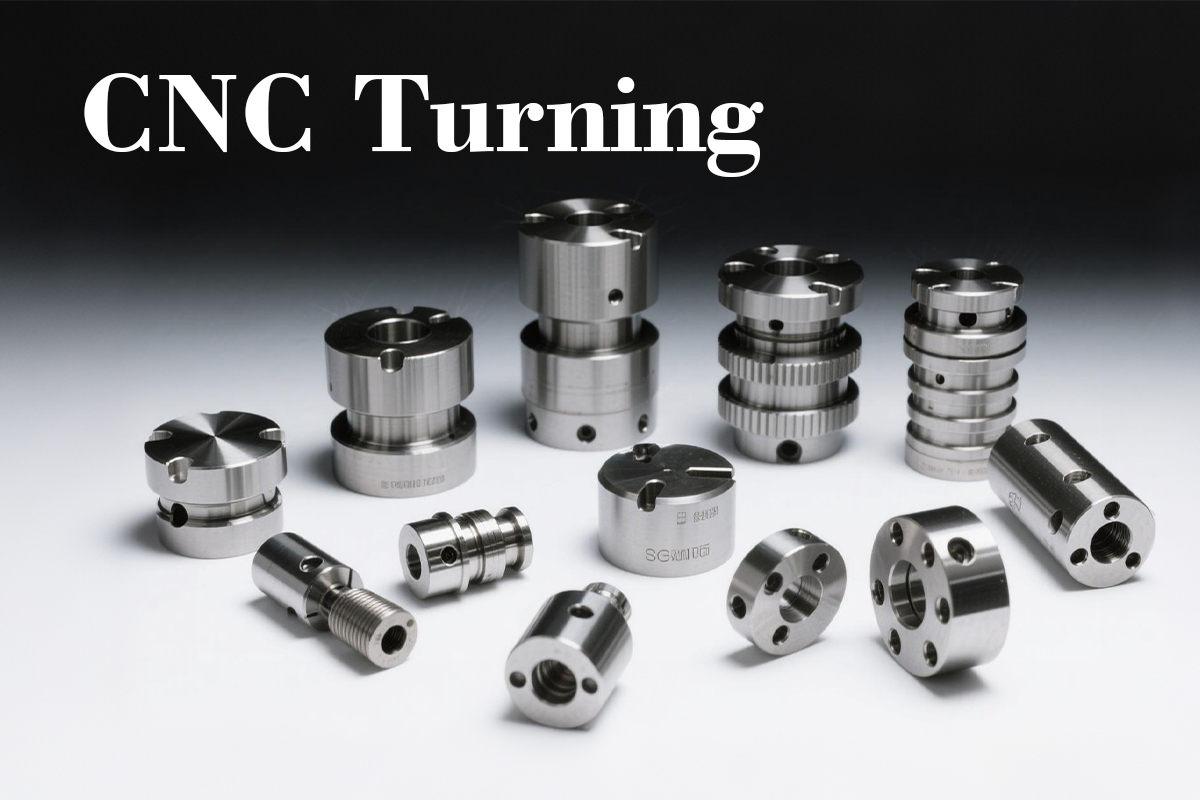
A Comprehensive Guide to CNC Turning: Mastering the Art of Precision
I've spent years immersed in the world of metalworking, and if there's one process that consistently impresses me with its blend of art and science, it's CNC turning. It's a cornerstone of modern manufacturing, and for anyone looking to understand how countless cylindrical parts are made with incredible precision, this guide is for you. Whether you're a seasoned engineer or just starting to explore the field, I want to share my comprehensive insights into what makes this technology so powerful.
What Exactly Is CNC Turning?
At its most fundamental level, CNC turning is a subtractive manufacturing process that uses a computer-controlled lathe to shape material. The workpiece, which is typically a cylindrical block of metal, is clamped in a spindle and rotated at high speed. As it spins, a cutting tool moves along its surface, removing material to create the desired shape. This method is the opposite of processes like CNC milling, where the tool rotates and the workpiece remains stationary.
The "CNC" part of the name—Computer Numerical Control—is the real game-changer. It means that a computer program dictates the exact movements, speeds, and tool changes. This level of automation is what gives CNC turning its legendary precision, consistency, and repeatability. I've seen firsthand how it can produce thousands of identical parts with tolerances measured in microns.
The Evolution of the Lathe
To truly appreciate modern CNC turning, you have to look at its history. The lathe is one of the oldest machine tools, with origins tracing back to ancient Egypt. Early lathes were simple, foot-powered devices where a craftsman would hold a tool to a spinning workpiece. Over centuries, they evolved with the introduction of belt-driven systems, gearboxes, and manual controls.
The real revolution came with the integration of computer technology in the 20th century. My first experience with a CNC lathe was a revelation. Gone were the days of tedious manual adjustments; instead, a carefully crafted program could run a complex operation flawlessly, time after time. Today's machines are marvels of engineering, featuring multi-axis capabilities, live tooling (which allows for milling and drilling on a lathe), and automated material handling. This evolution has transformed a basic shaping tool into a versatile, high-speed manufacturing platform.
Understanding the CNC Turning Process: A Step-by-Step Breakdown
When I approach a new turning project, I always break it down into a clear, methodical process. This structured approach is key to achieving a perfect result.
-
Design: It all starts with a digital model. Using Computer-Aided Design (CAD) software, I create a 3D model of the part. This digital blueprint is the foundation of the entire process. I pay meticulous attention to every detail, from the part's dimensions to its surface finish requirements, ensuring the design is optimized for turning.
-
Programming: Next, I translate the CAD model into a language the machine understands. This is where Computer-Aided Manufacturing (CAM) software comes in. The CAM program generates G-code, which is the precise set of instructions for the CNC lathe. It tells the machine everything: which tool to use, how fast to spin the workpiece, where to move the cutting tool, and at what rate. I always double-check the code to prevent any potential errors.
-
Setup and Tooling: This is a critical hands-on stage. I mount the raw material, or workpiece, into the lathe's chuck. Choosing the right cutting tools is equally important. Different materials require different types of tools—for example, a hardened steel tool will be used for aluminum, while a carbide insert might be necessary for stainless steel. I carefully install and align the tools in the tool turret to ensure they are ready for action.
-
Execution: Once everything is set, I run the program. The machine takes over, executing each line of G-code with sub-millimeter precision. I closely monitor the process, listening for any unusual sounds and watching the chips to ensure a smooth cut. The beauty of the process is that once it’s running correctly, it can produce parts with incredible speed and consistency.
-
Quality Control and Finishing: After the part is machined, my work isn't done. I use precision measuring tools like micrometers and calipers to verify that the part's dimensions match the design specifications. Sometimes, additional finishing processes like polishing, anodizing, or heat treating are required to meet the final product's aesthetic or functional requirements.
Key Components of a CNC Lathe
To truly understand the process, you have to know the machine itself. These are the main components I work with daily:
-
Spindle and Chuck: The spindle is the heart of the lathe, a high-speed rotating axis. The chuck is the clamping device that securely holds the workpiece. The choice of chuck depends on the part's size and geometry.
-
Tool Turret: This is a rotating mount that holds multiple cutting tools. It allows the machine to quickly switch between different tools for various operations without manual intervention, saving a huge amount of time.
-
Cutting Tools: The tools themselves come in a vast variety of shapes and materials, each designed for a specific purpose—turning, boring, threading, and so on. Understanding the right tool for the job is a key skill I've developed over the years.
-
Control Panel: This is the interface I use to interact with the machine. It's where I load programs, set parameters, and monitor the entire turning process.
-
Tailstock: This component slides along the machine's bed and provides support for longer, heavier workpieces. It prevents the part from deflecting or vibrating during the turning process, which is essential for maintaining accuracy.
The Different Faces of CNC Turning Operations
CNC turning isn't a single operation; it's a family of techniques. I've used each of these for countless projects, and knowing when to apply them is essential.
-
Facing: This is often the first step in a turning operation. I use a facing tool to create a perfectly flat surface on the end of the workpiece, perpendicular to the axis of rotation. It's all about creating a clean, true starting point.
-
Boring: When a hole needs to be enlarged or made more precise, I use a boring bar. This operation increases the internal diameter of a pre-drilled hole, bringing it to the exact specified dimension.
-
Drilling: While drilling is often seen as a separate process, many modern CNC lathes have the capability to drill holes along the axis of the workpiece, thanks to the live tooling feature.
-
Grooving: This involves cutting a narrow, circular channel into the workpiece's surface. Grooves are essential for features like O-ring seals, snap rings, or pulley systems.
-
Parting (Cut-Off): Parting is the final step in many projects. I use a parting tool to cut a finished part from the larger stock material. It requires careful handling to ensure a clean, burr-free cut.
-
Threading: This is a precise operation that creates helical threads on the outside or inside of a part. Threading is vital for creating components that will be fastened together with screws or nuts.
-
Knurling: I use knurling to create a textured, often diamond-shaped pattern on the surface of a part. This is typically done to provide a better grip on a handle or knob.
-
Taper Turning: This operation creates a conical shape by moving the cutting tool at an angle relative to the workpiece's axis of rotation.
The Materials I Work With
The versatility of CNC turning is truly remarkable. I've turned everything from common alloys to exotic materials, each with its own unique challenges and properties.
-
Aluminum: A lightweight, corrosion-resistant, and highly machinable material. I use it for applications where weight is a factor, such as in aerospace and electronics.
-
Stainless Steel: Known for its strength and corrosion resistance, stainless steel is a staple in medical and food processing applications. It can be challenging to machine, so I use specific tools and cutting fluids to manage heat and chip formation.
-
Brass: This alloy of copper and zinc is incredibly easy to machine, making it a favorite for fittings, valves, and decorative parts.
-
Plastics and Composites: Materials like nylon, Teflon, and fiberglass can also be turned. They require different cutting speeds and tools to prevent melting or chipping.
Why CNC Turning is a Cornerstone of Modern Manufacturing
I often explain to people that CNC turning is more than just a process; it's a solution to some of the biggest challenges in manufacturing.
-
Unmatched Precision and Repeatability: The computer control eliminates the inconsistencies and human error that plagued manual turning. This means I can produce thousands of parts, and each one will be a near-perfect replica of the last. This is non-negotiable for industries like aerospace and medical device manufacturing where safety and function are paramount.
-
Efficiency and Speed: Automation allows for high-volume production with minimal manual intervention. Once I've programmed the machine, it can run 24/7, significantly reducing lead times and labor costs.
-
Reduced Material Waste: The precision of CNC turning means less material is wasted. The software can optimize tool paths to make the most of the raw material, which is not only cost-effective but also more sustainable.
-
Versatility: As I mentioned, the range of materials and operations is vast. This allows me to tackle diverse projects for industries ranging from automotive to electronics to energy.
Navigating the World of CNC Turning Services
If you're looking for a CNC turning partner, I've learned a few things to look for. Not all service providers are created equal, and making the right choice can mean the difference between a successful project and a costly failure.
-
Experience and Expertise: Look for a company with a proven track record. Ask about their past projects and the types of materials they've worked with. An experienced provider will have the knowledge to anticipate challenges and deliver a high-quality product.
-
Technology and Equipment: The machines a shop uses matter. Modern, multi-axis lathes and advanced software indicate a commitment to efficiency and precision. Ask about their quality control processes and what measurement tools they use.
-
Customer Service and Communication: A good partner will keep you informed throughout the process, from initial design review to final delivery. Clear communication is essential for ensuring your project's specifications are met precisely.
-
Customization Capabilities: My work often involves unique, custom parts. The best providers are flexible and willing to work with you on specific requirements, whether it's a complex geometry or a special material.
The Future of CNC Turning
The technology isn't standing still. I'm seeing exciting advancements in areas like lights-out manufacturing, where machines can run autonomously for long periods, and digital twin technology, where a virtual model of the manufacturing process is used to optimize production and predict maintenance needs. The integration of artificial intelligence and machine learning is also on the horizon, promising even smarter and more efficient turning processes.
In my view, CNC turning will continue to be a vital process, evolving with technology to meet the demands of an increasingly complex and innovative world. Understanding its principles is a key step toward appreciating how so many of the products we use every day come to life.