Aluminum CNC Machining Service
Machined prototypes and production parts in as fast as 1 day. Request an online quote today.
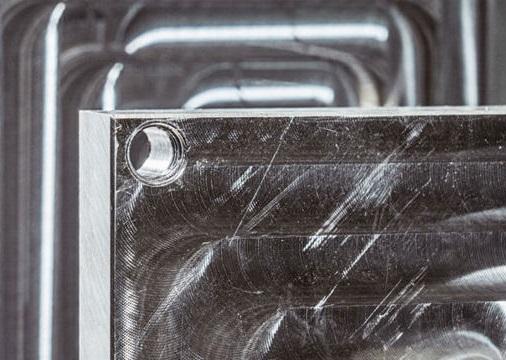
What is Aluminum CNC Machining?
Aluminum CNC machining is a computer-controlled manufacturing process used to cut, drill, mill, turn, and shape aluminum materials into precise components and products. CNC stands for Computer Numerical Control, which means machining equipment follows programmed instructions to remove material with a high degree of accuracy.
Aluminum is one of the most widely used metals for CNC machining because it combines low weight, good strength, excellent machinability, corrosion resistance, and relatively low material cost.
A typical aluminum CNC machining process includes:
- CAD Model: A digital 2D or 3D model defines the dimensions and geometry of the component.
- CNC Machine: The machine uses programmed toolpaths to remove material from an aluminum workpiece.
- Cutting Tools: Milling cutters, drills, turning tools, and other tooling shape the aluminum part.
- Control System: The CNC controller coordinates machine movements according to the programmed instructions.
Features of Aluminum CNC Machining
Aluminum CNC machining offers several characteristics that make it suitable for prototypes, custom parts, and high-volume production.
-
High Machinability
Aluminum is relatively easy to cut compared with many other metals. Its good machinability allows CNC machines to achieve high cutting speeds and efficient material removal, helping reduce machining time and production costs.
-
Lightweight
Aluminum has a low density compared with steel and many other engineering metals. This makes CNC-machined aluminum parts suitable for applications where weight reduction is important, including aerospace, automotive, robotics, and consumer electronics.
-
Good Strength-to-Weight Ratio
Many aluminum alloys provide a useful combination of strength and low weight. Heat-treated alloys can provide even higher mechanical performance for demanding applications.
-
Corrosion Resistance
Aluminum naturally forms a thin oxide layer that helps protect the material from corrosion. Additional surface treatments, such as anodizing, can further improve corrosion resistance and appearance.
-
Excellent Surface Finish
CNC machining can produce smooth and precise aluminum surfaces. Additional processes such as anodizing, polishing, bead blasting, or powder coating can be used when a specific appearance or surface property is required.
-
Dimensional Precision
CNC machines can produce complex aluminum components with consistent dimensions and repeatability, making them suitable for applications with tight tolerances.
Applications of Aluminum CNC Machining
The combination of low weight, machinability, strength, corrosion resistance, and design flexibility makes CNC-machined aluminum suitable for a wide range of industries.
Some common applications include:
- Aerospace components. Aluminum CNC machining is commonly used to manufacture lightweight structural components, brackets, housings, and other aircraft parts.
- Automotive parts. CNC-machined aluminum can be used for engine components, brackets, housings, suspension components, and custom automotive parts.
- Electronics enclosures. Aluminum is often machined into heat sinks, housings, frames, and protective enclosures for electronic devices.
- Robotics components. Lightweight aluminum parts are suitable for robotic arms, mounting brackets, joints, frames, and other precision components.
- Medical equipment. CNC machining can produce aluminum housings, fixtures, instrument components, and equipment parts with precise dimensions.
- Industrial machinery. Aluminum CNC machining is used for machine components, mounting plates, brackets, tooling, and custom mechanical parts.
- Consumer products. Aluminum can be machined into housings, handles, frames, knobs, and decorative components for consumer products.
- Prototypes. CNC machining is well suited to producing functional aluminum prototypes before mass production.
- Heat sinks. Aluminum's thermal conductivity makes it useful for components designed to dissipate heat from electronic and mechanical systems.
- Custom fixtures and tooling. Aluminum CNC machining can produce lightweight jigs, fixtures, molds, and manufacturing tools.
Aluminum Alloys for CNC Machining
Aluminum is available in many different alloys, each offering different combinations of strength, machinability, corrosion resistance, weldability, and surface finish. The appropriate aluminum alloy depends on the specific requirements of the application.
| Aluminum Alloy | Key Features | Common Applications |
|---|---|---|
| 6061 Aluminum | A versatile alloy with good machinability, strength, corrosion resistance, and weldability. It is one of the most commonly used aluminum alloys for CNC machining. | Machine components, brackets, frames, housings, prototypes, and general-purpose parts. |
| 7075 Aluminum | High-strength aluminum alloy with excellent strength-to-weight performance. It is generally more expensive and less corrosion-resistant than 6061. | Aerospace components, high-performance mechanical parts, tooling, and structural components. |
| 2024 Aluminum | High-strength aluminum alloy with good fatigue resistance and relatively good machinability. | Aerospace components, aircraft structures, and high-strength mechanical parts. |
| 5052 Aluminum | Excellent corrosion resistance and good formability. It is generally not selected primarily for complex high-speed CNC machining. | Enclosures, panels, marine components, and applications requiring good corrosion resistance. |
| 6082 Aluminum | A structural alloy offering good strength, machinability, and corrosion resistance. | Structural components, machinery, transportation equipment, and engineering parts. |
Types of Aluminum CNC Machining Processes
Different CNC machining processes are used depending on the geometry, dimensions, and functional requirements of the aluminum component.
| CNC Machining Process | How It Works | Suitable For | Main Advantage |
|---|---|---|---|
| CNC Milling | Rotating cutting tools remove material from an aluminum workpiece. | Slots, pockets, contours, holes, and complex shapes | High design flexibility |
| CNC Turning | The aluminum workpiece rotates while a cutting tool removes material. | Shafts, pins, bushings, and cylindrical parts | Efficient for rotational components |
| CNC Drilling | A rotating cutting tool creates holes in the workpiece. | Through holes and blind holes | Accurate hole production |
| CNC Tapping | A tapping tool creates internal threads. | Threaded holes for screws and bolts | Precise thread production |
| CNC Boring | A cutting tool enlarges and finishes an existing hole. | Precision bores and internal diameters | Improved dimensional accuracy |
| 5-Axis CNC Machining | The cutting tool and workpiece move along multiple axes. | Complex 3D and angled components | Fewer setups and greater flexibility |
Aluminum CNC Machining vs. Other Metals
Aluminum is often selected for CNC machining because it offers a favorable balance between machinability, weight, strength, and cost. However, other metals may be more appropriate when specific mechanical or environmental properties are required.
| Material | Advantages | Typical Uses |
|---|---|---|
| Aluminum | Lightweight, highly machinable, corrosion-resistant, good thermal conductivity. | Aerospace, automotive, electronics, robotics, machinery, consumer products. |
| Stainless Steel | High strength, excellent corrosion resistance, good durability. | Medical equipment, food processing, industrial machinery, chemical equipment. |
| Brass | Excellent machinability, corrosion resistance, and attractive appearance. | Fittings, valves, electrical components, decorative parts. |
| Titanium | High strength-to-weight ratio, excellent corrosion resistance, and high-temperature performance. | Aerospace, medical implants, high-performance engineering components. |
| Copper | Excellent electrical and thermal conductivity. | Electrical components, heat exchangers, conductive parts. |
Advantages of Aluminum CNC Machining?
Aluminum CNC machining provides several advantages for manufacturers and product designers.
- Fast machining. Aluminum can generally be machined at relatively high cutting speeds, allowing efficient production.
- Lightweight components. Aluminum parts can reduce the overall weight of assemblies compared with many steel alternatives.
- Complex geometries. CNC machining can produce intricate shapes, pockets, channels, holes, and contours from aluminum.
- High repeatability. CNC equipment can produce multiple components with consistent dimensions and geometry.
- Excellent surface treatment options. Aluminum parts can be anodized, polished, bead blasted, painted, or finished using other processes.
- Suitable for prototypes and production. CNC machining can be used for one-off prototypes as well as larger production quantities.
- Good thermal conductivity. Aluminum's ability to transfer heat makes it useful for heat sinks and thermal management components.
Aluminum CNC Machining Surface Finishes
After machining, aluminum components can receive additional surface treatments to improve their appearance, corrosion resistance, wear resistance, or functional performance.
| Surface Finish | Appearance | Main Benefits | Common Applications |
|---|---|---|---|
| Anodizing | Matte, satin, or colored | Improves corrosion and wear resistance | Electronics, consumer products, aerospace parts |
| Bead Blasting | Uniform matte | Reduces visible machining marks | Housings, enclosures, decorative parts |
| Polishing | Smooth and reflective | Improves surface appearance | Decorative and consumer products |
| Powder Coating | Wide range of colors and textures | Provides a durable protective coating | Industrial and outdoor components |
| Brushing | Directional texture | Provides a consistent decorative finish | Consumer products and visible components |
What factors affect the cost of Aluminum CNC Machining?
The cost of an aluminum CNC-machined component depends on more than the price of the raw material. Part geometry, machining time, tolerances, finishing requirements, production quantity, and material selection can all affect the final cost.
Important cost factors include:
- Material cost: The selected aluminum alloy and required material size affect the initial cost.
- Part complexity: Complex geometries generally require more programming, tooling, machining time, and inspection.
- Machining time: Longer cycle times generally result in higher production costs.
- Tolerances: Tight dimensional tolerances can require additional machining operations and inspection.
- Surface finishing: Processes such as anodizing, polishing, painting, or bead blasting add to the overall cost.
- Quantity: Larger production quantities can often reduce the per-part cost by distributing programming, setup, and tooling expenses across more components.
- Inspection requirements: Components requiring detailed dimensional inspection or specialized quality documentation may have higher manufacturing costs.
How to order Aluminum CNC Machined Parts?
Ordering custom aluminum CNC-machined components generally begins with providing the manufacturer with a detailed digital design and production requirements.
- Prepare the CAD file: Provide a suitable 2D drawing or 3D CAD model containing the required dimensions and features.
- Specify the aluminum alloy: Select an alloy such as 6061, 7075, 2024, or another material according to the application's requirements.
- Define tolerances: Identify critical dimensions and specify the required tolerances.
- Select the surface finish: Specify whether the component requires anodizing, polishing, bead blasting, powder coating, or another finish.
- Specify quantity: Provide the required prototype or production quantity so the manufacturer can determine an appropriate production process.
- Review the quotation: Compare material, machining, finishing, inspection, and shipping costs before placing the order.
- Inspect the finished parts: Verify that the delivered components meet the required dimensions, surface finish, and functional specifications.
Related Services
CNC Machining Service
Get precision-machined parts and rapid prototypes with fast turnaround times and competitive...
Related Blogs
Aluminum Alloy: A Complete Overview
Aluminum alloys are widely used in modern manufacturing because they combine low weight, good...
Anodized Aluminum: A Complete Overview
This article provides a comprehensive overview of anodized aluminum, explaining its...
The Difference Between Titanium and Steel
Titanium and steel are widely used engineering materials with different combinations of...
Titanium Alloy: A Complete Overview
Titanium alloy is a lightweight and high-strength material created by combining titanium with...