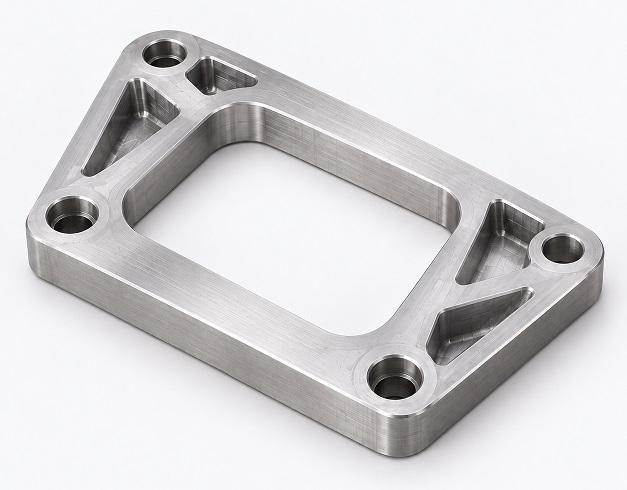
Titanium alloy is a lightweight and high-strength material created by combining titanium with other elements to improve its mechanical and physical properties. This article provides a comprehensive overview of titanium alloys, including their types, common grades, material properties, mechanical strength, hardness, thermal characteristics, and common applications.
What is Titanium Alloy?
A titanium alloy is an alloy made by combining titanium with other elements to improve its mechanical properties, corrosion resistance, heat resistance, and overall performance. Pure titanium already has excellent characteristics, including a high strength-to-weight ratio, outstanding corrosion resistance, and good biocompatibility. However, alloying titanium with elements such as aluminum, vanadium, molybdenum, zirconium, and tin allows engineers to create materials with enhanced strength, hardness, and durability.
Titanium alloys are widely used in industries that require lightweight yet strong materials, including aerospace, medical devices, automotive engineering, marine equipment, chemical processing, and high-performance sports products. Compared with many traditional metals, titanium alloy provides a unique combination of low density, high strength, and resistance to extreme environments.
The composition of titanium alloy varies depending on the intended application. For example, Ti-6Al-4V (Grade 5), which contains approximately 6% aluminum and 4% vanadium, is one of the most commonly used titanium alloys because it provides an excellent balance between strength, toughness, corrosion resistance, and manufacturability.
The properties of titanium alloy depend on several factors, including alloy composition, heat treatment, manufacturing process, and microstructure. By controlling these factors, manufacturers can produce titanium materials suitable for demanding applications requiring high strength titanium, improved fatigue resistance, or better thermal performance.
Properties of Titanium Alloy
Titanium alloy materials are known for their exceptional combination of physical, mechanical, and chemical properties. These characteristics make titanium alloys valuable in applications where conventional metals may not perform adequately.
- High strength-to-weight ratio: Titanium alloys provide strength comparable to many steels while being significantly lighter. This makes them especially useful in aerospace structures where reducing weight improves efficiency.
- Excellent corrosion resistance: Titanium naturally forms a protective oxide layer that prevents corrosion in many environments, including seawater and chemical processing conditions.
- Good heat resistance: Many titanium alloys maintain their mechanical properties at elevated temperatures, making them suitable for aircraft engines and industrial applications.
- Low density: Titanium has a density of approximately 4.5 g/cm³, which is lower than steel while maintaining excellent strength.
- Biocompatibility: Titanium alloys are compatible with the human body, which makes them commonly used in implants and medical devices.
Important titanium material properties include tensile strength, yield strength, modulus of elasticity, hardness, thermal conductivity, and melting temperature. These values vary depending on the specific titanium grade and treatment condition.
The Young's modulus of titanium alloys is typically around 100 to 120 GPa, which is lower than steel. This lower modulus allows titanium implants to behave more similarly to human bone, reducing stress-related problems in medical applications.
Types of Titanium Alloys
Titanium alloys are mainly classified into three categories based on their microstructure: alpha titanium alloys, beta titanium alloys, and alpha-beta titanium alloys. The classification depends on the phases present in the titanium crystal structure and the alloying elements added to stabilize these phases.
Each type of titanium alloy offers different combinations of strength, ductility, corrosion resistance, and temperature performance. In addition to these three main classifications, titanium alloys are also identified by specific grades, such as Ti-6Al-4V (Grade 5) and Ti-6242, which are designed for different engineering applications.
| Titanium Alloy Classification | Main Alloying Elements | Main Characteristics | Examples |
|---|---|---|---|
| Alpha Titanium Alloys | Aluminum, oxygen, nitrogen | Excellent corrosion resistance, good weldability, and high-temperature stability | Commercially Pure Titanium, Ti-5Al-2.5Sn |
| Beta Titanium Alloys | Aluminum, vanadium, molybdenum | Very high strength potential and excellent heat treatment response | Ti-10V-2Fe-3Al, Ti-15V-3Cr-3Sn-3Al |
| Alpha-Beta Titanium Alloys | Molybdenum, vanadium, chromium | Balanced strength, toughness, corrosion resistance, and manufacturability | Ti-6Al-4V, Ti-6242, Ti-3Al-2.5V |
Alpha Titanium Alloys
Alpha titanium alloys contain elements that stabilize the alpha phase of titanium, such as aluminum, oxygen, and nitrogen. These alloys provide excellent corrosion resistance, good weldability, and stable mechanical performance at elevated temperatures.
Because alpha titanium alloys contain little or no beta phase, they cannot be significantly strengthened through heat treatment. However, they maintain good toughness and are suitable for applications requiring long-term durability and corrosion resistance.
| Alpha Titanium Alloy | Grade | Main Alloying Elements | Characteristics | Typical Applications |
|---|---|---|---|---|
| Commercially Pure Titanium (CP Titanium) | Grade 1–4 | Pure titanium with controlled oxygen, iron, and nitrogen content | Excellent corrosion resistance, high ductility, and good weldability | Chemical equipment, marine applications, medical components |
| Grade 2 Titanium | Grade 2 | Commercially pure titanium | Most widely used CP titanium grade with a good balance of strength, corrosion resistance, and formability | Industrial equipment, heat exchangers, aerospace components |
| Ti-5Al-2.5Sn | Grade 6 | Aluminum and tin | Good creep resistance, weldability, and high-temperature stability | Aerospace structures, pressure systems, high-temperature applications |
| Ti-0.3Mo-0.8Ni | Grade 12 | Molybdenum and nickel | Improved corrosion resistance and moderate strength | Chemical processing equipment, marine applications |
Beta Titanium Alloys
Beta titanium alloys contain beta-stabilizing elements such as vanadium, molybdenum, chromium, and iron. These alloying elements allow the beta phase of titanium to remain stable at room temperature.
Beta titanium alloys can be strengthened through heat treatment and aging processes, allowing them to achieve very high tensile strength and yield strength. They are commonly used in applications where maximum strength and fatigue resistance are required.
| Beta Titanium Alloy | Common Name / Designation | Main Alloying Elements | Characteristics | Typical Applications |
|---|---|---|---|---|
| Ti-10V-2Fe-3Al | Ti-10-2-3 | Vanadium, iron, and aluminum | Very high strength, excellent heat treatment response, and good fatigue performance | Aerospace fasteners, landing gear components, structural parts |
| Ti-15V-3Cr-3Al-3Sn | Ti-15-3 | Vanadium, chromium, aluminum, and tin | High strength, excellent cold formability, and good aging response | Aircraft components, sheet metal parts, high-performance structures |
| Ti-3Al-8V-6Cr-4Mo-4Zr | Beta C | Aluminum, vanadium, chromium, molybdenum, and zirconium | High strength, excellent hardenability, and good corrosion resistance | Aerospace springs, fasteners, high-strength components |
| Ti-21S | Beta 21S | Molybdenum, niobium, aluminum, and silicon | High-temperature capability, oxidation resistance, and good strength retention | Aerospace and high-temperature applications |
| Ti-5Al-5Mo-5V-3Cr | Ti-5553 | Aluminum, molybdenum, vanadium, and chromium | Ultra-high strength and excellent damage tolerance | Aircraft landing gear and heavy-load aerospace structures |
Alpha-Beta Titanium Alloys
Alpha-beta titanium alloys contain both alpha and beta phases, providing a balance between strength, toughness, corrosion resistance, and manufacturability.
This category represents the most widely used group of titanium alloys. By adjusting the ratio of alpha and beta phases, manufacturers can achieve different combinations of mechanical properties for aerospace, medical, automotive, and industrial applications.
| Alpha-Beta Titanium Alloy | Grade | Main Alloying Elements | Characteristics | Typical Applications |
|---|---|---|---|---|
| Ti-6Al-4V | Grade 5 | Aluminum and vanadium | Most widely used titanium alloy; excellent strength-to-weight ratio and corrosion resistance | Aerospace, medical implants, automotive |
| Ti-6Al-4V ELI | Grade 23 | Aluminum, vanadium (extra-low interstitial) | Improved ductility, fracture toughness, and biocompatibility | Medical implants, aerospace |
| Ti-6242 (Ti-6Al-2Sn-4Zr-2Mo) | — | Aluminum, tin, zirconium, molybdenum, silicon | High-temperature strength and creep resistance | Aircraft engines and aerospace components |
| Ti-3Al-2.5V | Grade 9 | Aluminum, vanadium | Good strength, formability, and corrosion resistance | Tubing, aerospace components, hydraulic systems |
Ti-6Al-4V Titanium Alloy
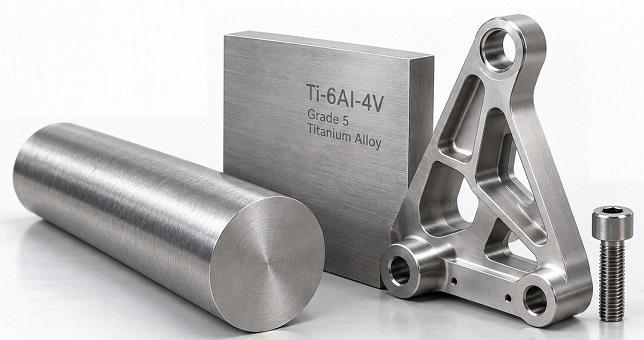
Ti-6Al-4V (Grade 5) is the most widely used titanium alloy worldwide. It contains approximately 6% aluminum and 4% vanadium, with titanium making up the remaining composition.
This alloy provides an excellent combination of high strength, lightweight properties, corrosion resistance, and fatigue performance. It is commonly used in aerospace structures, aircraft engine components, medical implants, and high-performance engineering applications.
Ti-6242 Titanium Alloy
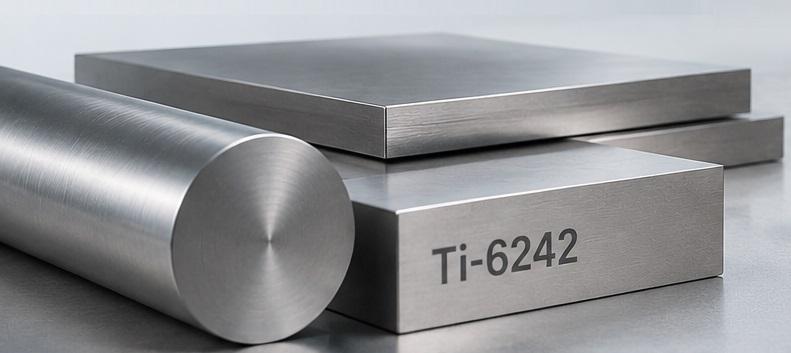
Ti-6242 (Ti-6Al-2Sn-4Zr-2Mo) is an alpha-beta titanium alloy designed for applications requiring improved high-temperature performance. Its composition includes aluminum, tin, zirconium, molybdenum, and silicon.
Compared with Ti-6Al-4V, Ti-6242 provides better creep resistance and maintains mechanical strength at higher temperatures, making it suitable for aerospace engine components and other demanding environments.
Titanium Alloy Grades
Titanium alloys are commonly identified by grade numbers that define their composition, mechanical properties, and intended applications. These titanium grades are standardized to help engineers select suitable materials based on strength, corrosion resistance, ductility, temperature performance, and biocompatibility requirements.
Titanium grades are generally divided into commercially pure titanium grades and titanium alloy grades. Commercially pure titanium grades (Grade 1–4) provide excellent corrosion resistance and ductility, while alloy grades such as Grade 5, Grade 9, and Grade 23 offer improved strength and specialized performance for demanding applications.
| Titanium Grade | Alloy Type | Composition | Key Characteristics | Typical Applications |
|---|---|---|---|---|
| Grade 1 | Commercially Pure Titanium (CP Titanium) | Pure titanium | Excellent corrosion resistance, highest ductility, easy formability | Chemical processing equipment, heat exchangers, medical applications |
| Grade 2 | Commercially Pure Titanium (CP Titanium) | Pure titanium with controlled impurities | Balanced strength, corrosion resistance, and weldability | Aerospace components, industrial equipment, marine applications |
| Grade 5 (Ti-6Al-4V) | Alpha-Beta Titanium Alloy | Titanium with approximately 6% aluminum and 4% vanadium | High strength-to-weight ratio, excellent fatigue resistance, good corrosion resistance | Aerospace structures, aircraft components, medical implants |
| Grade 9 (Ti-3Al-2.5V) | Alpha-Beta Titanium Alloy | Titanium with aluminum and vanadium additions | Good strength, excellent formability, improved corrosion resistance | Tubing, hydraulic systems, aerospace components |
| Grade 23 (Ti-6Al-4V ELI) | Alpha-Beta Titanium Alloy | Extra-low interstitial version of Ti-6Al-4V | Improved fracture toughness, ductility, and biocompatibility | Medical implants, orthopedic devices, aerospace applications |
Commercially Pure Titanium Grades (Grade 1–4)
Commercially pure titanium grades (Grade 1–4) contain mostly titanium with small amounts of oxygen, nitrogen, carbon, and iron. These grades are known for excellent corrosion resistance, high ductility, and good weldability. Among them, Grade 2 titanium is one of the most widely used commercially pure titanium grades because it provides a good balance between strength and corrosion resistance.
Grade 5 Titanium (Ti-6Al-4V)
Grade 5 titanium, also known as Ti-6Al-4V, is the most widely used titanium alloy grade. It belongs to the alpha-beta titanium alloy family and contains approximately 6% aluminum and 4% vanadium. This grade provides an excellent combination of high strength, low density, corrosion resistance, and fatigue performance.
Due to its outstanding mechanical properties, Grade 5 titanium is widely used in aerospace structures, aircraft components, medical implants, and high-performance engineering applications.
Grade 9 Titanium (Ti-3Al-2.5V)
Grade 9 titanium is an alpha-beta titanium alloy containing aluminum and vanadium. Compared with commercially pure titanium, it provides higher strength while maintaining good ductility and corrosion resistance.
Grade 9 titanium is commonly used for tubing applications, aerospace hydraulic systems, and components requiring a combination of lightweight performance and mechanical reliability.
Grade 23 Titanium (Ti-6Al-4V ELI)
Grade 23 titanium, also known as Ti-6Al-4V ELI (Extra Low Interstitial), is a modified version of Grade 5 titanium with lower levels of oxygen, nitrogen, and iron. This improves fracture toughness, ductility, and fatigue performance.
Because of its excellent biocompatibility and mechanical properties, Grade 23 titanium is widely used in medical implants, orthopedic devices, and aerospace applications where high reliability is required.
Titanium vs Titanium Alloy
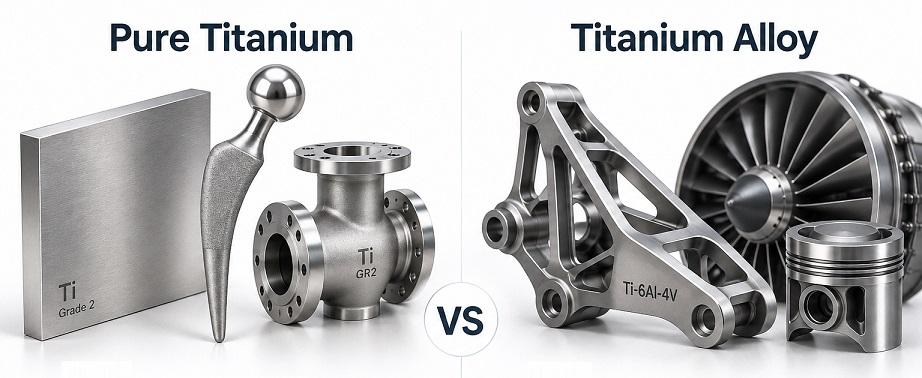
Titanium and titanium alloy are closely related materials, but they have different compositions and performance characteristics.
Pure titanium contains mostly titanium with very small amounts of impurities. It offers excellent corrosion resistance, low density, and good ductility. However, pure titanium generally has lower strength compared with titanium alloys.
Titanium alloys are created by adding other elements to titanium. These additional elements modify the material structure and improve properties such as tensile strength, hardness, fatigue resistance, and temperature performance.
| Property | Pure Titanium | Titanium Alloy |
|---|---|---|
| Strength | Moderate | Higher, depending on alloy composition |
| Hardness | Lower | Improved through alloying and heat treatment |
| Corrosion Resistance | Excellent | Usually excellent |
| Applications | Chemical equipment, medical uses | Aerospace, automotive, high-performance engineering |
In applications requiring maximum strength, titanium alloys are usually preferred because alloying elements increase mechanical performance without significantly increasing weight.
Mechanical Strength of Titanium Alloy
Titanium alloys are well known for their excellent mechanical strength combined with low density. The strength of titanium alloy is one of the main reasons these materials are widely used in aerospace, medical, automotive, and high-performance engineering applications.
Unlike many traditional metals, titanium alloys provide a high strength-to-weight ratio, meaning they can achieve comparable strength to steel while being significantly lighter. The mechanical performance of titanium alloys depends on alloy composition, microstructure, heat treatment, and manufacturing processes.
Important mechanical properties used to evaluate titanium alloy strength include tensile strength, ultimate tensile strength (UTS), yield strength, fatigue strength, and modulus of elasticity.
Tensile Strength
Tensile strength describes the maximum stress that a material can withstand while being stretched before it breaks. The tensile strength of titanium varies depending on the alloy grade and processing condition.
Commercially pure titanium has moderate tensile strength, while titanium alloys containing elements such as aluminum, vanadium, molybdenum, and zirconium can achieve much higher strength levels.
For example, Ti-6Al-4V titanium alloy typically has a tensile strength of approximately 900 MPa or higher, making it one of the most widely used high-strength titanium alloys.
Ultimate Tensile Strength (UTS)
Ultimate tensile strength (UTS) refers to the maximum stress a titanium alloy can withstand before fracture occurs. It represents the highest point on a tensile stress-strain curve.
The UTS of titanium depends on alloy type, heat treatment condition, and manufacturing process. Aging and heat treatment can significantly increase the ultimate tensile strength of certain titanium alloys by modifying their microstructure.
Yield Strength
Yield strength refers to the stress level at which titanium begins to deform permanently. A higher yield strength means the material can withstand greater loads before experiencing permanent deformation.
High-strength titanium alloys are often selected for aerospace and structural applications because they provide excellent yield strength while maintaining a lightweight design.
Modulus of Elasticity
The modulus of elasticity, also known as Young's modulus, measures the stiffness of a material and describes how much it deforms under an applied load.
Titanium alloys typically have a Young's modulus of approximately 100-120 GPa, which is lower than steel. This lower modulus allows titanium to have greater elastic flexibility compared with many traditional structural metals.
Strength Comparison of Common Titanium Alloys
| Titanium Alloy | Tensile Strength | Yield Strength | Typical Applications |
|---|---|---|---|
| Commercially Pure Titanium (Grade 1–4) | 240–550 MPa | 170–480 MPa | Chemical equipment, medical applications, corrosion-resistant components |
| Ti-3Al-2.5V (Grade 9) | 620–860 MPa | 480–740 MPa | Tubing, aerospace components, hydraulic systems |
| Ti-6Al-4V (Grade 5) | 900–1000 MPa | 800–900 MPa | Aerospace structures, aircraft components, implants |
| Ti-6Al-4V ELI (Grade 23) | 860–950 MPa | 790–880 MPa | Medical implants, aerospace applications |
| Ti-5Al-2.5Sn (Grade 6) | Approximately 900 MPa | Approximately 800 MPa | Aerospace structures, cryogenic applications |
| Ti-6242 | 900–1050 MPa | 800–950 MPa | Aerospace engine components, high-temperature applications |
Titanium Alloy Strength Compared with Other Metals
| Material | Density | Typical Tensile Strength | Strength-to-Weight Performance |
|---|---|---|---|
| Aluminum Alloy | Approximately 2.7 g/cm³ | 200-600 MPa | High |
| Titanium Alloy | Approximately 4.5 g/cm³ | 800-1200+ MPa | Excellent |
| Steel Alloy | Approximately 7.8 g/cm³ | 400-2000 MPa depending on grade | High but heavier |
Titanium Hardness and Hardness Scale
Titanium hardness refers to the resistance of titanium and titanium alloys to indentation, scratching, and surface deformation. Hardness is an important material property because it affects wear resistance, machining behavior, and long-term durability.
The hardness of titanium depends on several factors, including alloy composition, oxygen content, heat treatment, cold working, and microstructure. Titanium alloys generally have higher hardness than commercially pure titanium because alloying elements strengthen the titanium crystal structure.
Mohs Hardness
On the Mohs hardness scale, titanium has a hardness value of approximately 6. This means titanium is harder than many common metals but softer than materials such as hardened steel and some ceramics.
The Mohs hardness scale is mainly used for comparing scratch resistance and is commonly searched by consumers. However, industrial applications usually rely on Rockwell or Vickers hardness measurements.
Rockwell and Vickers Hardness
In engineering and manufacturing, titanium hardness is commonly measured using Rockwell hardness and Vickers hardness tests.
Rockwell hardness measures the depth of indentation under a specific load, while Vickers hardness uses a diamond indenter to measure resistance to penetration. These methods provide more accurate information for industrial material selection.
| Titanium Alloy | Vickers Hardness (HV) | Rockwell Hardness |
|---|---|---|
| Commercially Pure Titanium (Grade 1–4) | 100–200 HV | 70–90 HRB |
| Ti-3Al-2.5V (Grade 9) | 250–330 HV | 25–35 HRC |
| Ti-6Al-4V (Grade 5) | 300–400 HV | 30–40 HRC |
| Ti-6Al-4V ELI (Grade 23) | 300–380 HV | 30–38 HRC |
| Ti-5Al-2.5Sn (Grade 6) | 250–350 HV | 25–35 HRC |
| Ti-6242 | 330–400 HV | 34–42 HRC |
Relationship Between Titanium Hardness and Strength
Titanium hardness and strength are related but represent different material properties. Hardness describes resistance to surface deformation, while tensile strength and yield strength describe how much load a material can withstand before deformation or failure.
High-strength titanium alloys such as Ti-6Al-4V achieve excellent mechanical performance through a combination of alloy composition, microstructure control, and heat treatment rather than hardness alone.
Titanium Thermal Properties
Titanium alloys have unique thermal properties that make them suitable for demanding applications where lightweight construction, heat resistance, and dimensional stability are required. Compared with metals such as aluminum and copper, titanium has relatively low thermal conductivity, which means it transfers heat more slowly.
The thermal behavior of titanium alloys depends on alloy composition, microstructure, temperature, and manufacturing processes. Alloying elements such as aluminum, vanadium, molybdenum, and zirconium can affect properties including thermal conductivity, heat capacity, and high-temperature strength.
Important thermal properties of titanium alloys include thermal conductivity, coefficient of thermal expansion (CTE), specific heat capacity, and melting temperature.
Thermal Conductivity
Titanium has relatively low thermal conductivity compared with many engineering metals. The thermal conductivity of commercially pure titanium is approximately 17 W/m·K, while titanium alloys generally have similar or slightly lower values depending on their composition.
The low thermal conductivity of titanium means heat is not transferred quickly through the material. This characteristic can be beneficial in applications where thermal insulation, heat resistance, or controlled heat transfer is required.
| Titanium Alloy | Thermal Conductivity |
|---|---|
| Commercially Pure Titanium (Grade 1–4) | 16–22 W/m·K |
| Ti-3Al-2.5V (Grade 9) | 8–10 W/m·K |
| Ti-6Al-4V (Grade 5) | 6–7 W/m·K |
| Ti-6Al-4V ELI (Grade 23) | 6–7 W/m·K |
| Ti-5Al-2.5Sn (Grade 6) | 7–9 W/m·K |
| Ti-6242 | 7–9 W/m·K |
Coefficient of Thermal Expansion (CTE)
The coefficient of thermal expansion (CTE) describes how much a material expands or contracts when its temperature changes.
Titanium alloys have a relatively low CTE compared with aluminum and many steels. This allows titanium components to maintain dimensional stability during temperature fluctuations, making them suitable for precision aerospace and industrial applications.
Heat Capacity
The specific heat capacity of titanium refers to the amount of heat energy required to increase the temperature of the material. Titanium has a specific heat capacity of approximately 520 J/kg·K.
A higher heat capacity allows titanium alloys to absorb more heat before experiencing a significant temperature increase, which contributes to their performance in elevated-temperature environments.
Melting Point
Titanium has a high melting point of approximately 1,668°C. Titanium alloys generally maintain excellent mechanical properties at elevated temperatures, although their maximum operating temperature depends on alloy composition.
Specialized titanium alloys such as Ti-6242 are designed for improved creep resistance and high-temperature strength, making them suitable for aerospace engine components.
Summary of Titanium Thermal Properties
| Thermal Property | Typical Value | Importance |
|---|---|---|
| Thermal Conductivity | Approximately 6–17 W/m·K (depending on grade) | Determines how quickly heat moves through titanium |
| Coefficient of Thermal Expansion (CTE) | Approximately 8-9 × 10⁻⁶/K | Indicates dimensional changes caused by temperature variation |
| Specific Heat Capacity | Approximately 520 J/kg·K | Measures the heat required to increase material temperature |
| Melting Point | Approximately 1,668°C | Indicates maximum temperature resistance before melting |
Applications of Titanium Alloy
Titanium alloys are widely used across aerospace, medical, automotive, marine, and industrial industries due to their excellent combination of high strength, low density, corrosion resistance, and biocompatibility.
Aerospace
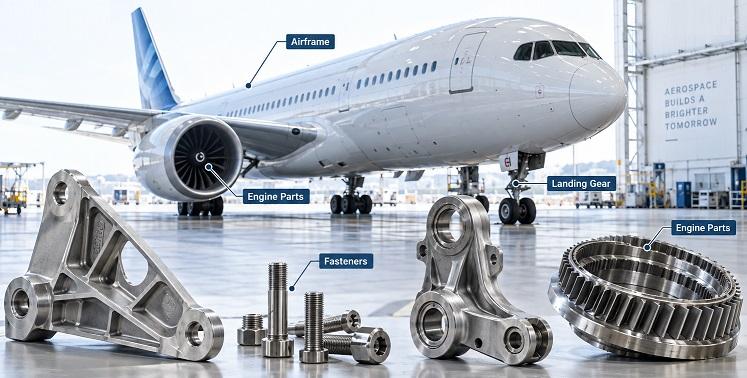
The aerospace industry is one of the largest application fields for titanium alloys. Their high strength-to-weight ratio allows aircraft manufacturers to reduce structural weight while maintaining excellent mechanical performance and durability.
Titanium alloys are commonly used in aircraft frames, landing gear components, engine parts, fasteners, and other critical structural components. They can withstand high temperatures, fatigue loading, and harsh operating environments, making them suitable for both commercial and military aerospace applications.
Common aerospace titanium alloys include Ti-6Al-4V (Grade 5 titanium alloy), which is widely used because of its excellent balance of strength, toughness, corrosion resistance, and manufacturability.
Medical Applications
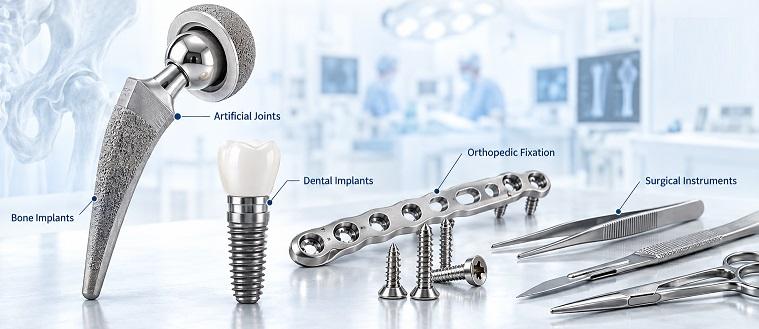
Titanium alloys play an important role in the medical industry due to their outstanding biocompatibility, corrosion resistance, and mechanical properties. They can safely interact with the human body and maintain long-term stability in medical environments.
Medical titanium alloys are widely used for bone implants, artificial joints, dental implants, surgical instruments, and orthopedic fixation devices. Their lightweight nature and elastic modulus close to human bone make them suitable for applications requiring strength and compatibility with biological tissues.
Ti-6Al-4V and commercially pure titanium are among the most commonly used materials for medical applications. Advanced surface treatments and manufacturing technologies have further improved their performance in implant design and patient-specific medical solutions.
Automotive
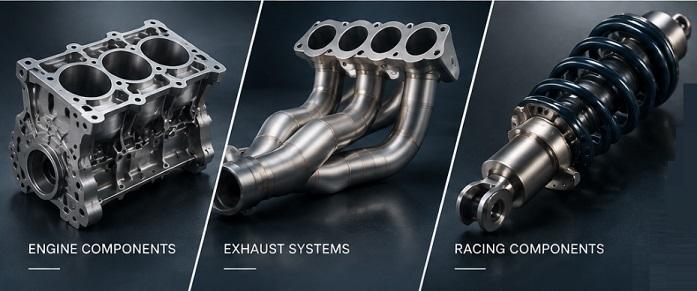
Titanium alloys are used in high-performance automotive components where weight reduction and heat resistance are important, including engine parts, exhaust systems, and racing components.
Marine
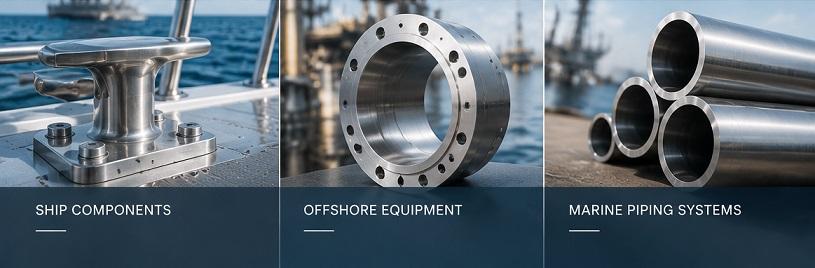
Titanium alloys are suitable for marine environments because of their excellent resistance to seawater corrosion. They are used in ship components, offshore equipment, and corrosion-resistant structures.
Industrial Applications
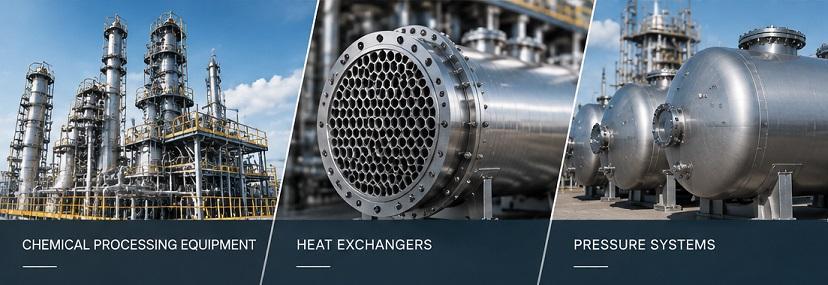
In industrial applications, titanium alloys are used in chemical processing equipment, heat exchangers, pressure systems, and other environments requiring high corrosion resistance and long service life.
With continuous improvements in manufacturing technologies, titanium alloy materials are becoming increasingly important in advanced engineering fields that require lightweight, durable, and high-performance solutions.
Does Titanium Alloy Rust or Tarnish?
Titanium alloy does not rust like iron or ordinary steel. Instead, titanium forms a thin and stable oxide layer on its surface when exposed to oxygen. This protective layer prevents further oxidation and provides excellent corrosion resistance.
Because of this passive oxide layer, titanium alloys can withstand many harsh environments, including seawater, chlorine-containing solutions, and many chemical environments.
Although titanium alloy does not typically rust, its surface can sometimes develop discoloration due to heat exposure, chemical reactions, or surface contamination. This is usually considered surface oxidation rather than rust.
The corrosion resistance of titanium alloys is one of the major reasons they are used in marine engineering, chemical processing equipment, and medical implants.
Is Titanium Malleable, Ductile, or Brittle?
Titanium is generally considered a ductile metal rather than a brittle material. It can deform under stress before breaking, especially in pure titanium and properly processed titanium alloys.
The ductility of titanium alloys depends on composition and microstructure. Alpha titanium alloys usually provide good ductility and weldability, while some high-strength beta alloys may have reduced ductility due to their increased strength.
Titanium is also moderately malleable, meaning it can be shaped through manufacturing processes such as forging and machining. However, titanium alloys can be more difficult to process than aluminum or steel because of their low thermal conductivity and chemical reactivity during machining.
What Are the Disadvantages of Titanium Alloy?
Although titanium alloys provide many advantages, they also have several limitations.
- Higher cost: Titanium materials are more expensive than many common metals because extraction, processing, and machining require specialized methods.
- Difficult machining: Titanium has low thermal conductivity, causing heat to concentrate during machining. This can increase tool wear.
- Lower stiffness compared with steel: Titanium has a lower modulus of elasticity than steel, meaning it is less rigid under the same load.
- Complex manufacturing: Producing high-quality titanium components often requires advanced equipment and careful processing control.
- Limited high-temperature capability compared with some superalloys: Certain nickel-based alloys perform better in extreme temperature environments.
Despite these disadvantages, titanium alloys remain valuable because their combination of low weight, strength, and corrosion resistance is difficult to match.