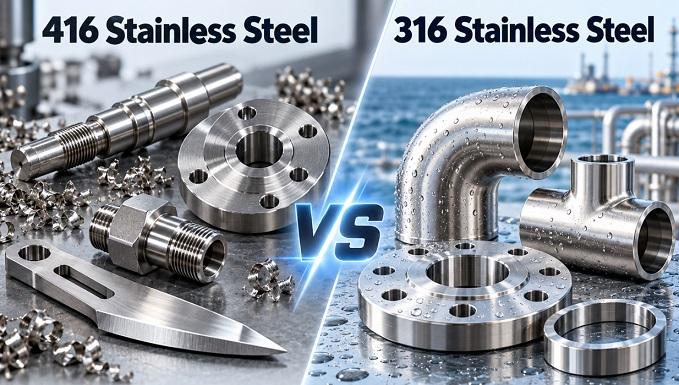
416 and 316 stainless steel are two widely used stainless steel grades with different combinations of mechanical properties, corrosion resistance, machinability, magnetic behavior, and manufacturing characteristics. Although both materials contain chromium and provide resistance to corrosion, they are designed for different engineering requirements.
This article explains the differences between 416 and 316 stainless steel, including their chemical composition, mechanical properties, density, corrosion resistance, thermal properties, electrical conductivity, magnetic properties, cost, machinability, and common applications.
What Is 416 Stainless Steel?
416 stainless steel is a free-machining martensitic stainless steel developed for applications that require efficient machining, good strength, and moderate corrosion resistance. It contains approximately 12–14% chromium and a relatively high sulfur content, which improves its machinability by helping cutting tools produce manageable chips.
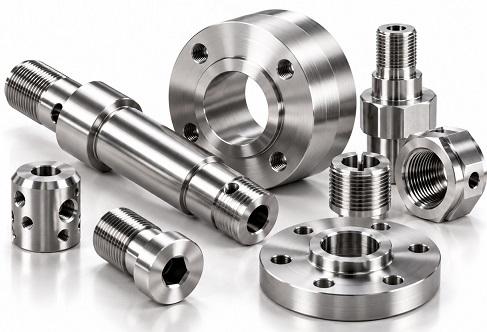
The high sulfur content is one of the defining characteristics of 416 stainless steel. During machining, sulfur-containing inclusions help break chips into smaller pieces and reduce certain cutting difficulties. This makes 416 particularly suitable for high-volume manufacturing processes involving turning, milling, drilling, and automatic screw machining.
Unlike austenitic stainless steels, 416 can be hardened through heat treatment. By controlling the heating, quenching, and tempering processes, manufacturers can adjust its hardness, strength, and wear resistance to suit different applications.
416 stainless steel is commonly supplied as round bars, hexagonal bars, rods, and other forms intended for machining. It is widely used to manufacture shafts, gears, fasteners, valve components, pump parts, and precision-machined mechanical components.
However, its excellent machinability comes with trade-offs. The sulfur additions that improve cutting performance generally reduce corrosion resistance and make welding more difficult compared with many other stainless steel grades. Therefore, 416 is most appropriate when machining efficiency and mechanical performance are more important than maximum corrosion resistance.
What Is 316 Stainless Steel?
316 stainless steel is an austenitic stainless steel known for its excellent corrosion resistance, good formability, and reliable performance in demanding environments. Its composition typically includes approximately 16–18% chromium, 10–14% nickel, and 2–3% molybdenum.
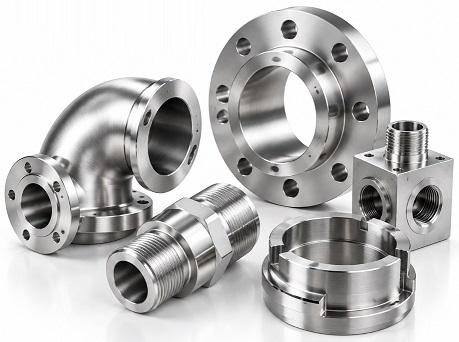
The addition of molybdenum is particularly important because it improves resistance to pitting and crevice corrosion in chloride-containing environments. This makes 316 stainless steel a popular choice for marine equipment, chemical processing systems, food processing equipment, and industrial components exposed to moisture and corrosive substances.
Nickel helps stabilize the austenitic microstructure, contributing to the material's toughness, ductility, and formability. As a result, 316 stainless steel can be formed into sheets, plates, pipes, tubes, and complex fabricated components using established industrial processes.
Unlike 416, standard 316 stainless steel cannot be hardened significantly through conventional quench-and-temper heat treatment. Its strength can be increased through cold working, but it is generally supplied in a solution-annealed condition for applications requiring good corrosion resistance and ductility.
316 stainless steel is also widely used in medical equipment, pharmaceutical manufacturing, architectural components, and marine structures. Although it offers excellent corrosion resistance in many environments, it is not completely immune to corrosion. Severe chloride exposure, stagnant crevices, and elevated temperatures can still cause localized corrosion or chloride stress corrosion cracking.
What Is the Difference Between 416 and 316 Stainless Steel?
The primary difference between 416 and 316 stainless steel is the balance between machinability and corrosion resistance.
416 stainless steel is designed for efficient machining and can be hardened by heat treatment. It is particularly useful for producing large quantities of precision components with relatively complex geometries. Its sulfur content improves cutting performance, but it also limits corrosion resistance and weldability.
316 stainless steel is designed primarily for corrosion resistance, toughness, and fabrication versatility. Its chromium, nickel, and molybdenum content makes it more suitable for wet, marine, chemical, and chloride-containing environments than 416 in many applications.
The following table summarizes the general differences between these two grades.
| Feature | 416 Stainless Steel | 316 Stainless Steel |
|---|---|---|
| Steel family | Martensitic | Austenitic |
| Chromium content | Approximately 12–14% | Approximately 16–18% |
| Nickel content | Usually not intentionally added in significant amounts | Approximately 10–14% |
| Molybdenum content | Optional or limited, depending on specification | Approximately 2–3% |
| Sulfur content | Relatively high to improve machinability | Generally low |
| Density | Approximately 7.7–7.8 g/cm³ | Approximately 8.0 g/cm³ |
| Machinability | Excellent | Moderate; generally more demanding |
| Heat treatment | Can be hardened by quenching and tempering | Cannot be hardened significantly by conventional quench-and-temper treatment |
| Hardness | Can achieve relatively high hardness after heat treatment | Usually lower in the annealed condition; increases through cold work |
| Corrosion resistance | Moderate; lower than 316 in many environments | Generally excellent in a wide range of environments |
| Chloride resistance | Limited | Better resistance to pitting and crevice corrosion, but not immune |
| Magnetic behavior | Magnetic | Generally non-magnetic when annealed; may become slightly magnetic after cold working |
| Weldability | Poor to limited | Generally good |
| Formability | More limited | Good |
| Typical applications | Shafts, gears, fasteners, valve parts | Marine equipment, chemical equipment, food processing systems |
| Relative material cost | Often lower, depending on product form | Often higher, depending on product form |
Chemical Composition of 416 vs 316 Stainless Steel
Chemical composition explains many of the differences between the two stainless steel grades.
416 relies on chromium for corrosion resistance and sulfur for improved machinability. Its carbon content allows it to develop a martensitic structure and respond to hardening heat treatment.
316 uses chromium, nickel, and molybdenum to provide a more corrosion-resistant austenitic alloy. Its relatively low sulfur content supports corrosion performance and fabrication characteristics rather than the enhanced chip-breaking behavior of free-machining grades.
| Chemical Element | 416 Stainless Steel | 316 Stainless Steel |
|---|---|---|
| Chromium (Cr) | Approximately 12–14% | Approximately 16–18% |
| Nickel (Ni) | Usually not intentionally added in significant amounts | Approximately 10–14% |
| Molybdenum (Mo) | Optional or limited, depending on specification | Approximately 2–3% |
| Carbon (C) | Maximum approximately 0.15% in common specifications | Maximum approximately 0.08% in standard 316 |
| Manganese (Mn) | Typically up to approximately 1.25% in common specifications | Typically up to approximately 2% |
| Silicon (Si) | Typically up to approximately 1% | Typically up to approximately 1% |
| Sulfur (S) | Usually at least approximately 0.15% in free-machining specifications | Typically limited to approximately 0.03% |
| Iron (Fe) | Balance | Balance |
Why Chromium Matters
Chromium is the principal alloying element responsible for stainless steel's corrosion resistance. When sufficient chromium is present, a thin passive film forms on the metal surface and helps limit further oxidation.
316 contains more chromium than 416 and also includes molybdenum and nickel. These elements contribute to its better performance in many corrosive environments.
The presence of chromium alone does not determine corrosion resistance. Microstructure, inclusions, surface finish, temperature, and exposure conditions also influence the performance of the finished component.
Why Sulfur Matters
Sulfur is intentionally added to 416 stainless steel to improve machinability. Sulfur-containing inclusions promote chip breaking and help reduce the difficulty of machining long, continuous chips.
This makes 416 attractive for automatic machining operations and high-volume production.
However, sulfur additions can reduce corrosion resistance and impair weldability. The resulting trade-off is central to material selection: 416 prioritizes machining efficiency, while 316 prioritizes corrosion resistance and fabrication versatility.
Mechanical Properties of 416 vs 316 Stainless Steel
Mechanical properties describe how a material responds to forces such as tension, compression, bending, impact, and repeated loading. When comparing 416 and 316 stainless steel, the most important considerations include tensile strength, yield strength, hardness, stiffness, ductility, and wear resistance.
416 stainless steel has an important advantage in applications that require high hardness and strength after heat treatment. Its martensitic structure allows manufacturers to modify its mechanical properties through controlled thermal processing.
316 stainless steel, by comparison, offers excellent ductility and toughness in its annealed condition. It can accommodate substantial deformation during forming and is often preferred for components that require a combination of corrosion resistance and flexibility.
| Mechanical Property | 416 Stainless Steel | 316 Stainless Steel |
|---|---|---|
| Tensile strength | Approximately 500–900 MPa in common conditions; higher values are possible after hardening | Commonly approximately 500–700 MPa in the annealed condition |
| Yield strength | Varies widely with heat treatment; approximately 275 MPa or higher in common annealed specifications | Typically at least approximately 200 MPa in common annealed product specifications |
| Young's modulus | Approximately 200 GPa | Approximately 193–200 GPa |
| Hardness | Can be increased substantially through heat treatment | Typically relatively low in the annealed condition |
| Elongation | Varies by condition; generally lower after hardening | Commonly high, often around 40% or more in suitable annealed products |
| Ductility | Moderate and condition-dependent | Generally excellent in the annealed condition |
| Wear resistance | Can be good after appropriate hardening | Moderate; depends on surface condition and application |
| Impact toughness | Depends strongly on heat treatment and section size | Generally good in the annealed condition |
Tensile Strength and Yield Strength
Tensile strength is the maximum tensile stress a material can withstand before fracture, while yield strength indicates the stress at which permanent deformation begins.
The tensile strength of 416 stainless steel depends strongly on its heat-treated condition. In the annealed state, it offers moderate strength and good machinability. After hardening and tempering, its tensile strength can increase substantially, making it suitable for shafts, mechanical parts, and components that require improved load-bearing capability.
316 stainless steel generally offers moderate tensile strength in its solution-annealed condition. Its strength can be increased through cold working, but this may also reduce ductility and affect its magnetic response.
For components requiring high hardness or a heat-treated martensitic structure, 416 may be the more appropriate choice. For components requiring corrosion resistance, good ductility, and reliable performance under complex loading conditions, 316 is often more suitable.
Young's Modulus and Stiffness
Young's modulus measures a material's resistance to elastic deformation. A higher modulus means that a material generally deforms less under the same stress when geometry and loading conditions are equivalent.
416 and 316 stainless steel have broadly similar elastic moduli, both close to 200 GPa. Consequently, their stiffness is generally comparable when components have the same dimensions and are subjected to the same loading conditions.
The difference in stiffness between the two grades is usually less important than differences in hardness, heat treatment, corrosion resistance, and fabrication requirements.
For precision shafts and machined parts, component diameter, length, geometry, support conditions, and applied load often have a greater influence on deflection than the choice between these two grades.
Hardness and Wear Resistance
Hardness measures resistance to localized indentation and is often relevant to wear, surface damage, and contact performance.
416 stainless steel can be hardened through heat treatment, making it useful for components that experience sliding contact, friction, or repeated mechanical interaction. Properly heat-treated 416 can provide improved wear resistance compared with its annealed condition.
316 stainless steel is generally softer in its annealed condition. Although it provides good toughness and corrosion resistance, it is not normally selected when high hardness is the primary requirement.
However, hardness alone does not determine wear performance. Lubrication, surface finish, contact pressure, mating materials, temperature, and corrosive conditions must also be considered. In applications where corrosion and wear occur simultaneously, selecting a suitable alloy and surface treatment is especially important.
Physical Properties of 416 vs 316 Stainless Steel
Physical properties include density and other characteristics that affect material selection and component design.
416 and 316 stainless steel have similar overall densities, although 316 is generally slightly heavier. The difference is small compared with the differences between steel and lightweight metals such as aluminum or titanium.
The more significant differences between 416 and 316 relate to their microstructures and chemical compositions. These differences affect magnetic behavior, corrosion resistance, machining performance, and heat treatment.
| Physical Property | 416 Stainless Steel | 316 Stainless Steel |
|---|---|---|
| Density | Approximately 7.7–7.8 g/cm³ | Approximately 8.0 g/cm³ |
| Crystal structure at room temperature | Predominantly martensitic | Austenitic |
| Heat treatment response | Can be hardened by conventional heat treatment | Primarily solution annealed; not hardened by conventional quenching |
Density and Weight Difference
Density is the mass of a material per unit volume. Because 416 stainless steel typically has a density of approximately 7.7–7.8 g/cm³ and 316 stainless steel approximately 8.0 g/cm³, a 416 component of identical volume will generally weigh slightly less.
For example, a solid component with a volume of 100 cm³ would weigh approximately 770–780 g if manufactured from 416 stainless steel, compared with approximately 800 g if manufactured from 316 stainless steel.
This difference is relatively small. In most applications, corrosion resistance, machinability, hardness, and material availability are more important selection factors than the modest density difference.
Crystal Structure
The crystal structure is a fundamental distinction between the two grades.
416 stainless steel is martensitic. Its microstructure can be modified through heat treatment to achieve different levels of hardness and strength.
316 stainless steel is austenitic. Its nickel content helps stabilize the austenitic structure at room temperature, contributing to good ductility, toughness, and formability.
These structural differences explain why 416 can be hardened through quenching and tempering, while 316 is typically strengthened through cold working rather than conventional hardening heat treatment.
Thermal Properties of 416 vs 316 Stainless Steel
Thermal properties influence heat transfer, dimensional stability, machining, welding, and the behavior of components exposed to changing temperatures.
416 stainless steel generally has higher thermal conductivity and a lower coefficient of thermal expansion than 316 stainless steel. This means heat can travel through 416 more readily, while 316 generally expands more for a comparable temperature increase.
These differences may be relevant in precision-machined components, heated equipment, and assemblies containing materials with different thermal expansion characteristics.
| Thermal Property | 416 Stainless Steel | 316 Stainless Steel |
|---|---|---|
| Thermal conductivity | 24–25 W/m·K | 14–16 W/m·K |
| Coefficient of thermal expansion | 10–11 µm/m·K | 16–17 µm/m·K |
| Specific heat capacity | Approximately 460 J/kg·K | Approximately 500 J/kg·K |
| Melting range | 1,480–1,530°C | 1,370–1,400°C |
Thermal Conductivity
Thermal conductivity measures how effectively a material transfers heat.
416 stainless steel generally transfers heat more effectively than 316 stainless steel. This can influence the temperature distribution within machined components and affect how heat is managed during cutting or other manufacturing operations.
316 stainless steel's lower thermal conductivity means heat can remain concentrated in a localized region during machining. Combined with its tendency to work-harden, this can increase cutting difficulty if tooling and cutting parameters are not properly selected.
Coefficient of Thermal Expansion
The coefficient of thermal expansion describes the dimensional change of a material as its temperature changes.
316 stainless steel generally has a higher thermal expansion coefficient than 416. As a result, a 316 component may expand more than an equivalent 416 component when both experience the same temperature increase.
This difference can matter in precision assemblies, close-tolerance parts, and equipment operating through repeated heating and cooling cycles.
Engineers should consider the thermal expansion of the entire assembly rather than evaluating each component independently. Differences in expansion between connected materials can create stresses, dimensional changes, and alignment problems.
Melting Temperature and High-Temperature Performance
The melting range of 416 stainless steel is generally higher than that of 316 stainless steel, although the exact ranges depend on composition and material specifications.
However, a higher melting temperature does not automatically mean a material is suitable for higher continuous operating temperatures. Oxidation resistance, creep strength, thermal fatigue, mechanical loading, and the surrounding environment must also be considered.
For applications involving sustained high temperatures, material selection should be based on documented service-temperature limits and high-temperature mechanical properties rather than melting point alone.
Corrosion Resistance of 416 vs 316 Stainless Steel
Corrosion resistance is one of the most important differences between 416 and 316 stainless steel.
Both grades contain chromium, which enables the formation of a thin passive oxide layer that helps protect the underlying metal. However, their alloy compositions differ significantly.
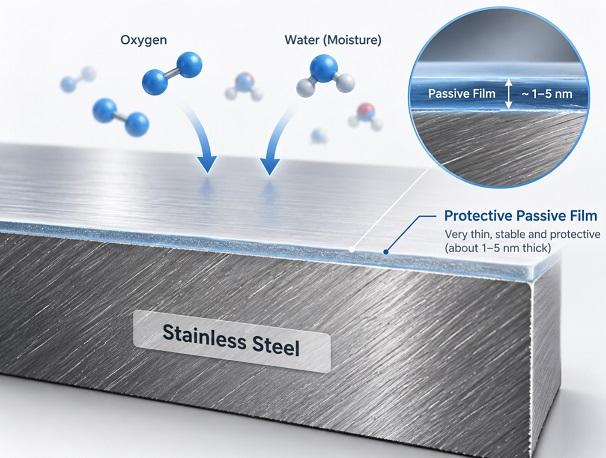
416 contains approximately 12–14% chromium and relatively high sulfur content. While this composition provides useful corrosion resistance in mild environments, it is generally less resistant to aggressive corrosion than 316.
316 contains more chromium and nickel, together with approximately 2–3% molybdenum. Molybdenum improves resistance to pitting and crevice corrosion, particularly in chloride-containing environments.
| Corrosion Property | 416 Stainless Steel | 316 Stainless Steel |
|---|---|---|
| General atmospheric corrosion | Moderate; depends on exposure | Generally good to excellent |
| Fresh water | Suitable in many mild conditions | Generally very good |
| Marine environments | Limited for prolonged or severe exposure | Better suited to many marine applications, but not immune to seawater corrosion |
| Chloride resistance | Relatively limited | Improved resistance to pitting and crevice corrosion |
| Chemical processing | Suitable only for compatible environments | Suitable for many chemicals, subject to compatibility checks |
| Protective passive film | Chromium-rich oxide layer | Chromium-rich oxide layer supported by a more corrosion-resistant alloy composition |
Water and Humid Environments
416 stainless steel can perform satisfactorily in mild atmospheric conditions and certain fresh-water applications. However, its corrosion resistance may be inadequate when components are continuously exposed to moisture, salts, or aggressive cleaning chemicals.
316 stainless steel is generally a better choice for equipment exposed to humidity, frequent washing, and many corrosive industrial environments. Its higher alloy content provides a stronger defense against many forms of localized corrosion.
Chlorides and Seawater
Chloride ions can damage passive films and cause localized corrosion, including pitting and crevice corrosion.
The molybdenum content of 316 improves its resistance to these mechanisms compared with 416 in many chloride-containing environments. For this reason, 316 is commonly used for marine fittings, coastal equipment, and components exposed to salt-containing water.
However, 316 can still experience pitting, crevice corrosion, and chloride stress corrosion cracking under sufficiently severe conditions. Continuous immersion in seawater or exposure to warm, concentrated chlorides may require a more corrosion-resistant alloy.
416 is generally not the preferred choice for prolonged seawater exposure or components that must maintain reliable corrosion performance in chloride-rich environments.
Electrical Properties of 416 vs 316 Stainless Steel
Electrical properties describe how readily a material conducts electricity and how strongly it resists electrical current.
Both 416 and 316 stainless steel conduct electricity, but neither is a preferred material for applications requiring very high electrical conductivity. Copper and aluminum are generally more suitable for electrical conductors.
The electrical resistivity of 416 and 316 differs because of their chemical compositions and microstructures. Exact values also depend on temperature and processing history.
| Electrical Property | 416 Stainless Steel | 316 Stainless Steel |
|---|---|---|
| Electrical conductivity | Low compared with copper and aluminum | Low compared with copper and aluminum |
| Electrical resistivity | Grade- and condition-dependent | Grade- and condition-dependent |
Magnetic Properties of 416 vs 316 Stainless Steel
Magnetic behavior is one of the easiest practical differences to observe between 416 and 316 stainless steel.
416 stainless steel is magnetic because of its martensitic microstructure. It can be attracted to a magnet in both annealed and hardened conditions.
316 stainless steel is generally non-magnetic in its solution-annealed condition because of its austenitic structure. However, cold working, deformation, and certain processing conditions can introduce some magnetic response.
A simple magnet test can provide a useful preliminary indication, but it is not a definitive method of identifying a stainless steel grade.
Applications of 416 Stainless Steel
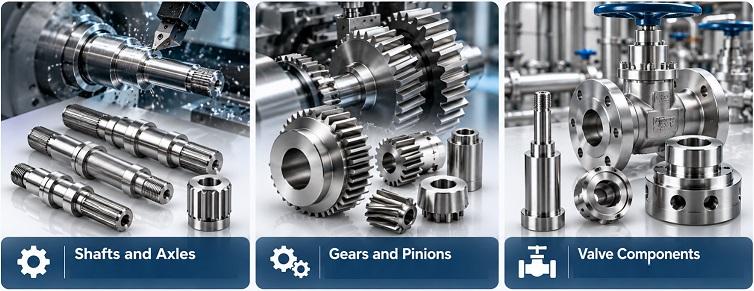
416 stainless steel is widely used in the manufacture of precision-machined components and mechanical parts.
- Shafts and Axles: Used for rotating components where machinability, dimensional accuracy, and suitable mechanical strength are important.
- Gears and Pinions: Can be used for mechanical transmission components when the required hardness and service conditions are compatible with the selected heat treatment.
- Fasteners and Fittings: Suitable for certain screws, fittings, and machined fasteners used in relatively mild environments.
- Valve Components: Used for valve stems, trim, and other parts where machining efficiency is important.
- Pump Components: Suitable for selected pump shafts and machined components that are not exposed to severely corrosive fluids.
- Automatic Screw-Machined Parts: Particularly useful for high-volume production involving turning, drilling, threading, and other machining operations.
416 is generally less suitable for applications involving prolonged seawater exposure, aggressive chloride solutions, or demanding welded assemblies.
Applications of 316 Stainless Steel
316 stainless steel is widely used in industries where corrosion resistance and fabrication versatility are essential.
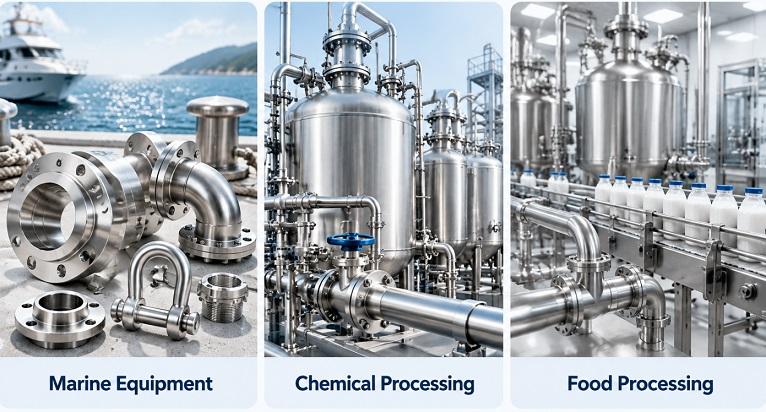
- Marine Equipment: Used for many marine fittings, hardware, and coastal components exposed to salt spray or chloride-containing water, subject to environmental severity.
- Chemical Processing: Used for tanks, piping, fittings, and equipment handling compatible chemicals.
- Food and Beverage Processing: Commonly used for processing equipment, storage vessels, piping, and surfaces that require regular cleaning.
- Pharmaceutical Equipment: Suitable for many process vessels, transfer systems, and fabricated components where corrosion resistance and cleanability are important.
- Medical and Laboratory Equipment: Used for selected instruments, containers, and equipment components when the relevant material and hygiene requirements are satisfied.
- Architectural and Outdoor Components: Suitable for many coastal fittings, exposed hardware, and architectural applications where improved corrosion resistance is needed.
Cost of 416 vs 316 Stainless Steel
Cost is an important factor when choosing between 416 and 316 stainless steel. The most economical option depends not only on the price of the raw material but also on machining time, tooling consumption, fabrication costs, maintenance, and expected service life.
416 is often attractive for high-volume machined components because its free-machining characteristics can improve production efficiency. Shorter machining cycles and reduced cutting difficulties can help lower manufacturing costs.
316 is often more expensive as a raw material because it contains substantial nickel and molybdenum. However, its better corrosion resistance can reduce maintenance, replacement, and downtime costs in demanding environments.
| Cost Factor | 416 Stainless Steel | 316 Stainless Steel |
|---|---|---|
| Raw material cost | Often lower, depending on form and supplier | Often higher because of alloying elements |
| Machining cost | Generally lower for suitable machining operations | Often higher because machining can be more demanding |
| Tooling requirements | Favorable chip breaking and machining productivity | Requires suitable tooling and control of work hardening |
| Welding and fabrication | More difficult to weld | Generally easier to weld using appropriate procedures |
| Corrosion-related maintenance | May be higher in corrosive environments | Often lower in environments compatible with 316 |
| Lifecycle cost | Attractive for efficiently machined parts in suitable environments | Attractive when corrosion resistance and service life are priorities |
For high-volume production of small or medium-sized machined parts, 416 can provide substantial manufacturing advantages. Its chip-breaking behavior and machining productivity can reduce cycle times and improve production efficiency.
For equipment operating in marine, chemical, food processing, or frequently washed environments, 316 may offer better overall value even if the initial purchase price is higher.
Manufacturing and Machinability of 416 vs 316 Stainless Steel
Manufacturing and machinability are among the most significant differences between these two grades.
416 stainless steel is specifically designed for free machining. Its sulfur additions improve chip formation and help make machining operations more predictable. Under appropriate conditions, it can support efficient turning, drilling, threading, and other high-volume operations.
316 stainless steel is generally more difficult to machine. It can work-harden during cutting, and its relatively low thermal conductivity can cause heat to concentrate near the cutting zone. These characteristics require appropriate cutting tools, speeds, feeds, and cooling strategies.
| Manufacturing Property | 416 Stainless Steel | 316 Stainless Steel |
|---|---|---|
| Machinability | Excellent | Moderate to difficult |
| Chip formation | Generally favorable; chips break more readily | Can produce long chips without suitable machining conditions |
| Work hardening | Generally less problematic during machining | Significant consideration during machining |
| Formability | More limited | Generally excellent |
| Welding | Poor to limited | Generally good |
| Heat treatment | Can be hardened and tempered | Commonly solution annealed |
| Best production approach | Precision machining and high-volume turned parts | Fabrication, forming, welding, and corrosion-resistant components |
416 vs 316 Stainless Steel: Which Material Should You Choose?
Choosing between 416 and 316 stainless steel depends on the most important performance requirements of the application.
- Choose 416 stainless steel when machinability, moderate corrosion resistance, or manufacturing efficiency is a major consideration. 416 is a free-machining martensitic stainless steel that is particularly useful for precision-machined components, shafts, gears, valves, and fasteners where ease of machining and production efficiency are important.
- Choose 316 stainless steel when corrosion resistance, chemical durability, or performance in harsh environments is a major consideration. 316 is an austenitic stainless steel with excellent resistance to corrosion, particularly in chloride-containing environments. It is widely used in marine equipment, chemical processing, medical equipment, food processing, and other applications where long-term corrosion resistance is essential.
The final selection should be based on the specific material specification, operating temperature, mechanical loads, corrosion environment, manufacturing process, and expected service life.