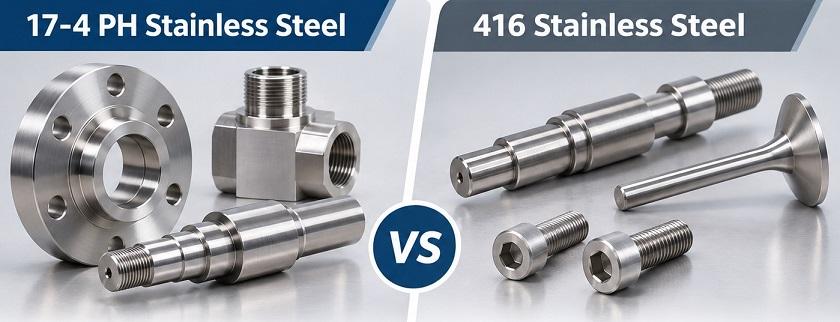
17-4 stainless steel and 416 stainless steel are two widely used martensitic stainless steel grades with different combinations of mechanical properties, physical characteristics, corrosion resistance, machinability, heat treatment response, and manufacturing performance. Although both materials belong to the martensitic stainless steel family, they are designed for different engineering requirements.
This article explains the differences between 17-4 stainless steel and 416 stainless steel, including their chemical composition, strengthening mechanisms, mechanical properties, density, corrosion resistance, thermal properties, electrical conductivity, machinability, cost, and common applications.
What Is 17-4 Stainless Steel?
17-4 stainless steel, also known as 17-4 PH, UNS S17400, or Type 630, is a precipitation-hardening martensitic stainless steel. It contains approximately 17% chromium and 4% nickel, together with copper and niobium, which contribute to its precipitation-hardening characteristics.
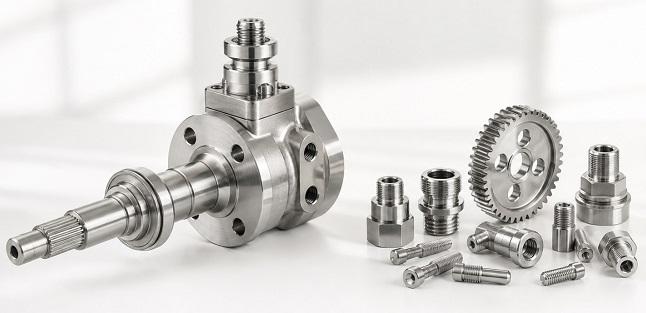
Unlike conventional martensitic stainless steels that rely primarily on carbon content and quenching to achieve high hardness, 17-4 PH develops its mechanical strength through a controlled aging process. This allows manufacturers to obtain high strength and hardness while maintaining useful corrosion resistance and dimensional stability.
One of the most important characteristics of 17-4 PH is its combination of high tensile strength, good corrosion resistance, and relatively straightforward heat treatment. The material is commonly supplied in the solution-treated Condition A and subsequently aged to achieve the required mechanical properties.
Common aging conditions include H900, H1025, H1075, and H1150. H900 generally provides the highest strength and hardness, while higher-temperature aging conditions usually provide improved toughness and ductility at the expense of some strength.
17-4 PH is widely used in aerospace components, pump shafts, valves, chemical processing equipment, oil and gas equipment, and high-strength mechanical components where both strength and corrosion resistance are important.
What Is 416 Stainless Steel?
416 stainless steel is a free-machining martensitic stainless steel containing approximately 12–14% chromium. It is specifically designed to provide excellent machinability while maintaining the ability to achieve higher strength and hardness through heat treatment.
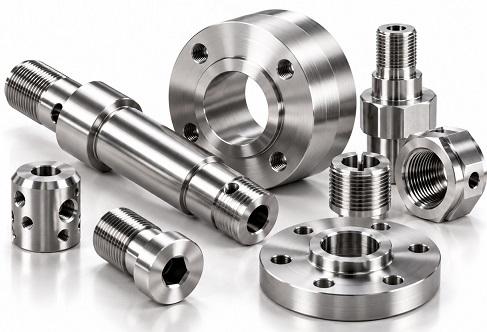
The most distinctive feature of 416 stainless steel is its relatively high sulfur content. Sulfur is intentionally added to improve machining performance by promoting the formation of manganese sulfide inclusions. These inclusions help break chips during cutting and reduce machining resistance.
As a result, 416 is considered one of the most easily machined stainless steel grades. It is particularly suitable for automatic screw machining, CNC turning, precision components, and high-volume production involving complex machined parts.
However, the sulfur additions that improve machinability also reduce corrosion resistance, toughness, weldability, and formability compared with some other stainless steel grades.
416 stainless steel can be hardened through conventional quenching and tempering processes. Its final strength and hardness depend on the heat treatment temperature, cooling conditions, and required mechanical performance.
Common applications include shafts, gears, valves, pump components, fasteners, and precision-machined parts where manufacturing efficiency is a major consideration.
What Is the Difference Between 17-4 PH and 416 Stainless Steel?
17-4 stainless steel and 416 stainless steel differ mainly in their strengthening mechanisms, chemical composition, mechanical performance, corrosion resistance, and machinability.
17-4 PH is a precipitation-hardening stainless steel designed to provide high strength, good corrosion resistance, and a balanced combination of mechanical properties. It is particularly useful in applications where components must withstand substantial mechanical loads and corrosive environments.
416 stainless steel, on the other hand, is a free-machining martensitic stainless steel designed primarily for manufacturing efficiency. Its sulfur content provides excellent machinability, making it attractive for components that require extensive turning, drilling, and other machining operations.
In general, 17-4 PH provides higher strength in its common high-strength aging conditions and better corrosion resistance, while 416 offers superior machinability and is often more economical for high-volume machined components.
The following table summarizes the general differences between the two stainless steel grades.
| Feature | 17-4 Stainless Steel | 416 Stainless Steel |
|---|---|---|
| Material Type | Precipitation-hardening martensitic stainless steel | Free-machining martensitic stainless steel |
| UNS Designation | S17400 | S41600 |
| Common Designation | Type 630, 17-4 PH | Type 416 |
| Chromium Content | 15–17.5% | 12–14% |
| Nickel Content | 3–5% | Generally no intentional addition |
| Copper Content | 3–5% | Generally no intentional addition |
| Sulfur Content | 0.03% maximum | Approximately 0.15% minimum |
| Density | Approximately 7.75 g/cm³ | Approximately 7.75–7.8 g/cm³ |
| Strength | Very high after precipitation hardening | Moderate to high after quenching and tempering |
| Hardness | Approximately 28–47 HRC depending on condition | Varies with heat treatment; commonly 26–42 HRC |
| Stiffness | Approximately 196 GPa | Approximately 200 GPa |
| Corrosion Resistance | Generally good | Moderate; lower than 17-4 PH |
| Machinability | Moderate | Excellent |
| Heat Treatment | Precipitation hardening | Quenching and tempering |
| Weldability | Generally good with appropriate procedures | Poor |
| Magnetic Properties | Magnetic | Magnetic |
| Cost | Generally higher | Generally lower |
| Common Applications | Aerospace, oil and gas, valves, high-strength components | Shafts, gears, automatic screw-machine parts, precision components |
Chemical Composition of 17-4 PH vs 416
Chemical composition is one of the most important differences between 17-4 PH and 416 stainless steel. Their alloying elements determine their corrosion resistance, mechanical properties, heat treatment response, and machinability.
17-4 PH contains chromium, nickel, copper, and niobium. These elements provide corrosion resistance and enable precipitation hardening during aging.
416 stainless steel contains a higher sulfur content than conventional stainless steel grades. This addition improves machining performance but reduces some other material properties.
| Chemical Element | 17-4 Stainless Steel | 416 Stainless Steel |
|---|---|---|
| Carbon (C) | 0.07% maximum | 0.15% maximum |
| Chromium (Cr) | 15.0–17.5% | 12.0–14.0% |
| Nickel (Ni) | 3.0–5.0% | Generally no intentional addition |
| Copper (Cu) | 3.0–5.0% | Generally no intentional addition |
| Manganese (Mn) | 1.0% maximum | 1.25% maximum |
| Silicon (Si) | 1.0% maximum | 1.0% maximum |
| Sulfur (S) | 0.03% maximum | Approximately 0.15% minimum |
| Phosphorus (P) | 0.04% maximum | 0.06% maximum |
| Niobium + Tantalum | 0.15–0.45% | Not normally specified |
| Iron (Fe) | Balance | Balance |
Chromium Content
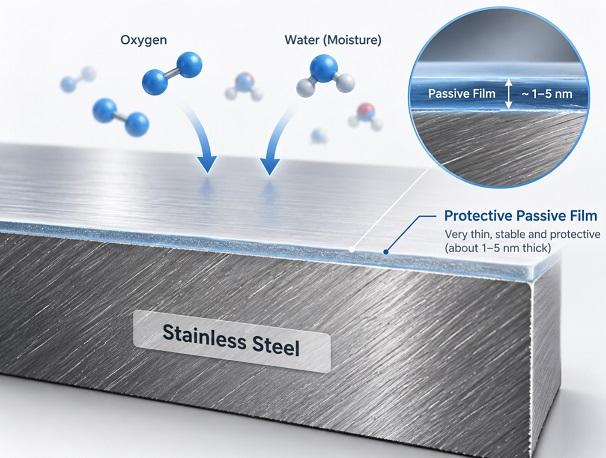
Chromium is the primary element responsible for the corrosion resistance of stainless steel. It promotes the formation of a thin passive oxide layer that protects the underlying metal from corrosion.
17-4 PH contains approximately 15–17.5% chromium, while 416 contains approximately 12–14% chromium.
The higher chromium content of 17-4 PH contributes to its generally better corrosion resistance. However, corrosion behavior also depends on microstructure, surface condition, heat treatment, and environmental exposure.
Nickel and Copper Content
17-4 PH contains approximately 3–5% nickel and 3–5% copper. These elements are important to the alloy's mechanical performance and precipitation-hardening response.
Copper contributes to the formation of strengthening precipitates during aging, allowing 17-4 PH to achieve high mechanical strength without relying exclusively on high carbon content.
416 stainless steel does not depend on copper precipitation hardening. Its strength is primarily developed through conventional martensitic heat treatment.
Sulfur Content
Sulfur is the most distinctive compositional difference between these grades.
Sulfur is intentionally added to 416 stainless steel to improve machinability. Sulfur-containing inclusions promote chip breaking and help reduce the difficulty of machining long, continuous chips. This makes 416 attractive for automatic machining operations and high-volume production.
17-4 PH has a much lower sulfur content, which helps maintain better toughness and corrosion performance but does not provide the same free-machining characteristics.
Mechanical Properties of 17-4 PH vs 416
Mechanical properties describe how materials behave when subjected to external forces, including tension, compression, bending, impact, and repeated loading. These properties are particularly important when selecting stainless steel for structural components, rotating machinery, pressure-containing parts, and precision engineering applications.
Both 17-4 PH and 416 stainless steel can achieve relatively high mechanical strength through heat treatment. However, their strengthening mechanisms are different.
17-4 PH achieves high strength through precipitation hardening, while 416 stainless steel develops strength primarily through martensitic transformation and tempering.
17-4 PH generally offers a stronger combination of tensile strength, yield strength, and corrosion resistance in high-performance applications. Meanwhile, 416 provides a useful combination of hardness and machinability, making it attractive for machined mechanical components.
| Mechanical Property | 17-4 Stainless Steel | 416 Stainless Steel |
|---|---|---|
| Tensile Strength | 930–1,380 MPa depending on aging condition | 620–1,035 MPa in common annealed and Condition T conditions; higher values possible with other tempering conditions |
| Yield Strength | 725–1,275 MPa depending on aging condition | 275–895 MPa depending on condition |
| Young's Modulus | Approximately 196 GPa | 200–205 GPa |
| Hardness | 28–47 HRC depending on aging condition | 26–42 HRC depending on heat treatment |
| Elongation | 5–17% depending on condition | 5–30% depending on condition |
| Fatigue Performance | Generally good in properly designed and processed components | Depends strongly on surface condition, heat treatment, and sulfur inclusions |
| Fracture Toughness | Generally good, particularly in higher-temperature aging conditions | More limited in some conditions due to its free-machining microstructure |
Mechanical Properties of Common 17-4 PH and 416 Conditions
Comparing specific heat treatment conditions provides a more practical understanding of the mechanical differences between these materials.
For 17-4 PH, H900 is commonly selected when high strength and hardness are the primary requirements. H1025 provides a more balanced combination of strength and toughness, while H1150 is often considered when improved toughness and ductility are more important than maximum strength.
For 416 stainless steel, annealed material is commonly used when excellent machining performance is required. Hardened and tempered conditions are selected when the finished component requires higher strength and wear resistance.
| Grade and Condition | Tensile Strength | Yield Strength | Hardness |
|---|---|---|---|
| 17-4 PH (H900) | Approximately 1,310 MPa | Approximately 1,170 MPa | 40–44 HRC |
| 17-4 PH (H1025) | Approximately 1,070 MPa | Approximately 1,000 MPa | 35–38 HRC |
| 17-4 PH (H1150) | Approximately 930 MPa | Approximately 725 MPa | 28–33 HRC |
| 416 (Annealed) | 515–620 MPa | 275–310 MPa | Varies by product condition |
| 416 (Condition T) | 890–1,035 MPa | 760–895 MPa | 26–32 HRC |
Tensile Strength and Yield Strength
Tensile strength represents the maximum stress a material can withstand before breaking, while yield strength indicates the stress level at which permanent deformation begins.
17-4 PH is particularly attractive for applications requiring high tensile and yield strength. In the H900 condition, it can achieve tensile strength of approximately 1,310 MPa and yield strength of approximately 1,170 MPa.
416 stainless steel can also achieve high strength after hardening and tempering. However, its strength levels depend strongly on the selected heat treatment condition, and its overall mechanical performance is generally less balanced than that of 17-4 PH in demanding corrosion-resistant applications.
Therefore, 17-4 PH is generally preferred for highly loaded components where strength and corrosion resistance must be combined, while 416 is suitable for less demanding applications where machining efficiency is important.
Young's Modulus and Stiffness
Young's modulus measures a material's resistance to elastic deformation. A higher modulus indicates greater stiffness under the same loading conditions and geometry.
17-4 PH stainless steel has a Young's modulus of approximately 196 GPa, while 416 stainless steel typically has a modulus of approximately 200–205 GPa.
The difference is relatively small, meaning both materials provide similar elastic stiffness. In most engineering applications, their stiffness difference is less important than their differences in strength, corrosion resistance, and machinability.
Hardness and Wear Resistance
Hardness describes a material's resistance to indentation, scratching, and localized deformation. It is particularly important for shafts, gears, valve components, and other parts exposed to friction or repeated contact.
17-4 PH can achieve high hardness through precipitation hardening. The H900 condition provides high hardness and strength, making it suitable for many high-performance mechanical applications.
416 stainless steel can also achieve substantial hardness through quenching and tempering. Its hardness can be adjusted depending on the required combination of strength, wear resistance, and toughness.
However, hardness alone does not determine wear resistance. Surface finish, lubrication, contact pressure, microstructure, and operating conditions must also be considered.
Fatigue Strength
Fatigue strength describes a material's ability to withstand repeated loading cycles without failure.
17-4 PH is widely used in components subjected to cyclic mechanical loading because of its high strength and useful corrosion resistance. Aerospace fittings, pump shafts, valve components, and mechanical parts are examples of applications where fatigue performance is important.
416 stainless steel can also provide useful fatigue performance, particularly in properly designed and heat-treated components. However, its sulfur-containing inclusions can influence fatigue crack initiation, especially when components are exposed to cyclic loading or corrosive environments.
For demanding fatigue applications, the exact heat treatment, surface finish, geometry, and loading spectrum should be evaluated rather than relying only on nominal tensile strength.
Physical Properties of 17-4 PH vs 416
Physical properties describe the basic characteristics of a material, including density, weight, and other properties that influence its behavior during manufacturing and service.
17-4 PH and 416 stainless steel have relatively similar densities because both are primarily iron-based stainless steel alloys. Their physical properties are also broadly comparable, although differences in chemical composition and microstructure can influence thermal and electrical performance.
Both 17-4 PH and 416 stainless steel are generally magnetic because of their martensitic microstructures. 17-4 PH is magnetic in its common heat-treated conditions. Similarly, 416 stainless steel exhibits magnetic behavior in both annealed and hardened conditions.
| Physical Property | 17-4 Stainless Steel | 416 Stainless Steel |
|---|---|---|
| Density | Approximately 7.75 g/cm³ | Approximately 7.75–7.8 g/cm³ |
| Weight Difference | Similar to 416 | Similar to 17-4 PH |
| Crystal Structure | Martensitic with precipitation-hardening characteristics | Martensitic |
| Magnetic Behavior | Magnetic | Magnetic |
| Surface Characteristics | Good potential for corrosion-resistant finishes | Good machinability and finishing potential |
Density and Weight Difference
Density describes the mass of a material per unit volume. It is important when calculating component weight, evaluating structural loads, and designing equipment where overall mass is a concern.
17-4 PH has a density of approximately 7.75 g/cm³, while 416 stainless steel typically has a density of approximately 7.75–7.8 g/cm³. This means the weight difference between the two grades is very small for components with identical dimensions.
Unlike comparisons between stainless steel and titanium, selecting 17-4 PH instead of 416 does not provide a significant weight reduction. Engineers generally choose between these grades based on mechanical performance, corrosion resistance, machinability, and cost rather than density.
Dimensional Stability
Dimensional stability is important for precision-machined components, especially when they must maintain tight tolerances during heat treatment and service.
17-4 PH is often machined in the solution-treated Condition A and subsequently aged. This aging process generally produces relatively small dimensional changes compared with some conventional hardening processes.
416 stainless steel may experience dimensional changes and distortion during quenching and tempering, depending on component geometry, material condition, and heat treatment procedures.
For precision components, manufacturers should consider machining allowances, heat treatment distortion, residual stresses, and final finishing operations before selecting either material.
Thermal Properties of 17-4 PH vs 416
Thermal properties describe how materials respond to temperature changes, including heat transfer, thermal expansion, specific heat capacity, and melting behavior.
17-4 PH and 416 stainless steel have relatively similar thermal properties because both are iron-based martensitic stainless steels. However, their thermal conductivity and thermal expansion values are not identical.
These properties can influence machining, heat treatment, dimensional stability, and thermal management in engineering applications.
| Thermal Property | 17-4 Stainless Steel | 416 Stainless Steel |
|---|---|---|
| Thermal Conductivity | 17.8–18.3 W/m·K | 24.9–25.1 W/m·K |
| Coefficient of Thermal Expansion | 10.8–11.3 µm/m·K | 9.9–10.8 µm/m·K |
| Specific Heat Capacity | Approximately 460 J/kg·K | Approximately 460 J/kg·K |
| Melting Temperature | 1,404–1,440°C | 1,480–1,530°C |
| Heat Treatment | Precipitation aging | Quenching and tempering |
Thermal Conductivity
Thermal conductivity measures how efficiently a material transfers heat.
17-4 PH has a typical thermal conductivity of approximately 17.8–18.3 W/m·K near room temperature to moderate temperatures, depending on the measurement condition. 416 stainless steel generally has higher thermal conductivity, approximately 25 W/m·K near room temperature.
This means 416 can transfer heat more effectively than 17-4 PH under comparable conditions. The difference may influence machining behavior, thermal management, and manufacturing processes. However, actual heat transfer also depends on component geometry, surface conditions, temperature, and surrounding materials.
Coefficient of Thermal Expansion
The coefficient of thermal expansion describes how much a material expands or contracts when its temperature changes.
17-4 PH has a typical thermal expansion coefficient of approximately 10.8–11.3 µm/m·K over commonly referenced temperature ranges. 416 stainless steel has a typical value of approximately 9.9–10.8 µm/m·K.
Both materials have relatively low thermal expansion compared with many other engineering materials. The difference is generally modest but may become important in precision assemblies operating across a wide temperature range.
Specific Heat Capacity
Specific heat capacity measures the amount of heat energy required to increase the temperature of a material by one degree.
Both 17-4 PH and 416 stainless steel have specific heat capacities of approximately 460 J/kg·K under commonly referenced conditions. This means their heat storage characteristics are relatively similar when equal masses of material are compared.
Melting Temperature
The melting temperature represents the range at which a material changes from a solid to a liquid.
17-4 PH generally has a melting range of approximately 1,404–1,440°C, while 416 stainless steel has a typical melting range of approximately 1,480–1,530°C.
Although melting temperature is useful for understanding material behavior, it should not be treated as the maximum allowable service temperature. Long-term operating limits depend on oxidation, strength retention, creep behavior, and the specific engineering environment.
Corrosion Resistance of 17-4 PH vs 416
Corrosion resistance describes a material's ability to withstand chemical and electrochemical degradation when exposed to moisture, salts, acids, and other corrosive environments. Corrosion resistance is one of the most important differences between 17-4 PH and 416 stainless steel.
17-4 PH generally provides better corrosion resistance than 416 stainless steel because it contains more chromium and does not require the high sulfur additions used in free-machining stainless steel.
17-4 PH forms a protective chromium-rich passive oxide layer that helps prevent further corrosion. It performs well in many atmospheric environments, fresh water applications, and moderately corrosive industrial environments.
However, 17-4 PH should not be considered immune to corrosion. It may experience pitting, crevice corrosion, or stress corrosion cracking under certain chloride-containing or aggressive environmental conditions.
416 stainless steel provides useful corrosion resistance in relatively mild environments. It can perform well in atmospheric exposure, fresh water, and some industrial environments, but its sulfur-containing inclusions can reduce resistance to localized corrosion.
The following table summarizes their general corrosion characteristics.
| Corrosion Property | 17-4 Stainless Steel | 416 Stainless Steel |
|---|---|---|
| General Corrosion Resistance | Good | Moderate |
| Atmospheric Corrosion Resistance | Good | Good in relatively mild environments |
| Fresh Water Resistance | Generally good | Generally good, depending on conditions |
| Seawater Resistance | Limited; not generally preferred for prolonged exposure | Poor for demanding seawater service |
| Chloride Resistance | Limited under aggressive conditions | Generally poor |
| Chemical Resistance | Good in selected environments | More limited |
| Pitting Resistance | Generally better | Lower |
| Protective Oxide Layer | Chromium-rich passive layer | Chromium-rich passive layer affected by sulfur inclusions |
Electrical Properties of 17-4 PH vs 416
Electrical properties describe how easily a material allows electric current to flow. These characteristics are important in electrical equipment, sensors, industrial machinery, grounding components, and electromagnetic systems.
Both 17-4 PH and 416 stainless steel are electrical conductors, but neither is commonly selected when high electrical conductivity is the primary requirement. Their electrical resistance is relatively high compared with copper and aluminum.
| Electrical Property | 17-4 Stainless Steel | 416 Stainless Steel |
|---|---|---|
| Electrical Resistivity | 0.75–0.98 µΩ·m | 0.55–0.57 µΩ·m |
| Electrical Conductivity | Relatively low | Relatively low |
Electrical Resistivity
Electrical resistivity measures how strongly a material resists the flow of electric current.
17-4 PH generally has electrical resistivity of approximately 0.75–0.98 µΩ·m, depending on the material condition. 416 stainless steel typically has electrical resistivity of approximately 0.55–0.57 µΩ·m.
Therefore, 416 generally offers lower electrical resistivity than 17-4 PH. However, both materials have substantially lower electrical conductivity than common electrical conductor materials such as copper and aluminum.
For applications requiring electrical conductivity, engineers should evaluate the complete electrical design rather than selecting a stainless steel grade based on mechanical properties alone.
Heat Treatment of 17-4 PH vs 416
Heat treatment is essential for controlling the mechanical properties of both 17-4 PH and 416 stainless steel. However, their heat treatment processes are fundamentally different.
17-4 PH uses precipitation hardening, while 416 relies primarily on conventional martensitic hardening through quenching and tempering.
| Heat Treatment Feature | 17-4 Stainless Steel | 416 Stainless Steel |
|---|---|---|
| Main Strengthening Mechanism | Precipitation hardening | Martensitic transformation |
| Common Starting Condition | Solution-treated Condition A | Annealed |
| Hardening Process | Controlled aging | Austenitizing and quenching |
| Tempering or Aging | Aging treatment | Tempering |
| Distortion Considerations | Generally relatively low during aging | Quenching distortion may require consideration |
| Property Adjustment | Different aging temperatures | Different quenching and tempering conditions |
Heat Treatment of 17-4 PH Stainless Steel
17-4 PH is commonly supplied in the solution-treated Condition A. It is then aged at a controlled temperature to achieve the required mechanical properties.
Common aging conditions include:
| Condition | Typical Aging Temperature | General Characteristics |
|---|---|---|
| H900 | 482°C | Highest strength and hardness among common conditions |
| H925 | 496°C | High strength with slightly different toughness characteristics |
| H1025 | 552°C | Balanced strength and toughness |
| H1075 | 579°C | Reduced strength with improved ductility |
| H1100 | 593°C | Improved toughness and ductility |
| H1150 | 621°C | Lower strength and higher toughness |
The aging process creates fine strengthening precipitates within the martensitic matrix, increasing the material's strength and hardness.
One major advantage of this process is that high mechanical strength can be achieved without requiring the same conventional quenching process used for many martensitic stainless steels.
Heat Treatment of 416 Stainless Steel
416 stainless steel is commonly hardened by heating it to an appropriate austenitizing temperature, followed by quenching and tempering.
Quenching transforms the microstructure into a harder martensitic structure, while tempering helps adjust hardness, strength, and toughness. The final properties depend on the selected austenitizing temperature, cooling rate, tempering temperature, and material dimensions.
416 can achieve high hardness, but its toughness and corrosion performance must be considered when selecting the final heat treatment condition.
Applications of 17-4 Stainless Steel
17-4 PH is widely used in industries that require a combination of high strength, corrosion resistance, and dimensional stability.
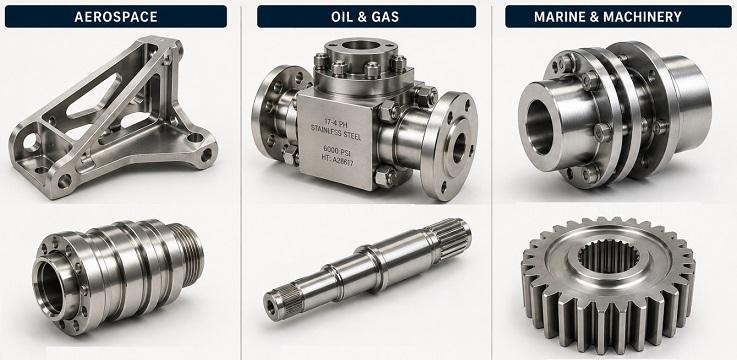
- Aerospace Industry: 17-4 PH is used for aircraft structural components, fittings, shafts, fasteners, and other high-strength parts where mechanical performance and corrosion resistance are important.
- Oil and Gas Industry: The material is used for valve components, pump shafts, fittings, and selected oilfield equipment operating in demanding industrial environments.
- Chemical Processing: 17-4 PH is used in equipment components, mechanical parts, and fittings exposed to selected chemical environments.
- Marine Equipment: It is used for certain marine mechanical components where its strength and moderate corrosion resistance are suitable for the service environment.
- Food Processing Equipment: Selected components and machinery parts use 17-4 PH because of its mechanical properties and corrosion resistance.
- Industrial Machinery: High-strength shafts, gears, couplings, and other precision mechanical components can be manufactured from 17-4 PH.
Applications of 416 Stainless Steel
416 stainless steel is widely used in manufacturing applications where excellent machinability and moderate corrosion resistance are sufficient.
- Automotive Industry: 416 is used for shafts, fasteners, precision-machined fittings, and other automotive components requiring efficient machining.
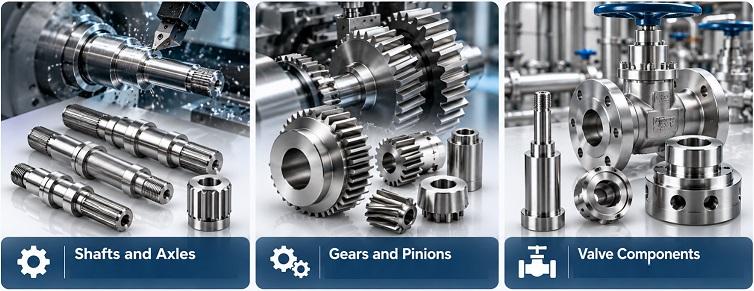
- Pump and Valve Industry: The material is used for pump shafts, valve stems, valve components, and mechanical parts operating in relatively mild environments.
- Machinery Manufacturing: 416 is suitable for gears, pins, bushings, shafts, and other machined mechanical components.
- Automatic Screw Machining: Its excellent chip-breaking characteristics make it suitable for high-volume production of small precision components.
- Industrial Equipment: The material is used in mechanical fittings, connectors, and other parts where machinability and cost efficiency are important.
- General Engineering: 416 is commonly selected for components requiring moderate corrosion resistance and good machining productivity.
Machinability of 17-4 PH vs 416
Machinability is one of the most important differences between these two materials and often determines which grade is selected for high-volume manufacturing.
416 stainless steel is specifically designed for excellent machinability, while 17-4 PH generally requires more demanding machining operations.
416 contains sulfur additions that promote chip breaking and improve cutting performance. This makes it particularly suitable for automatic screw machines, CNC turning, drilling, and the production of large quantities of precision components.
17-4 PH does not contain the same level of free-machining additives. Its machinability depends heavily on the supplied condition, hardness, and machining process.
The following table compares their general manufacturing characteristics.
| Manufacturing Property | 17-4 Stainless Steel | 416 Stainless Steel |
|---|---|---|
| Machinability | Moderate | Excellent |
| Chip Formation | More demanding | Generally easier chip breaking |
| CNC Turning | Good with appropriate tooling | Excellent |
| Drilling | Requires suitable cutting conditions | Generally easier |
| Grinding | Good | Good |
| Surface Finishing | Good | Good |
| Welding | Generally good with appropriate procedures | Poor |
| Formability | Limited to moderate | Limited |
| Manufacturing Cost | Generally higher | Generally lower for machined parts |
Cost of 17-4 PH vs 416
Cost is an important factor when selecting stainless steel for engineering and manufacturing applications.
17-4 PH is generally more expensive than 416 stainless steel because of its more complex alloy composition, additional alloying elements, precipitation-hardening requirements, and typically higher material processing costs.
416 is generally more economical, especially for components produced through high-volume machining. Its excellent machinability can reduce production time and improve manufacturing efficiency.
However, material price alone does not determine the total cost of a finished component. Heat treatment, machining time, surface finishing, inspection, corrosion protection, and expected service life must also be considered.
| Cost Factor | 17-4 Stainless Steel | 416 Stainless Steel |
|---|---|---|
| Raw Material Cost | Generally higher | Generally lower |
| Alloying Cost | Higher due to nickel, copper, and niobium | Lower alloying complexity |
| Machining Cost | Generally higher | Generally lower |
| Heat Treatment Cost | Requires precipitation aging | Requires conventional hardening when applicable |
| Welding Cost | Moderate with qualified procedures | Potentially higher due to welding difficulties |
| Maintenance Cost | Can be lower in suitable corrosive environments | May require more maintenance in corrosive environments |
| Overall Manufacturing Cost | Often higher | Often lower for machined components |
17-4 PH and 416 Stainless Steel: Which Material Should You Choose?
Choosing between 17-4 PH and 416 stainless steel depends on the mechanical requirements, corrosion environment, manufacturing process, production volume, and expected service life of the component.
Both materials can provide useful strength and hardness, but their advantages are different.
- Choose 17-4 PH when high strength, better corrosion resistance, and balanced mechanical properties are the main priorities. It is particularly suitable for aerospace components, high-strength shafts, pump parts, industrial valves, and other applications where mechanical performance is more important than minimizing machining costs.
- Choose 416 stainless steel when excellent machinability, lower production cost, and efficient high-volume manufacturing are the main priorities. It is particularly suitable for automatic screw-machine components, precision shafts, gears, fittings, and other machined parts operating in relatively mild environments.
For applications involving aggressive chemicals, seawater, elevated temperatures, or severe cyclic loading, additional material evaluation is necessary. Alternative stainless steel grades or specialized corrosion-resistant alloys may provide better performance.