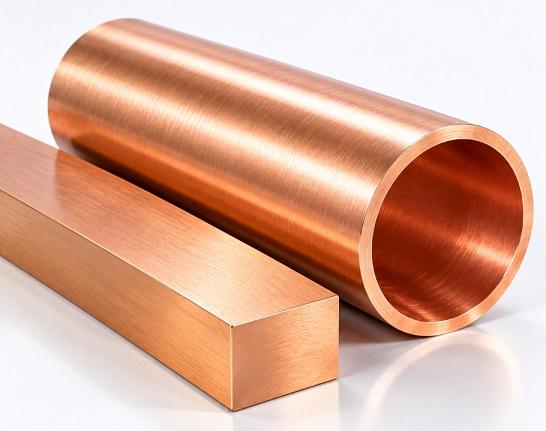
Copper alloy is a metallic material produced by combining copper with other elements to improve its mechanical, physical, and chemical properties. This article provides a comprehensive overview of copper alloys, including their types, common grades, mechanical properties, thermal characteristics, electrical conductivity, corrosion resistance, cost, and common applications.
What Is Copper Alloy?
A copper alloy is an alloy made by combining copper with one or more additional elements to achieve specific performance characteristics. Common alloying elements include zinc, tin, aluminum, nickel, silicon, phosphorus, and beryllium. These elements modify the strength, hardness, ductility, corrosion resistance, electrical conductivity, and thermal performance of copper.
Pure copper is widely valued for its excellent electrical and thermal conductivity, corrosion resistance, and formability. However, pure copper has relatively low strength and hardness compared with many engineering metals. By introducing carefully controlled alloying elements, manufacturers can produce copper alloys that are better suited to structural components, wear-resistant parts, marine equipment, electrical contacts, and precision-machined products.
Copper alloys are widely used in electrical engineering, automotive manufacturing, aerospace equipment, plumbing systems, marine applications, chemical processing, and industrial machinery. The main advantage of copper alloys is their ability to combine useful conductivity with improved strength, corrosion resistance, and manufacturability.
The properties of a copper alloy depend on its chemical composition, microstructure, manufacturing process, and temper or heat-treatment condition. For example, brass offers good formability and machinability, while beryllium copper can achieve high strength and fatigue resistance after suitable heat treatment. Copper-nickel alloys are especially useful in seawater environments because of their excellent corrosion resistance.
Properties of Copper Alloy
Copper alloys are known for their versatile combination of physical, mechanical, electrical, and chemical properties. Although individual grades can differ significantly, several general properties explain their widespread use in engineering applications.
- Electrical conductivity: Many copper alloys conduct electricity effectively, making them suitable for electrical connectors, terminals, switches, and conductive components. Conductivity generally decreases as more alloying elements are added.
- Thermal conductivity: Copper alloys transfer heat efficiently compared with many stainless steels and nickel-based alloys. They are widely used in heat exchangers, cooling systems, and thermal management equipment.
- Corrosion resistance: Many copper alloys perform well in atmospheric, freshwater, and selected marine environments. Their corrosion resistance depends on alloy composition and exposure conditions.
- Good formability: Brass and several other copper alloys can be rolled, drawn, stamped, and formed into complex shapes.
- Wear resistance: Certain copper alloys, including aluminum bronze and beryllium copper, offer good wear performance in appropriately designed applications.
- Machinability: Some copper alloys machine efficiently and produce good surface finishes, although machinability differs considerably between free-machining brass and high-strength copper alloys.
- Non-sparking characteristics: Selected copper alloys are used for tools and components where reducing mechanical sparking is important. Their suitability must be verified for the particular hazardous environment.
Important copper alloy properties include tensile strength, yield strength, elongation, hardness, modulus of elasticity, fatigue resistance, thermal conductivity, electrical conductivity, and melting temperature.
Copper alloys are also generally nonmagnetic or weakly magnetic, depending on composition and processing. Their relatively high density, typically around 8.3–8.9 g/cm³ for common families, is an important consideration when weight reduction is a priority.
Types of Copper Alloys
Copper alloys are commonly classified according to their principal alloying elements and resulting material properties. Major families include brass, bronze, copper-nickel alloys, aluminum bronze, silicon bronze, and precipitation-hardenable copper alloys.
Each family offers a different balance of strength, conductivity, corrosion resistance, ductility, and cost. For example, brass is widely used for fittings and machined components, while phosphor bronze is common in springs and electrical contacts. Aluminum bronze and copper-nickel alloys are frequently selected for demanding marine applications.
| Copper Alloy Classification | Main Alloying Elements | Main Characteristics | Examples |
|---|---|---|---|
| Brass | Zinc | Good formability, machinability, and corrosion resistance | C26000, C36000 |
| Tin Bronze | Tin, sometimes phosphorus | Good wear resistance, strength, and corrosion resistance | C51000, C52100 |
| Aluminum Bronze | Aluminum, sometimes iron and nickel | High strength and excellent marine corrosion resistance | C95400, C63000 |
| Copper-Nickel | Nickel, often iron and manganese | Excellent seawater resistance and good thermal stability | C70600, C71500 |
| Silicon Bronze | Silicon, sometimes manganese | Good corrosion resistance, weldability, and fabrication characteristics | C65500 |
| Beryllium Copper | Beryllium, sometimes cobalt or nickel | High strength, fatigue resistance, and useful electrical conductivity | C17200, C17500 |
| Pure and High-Copper Alloys | Limited alloying additions | High electrical and thermal conductivity | C10100, C11000, C12200 |
Brass
Brass is a copper-zinc alloy known for its excellent formability, machinability, and attractive appearance. The zinc content can be adjusted to change strength, ductility, color, and manufacturing behavior. Brass is available in wrought and cast forms, making it suitable for a broad range of components.
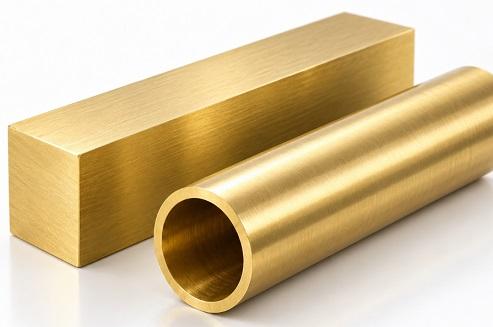
Brass alloys are widely used in plumbing fittings, valves, fasteners, musical instruments, decorative products, electrical connectors, and precision-machined parts. Some compositions are designed for cold forming, while others are optimized for machining or casting.
C26000, commonly known as cartridge brass, contains approximately 70% copper and 30% zinc. It offers good cold-working properties and is commonly used in formed components. C36000, or free-cutting brass, contains lead to improve machinability and is often used for turned parts and fittings. Lead content must be considered carefully for drinking-water systems and other regulated applications.
| Brass Alloy | Common Designation | Main Characteristics | Typical Applications |
|---|---|---|---|
| C26000 | Cartridge Brass | Excellent cold formability and good corrosion resistance | Radiator components, formed parts, electrical hardware |
| C36000 | Free-Cutting Brass | Excellent machining performance | Turned components, fittings, valve parts |
| C28000 | Muntz Metal | Good strength and practical fabrication characteristics | Architectural hardware, marine fittings, plates |
| C46400 | Naval Brass | Improved resistance to seawater corrosion | Marine hardware, fasteners, shafts, fittings |
Brass is often selected when a component requires a combination of reasonable strength, good machinability, corrosion resistance, and economical production. However, dezincification can affect certain brass compositions under specific water and service conditions. Engineers should choose a suitable dezincification-resistant grade where necessary.
Bronze
Traditionally, bronze refers primarily to copper-tin alloys. In modern industrial usage, however, bronze also includes several other copper-based alloy families, such as aluminum bronze and silicon bronze.
Bronze should not be treated as a single standardized composition. The properties of tin bronze, aluminum bronze, and silicon bronze can differ substantially.
Tin Bronze
Tin bronze contains copper and tin, with possible additional elements depending on the grade. Tin bronze offers good wear resistance, corrosion resistance, and mechanical reliability, making it valuable for bearings, bushings, springs, and industrial hardware.
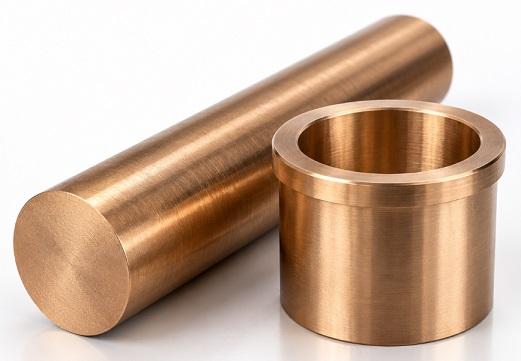
Phosphor bronze is a tin-copper alloy containing a controlled amount of phosphorus. Phosphorus can improve deoxidation during production and contribute to strength and wear characteristics. Depending on composition and temper, phosphor bronze can also provide excellent fatigue performance and spring properties.
C51000 and C52100 are common phosphor bronze grades. They are used in electrical contacts, connectors, springs, washers, and other components that experience repeated mechanical loading. Cast tin bronzes are also used in pump parts, bearings, and fittings.
| Bronze Alloy | Main Alloying Elements | Characteristics | Typical Applications |
|---|---|---|---|
| C51000 | Copper, tin, phosphorus | Good spring properties and fatigue resistance | Electrical contacts, springs, connectors |
| C52100 | Copper, higher tin content, phosphorus | High strength and good wear performance | Spring components, switches, precision hardware |
| C93200 | Copper, tin, lead, zinc | Good bearing performance and machinability | Bushings, bearings, industrial machinery |
| C90700 | Copper and tin | Good strength and wear resistance in cast form | Gears, bearings, pump components |
Aluminum Bronze
Aluminum bronze is a copper alloy in which aluminum is the principal alloying element. Some grades also contain iron, nickel, or manganese to improve strength, wear resistance, and corrosion performance. Aluminum bronze is particularly valued for its combination of mechanical strength and resistance to seawater corrosion.
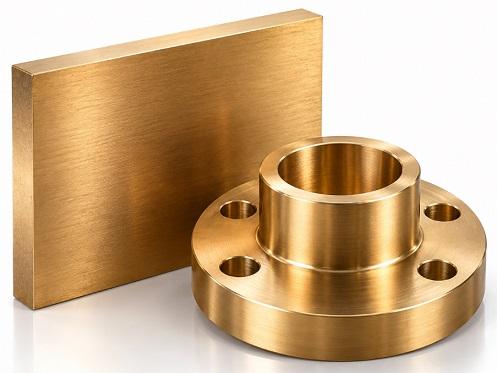
Compared with many common brasses and tin bronzes, aluminum bronze can provide high strength and good resistance to erosion and cavitation in appropriately designed equipment. These characteristics make it useful for marine propellers, pump components, valve bodies, offshore hardware, and heavy-duty industrial parts.
C95400 is a common cast aluminum bronze containing aluminum with iron additions. C95500 is a nickel-aluminum bronze used where additional strength and corrosion performance are required. C63000 is a wrought nickel-aluminum bronze alloy used in demanding structural and marine applications.
| Grade | Product Form | Key Characteristics | Typical Applications |
|---|---|---|---|
| C95400 | Cast | Good strength, wear resistance, and corrosion resistance | Bearings, pump parts, valves |
| C95500 | Cast | High strength and good marine performance | Marine fittings, heavy-duty components |
| C63000 | Wrought | High mechanical strength and seawater resistance | Propeller components, shafts, fasteners |
Aluminum bronze is not universally immune to corrosion. Performance depends on water chemistry, temperature, flow velocity, deposits, and galvanic contact with other metals. Correct grade selection and engineering design are necessary for reliable long-term service.
Silicon Bronze
Silicon bronze is a copper alloy containing silicon, often with small amounts of manganese and other elements. It is known for good corrosion resistance, attractive surface appearance, and favorable welding and fabrication characteristics.
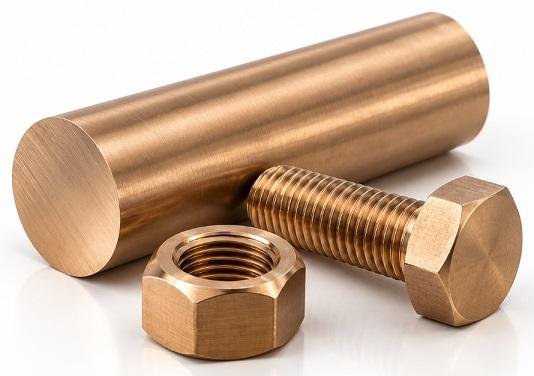
Silicon bronze is frequently used for architectural hardware, fasteners, marine fittings, decorative components, and welded structures. It is particularly useful when a component needs a combination of corrosion resistance, practical fabrication, and an appealing finish.
C65500, commonly identified as high-silicon bronze, is one example of this alloy family. Depending on the exact product form and specification, silicon bronze can be supplied as rod, bar, plate, sheet, or other shapes suitable for machining and forming.
Compared with some high-strength copper alloys, silicon bronze may offer more moderate mechanical strength. Its principal advantages are often its corrosion performance and fabrication characteristics rather than maximum hardness.
Copper-Nickel Alloy
Copper-nickel alloys contain nickel as the principal alloying element. Common compositions include 90% copper and 10% nickel, as well as 70% copper and 30% nickel. Small additions of iron and manganese may improve performance in flowing seawater.
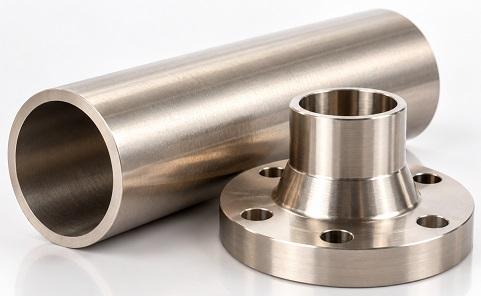
Copper-nickel alloys are widely recognized for their resistance to seawater corrosion, biofouling under suitable conditions, and erosion-corrosion. They are commonly used in shipboard piping, heat exchangers, condensers, desalination systems, offshore installations, and marine cooling equipment.
| Grade | Approximate Composition | Main Characteristics | Typical Applications |
|---|---|---|---|
| C70600 | 90% copper, 10% nickel | Good seawater resistance and heat-transfer performance | Condenser tubes, marine piping |
| C71500 | 70% copper, 30% nickel | Higher nickel content and strong corrosion resistance | Marine heat exchangers, offshore equipment |
Copper-nickel alloys also offer useful thermal stability and can be fabricated into tubes, plates, fittings, and welded assemblies. Their thermal conductivity is generally lower than that of pure copper, but their corrosion resistance can make them a better overall choice for seawater heat exchangers.
90/10 Copper-Nickel
The 90/10 copper-nickel family generally contains approximately 90% copper and 10% nickel, with additional elements controlled by the relevant specification. It is widely used for marine piping, condenser tubes, heat exchangers, and seawater handling equipment.
The alloy combines useful corrosion resistance with good fabrication characteristics. Surface condition, commissioning procedures, water cleanliness, and flow conditions remain important because deposits and unsuitable operating conditions can contribute to localized damage.
70/30 Copper-Nickel
The 70/30 copper-nickel family generally contains approximately 70% copper and 30% nickel. Compared with 90/10 grades, it often provides higher strength and can be suitable for more demanding seawater service conditions.
Applications include shipboard piping, offshore systems, condensers, and other marine equipment. The higher nickel content changes the material's mechanical and corrosion-related characteristics, but it does not eliminate the need to assess flow velocity, fluid chemistry, temperature, and galvanic effects.
Beryllium Copper
Beryllium copper is a precipitation-hardenable copper alloy containing a small percentage of beryllium, sometimes combined with cobalt or nickel. It is designed to achieve high strength and hardness while retaining useful electrical and thermal conductivity.
Beryllium copper can combine mechanical strength, fatigue resistance, spring performance, and conductivity more effectively than many conventional copper alloys. These characteristics make it suitable for electrical contacts, precision springs, connectors, relay components, and specialized tooling.
C17200 is a widely used high-strength beryllium copper grade. C17500 is a copper-cobalt-beryllium alloy family used in applications that require a different balance of strength and conductivity.
| Grade | Alloy Family | Key Characteristics | Typical Applications |
|---|---|---|---|
| C17200 | Copper-beryllium | High strength, hardness, and fatigue resistance | Precision springs, electrical contacts, connectors |
| C17500 | Copper-cobalt-beryllium | Useful conductivity and strength | Electrical components, resistance-welding equipment |
Beryllium copper requires special occupational health precautions. In particular, inhalation of dust or fumes containing beryllium during machining, grinding, welding, or other processing can cause serious health effects. Manufacturers must follow applicable exposure controls, material safety guidance, and local regulations.
Common Copper Alloy Grades
Copper alloy grades are identified through standardized designation systems that specify composition, product requirements, or both. In North America, UNS designations for copper alloys begin with the letter C, followed by five digits.
Selecting a copper alloy grade requires more than comparing the chemical composition. Engineers should consider product form, temper, applicable ASTM or other standards, mechanical-property requirements, conductivity, corrosion exposure, and manufacturing method.
| Copper Alloy Grade | Alloy Type | Key Characteristics | Typical Applications |
|---|---|---|---|
| C10100 | Oxygen-Free Electronic Copper | Very high conductivity and low oxygen content | Electrical and electronic components |
| C11000 | Electrolytic Tough-Pitch Copper | High electrical and thermal conductivity | Busbars, conductors, heat exchangers |
| C12200 | Phosphorus-Deoxidized Copper | Good formability and suitability for many tube applications | Heat exchangers, plumbing tubes, refrigeration systems |
| C26000 | Brass | Good formability and corrosion resistance | Formed parts, connectors, hardware |
| C36000 | Free-Cutting Brass | Excellent machinability | Precision turned components |
| C51000 | Phosphor Bronze | Good spring properties and fatigue resistance | Contacts, springs, connectors |
| C65500 | Silicon bronze | Good corrosion resistance and fabrication performance | Fasteners, marine fittings, architectural hardware |
| C70600 | Copper-Nickel | Excellent seawater corrosion resistance | Marine tubing and heat exchangers |
| C63000 | Nickel Aluminum Bronze | High strength, wear resistance, and corrosion resistance | Marine components, shafts, valves |
| C95400 | Aluminum Bronze | Strength and wear resistance | Cast valves, pumps, bearings |
| C17200 | Beryllium Copper | High strength and hardness | Electrical contacts and precision springs |
C11000 Copper
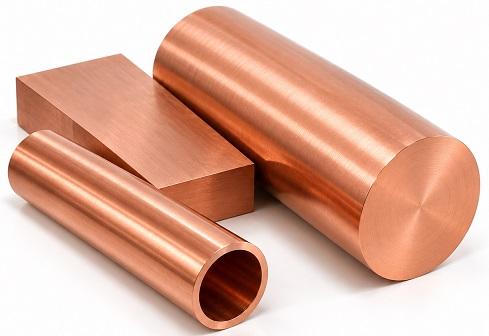
C11000 is a widely used high-conductivity copper grade. It is commonly selected for electrical conductors, busbars, grounding components, power distribution systems, and thermal transfer applications. Its conductivity and formability make it useful when low electrical resistance and reliable fabrication are important.
Although C11000 is often described as commercially pure copper, its exact properties depend on product condition and applicable specifications. It is not always the best choice for highly loaded or wear-intensive components because its strength and hardness are generally lower than those of many precipitation-hardened copper alloys.
C26000 Cartridge Brass
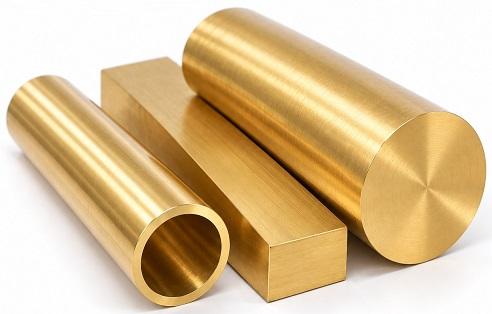
C26000, or cartridge brass, is widely used where good ductility and forming performance are required. Typical applications include stamped parts, drawn components, decorative hardware, and selected electrical fittings.
Compared with high-purity copper, C26000 generally offers higher strength and hardness but lower electrical and thermal conductivity. It is therefore more appropriate for many formed mechanical parts than for applications where maximum electrical conductivity is the primary requirement.
C36000 Free-Cutting Brass
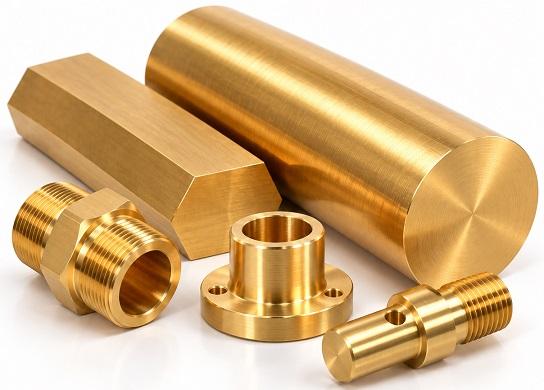
C36000 is a free-machining brass widely used in high-volume precision manufacturing. Its machining characteristics allow efficient production of threaded fittings, connectors, valve components, fasteners, and turned parts.
The alloy contains lead to improve machinability. Consequently, regulatory requirements and exposure risks must be evaluated for potable-water components, consumer products, and other applications where lead content is restricted. Lead-free alternatives may be required depending on the application and jurisdiction.
C51000 Phosphor Bronze
C51000 is a widely used phosphor bronze alloy valued for its good spring properties, fatigue resistance, and corrosion resistance. It is commonly selected for electrical contacts, spring components, connectors, and other applications that require reliable elastic performance and durability.
Compared with high-conductivity copper grades, C51000 generally offers higher strength and better spring performance but lower electrical conductivity. Its combination of mechanical properties and corrosion resistance makes it suitable for components subjected to repeated flexing or cyclic loading. The appropriate temper and product form should be considered when selecting the alloy to meet specific strength, formability, and service-life requirements.
Copper vs Copper Alloy
Pure copper and copper alloys share the same base metal, but their performance differs because of alloying elements and processing. Pure copper is generally preferred when high electrical or thermal conductivity is the primary requirement. Copper alloys are often selected when greater strength, hardness, wear resistance, or specialized corrosion resistance is needed.
| Property | Pure Copper | Copper Alloy |
|---|---|---|
| Electrical Conductivity | Very high | Varies; usually lower than pure copper |
| Thermal Conductivity | Very high | Varies with alloy composition |
| Strength | Moderate, depending on temper | Can be substantially higher |
| Hardness | Generally relatively low in annealed condition | Can be improved through alloying and heat treatment |
| Corrosion Resistance | Excellent in many environments | Ranges from good to excellent, depending on grade |
| Machinability | Can be gummy and difficult to machine cleanly | Some grades, particularly free-cutting brass, machine very well |
| Typical Applications | Conductors, busbars, heat-transfer equipment | Fittings, bearings, springs, marine hardware |
Pure copper is not always the best choice simply because it has higher conductivity. A connector may require spring force and resistance to repeated loading, while a bearing may need wear resistance and load-carrying capacity. In these cases, the right copper alloy can deliver better overall performance.
Mechanical Properties of Copper Alloy
Mechanical properties determine how copper alloys respond to tensile loading, bending, impact, repeated stress, and contact forces. Strength, ductility, hardness, fatigue resistance, and stiffness must be evaluated together to ensure that the selected material performs reliably throughout its intended service life.
Copper alloy properties depend on composition, grain structure, casting quality, cold work, heat treatment, and product dimensions. A soft annealed brass sheet can behave very differently from a heavily cold-worked phosphor bronze strip or an age-hardened beryllium copper component.
Important mechanical properties include tensile strength, yield strength, elongation, fatigue strength, hardness, and modulus of elasticity.
| Copper Alloy Grade | Alloy Type | Temper / Condition | Tensile Strength (MPa) | Yield Strength (MPa) | Elongation (%) | Hardness | Young's Modulus (GPa) |
|---|---|---|---|---|---|---|---|
| C11000 | Pure Copper | Annealed | 235 | 76 | 45 | 40–60 HRF | 117 |
| C26000 | Cartridge Brass | Annealed | 365 | 150 | 54 | 55–75 HRB | 110 |
| C36000 | Free-Cutting Brass | Annealed | 340 | 125 | 53 | 55–65 HRB | 100 |
| C51000 | Phosphor Bronze | Annealed | 345 | 150 | 50 | 60–80 HRB | 110 |
| C17200 | Beryllium Copper | Solution Heat-Treated | 415–540 | 195–380 | 35–60 | 45–85 HRB | 125–130 |
| C70600 | 90/10 Copper-Nickel | Annealed | 350 | 90 | 35 | 55–80 HRB | 140 |
Tensile Strength
Tensile strength is the maximum engineering stress a material withstands during a tensile test before the measured load begins to decrease or the specimen fractures. It is commonly expressed in megapascals (MPa).
Pure copper typically has lower tensile strength than many strengthened copper alloys. Cold-worked brass and phosphor bronze can achieve substantially higher strength, while precipitation-hardened beryllium copper can reach particularly high values for a copper-based material.
Yield Strength
Yield strength indicates the stress at which a material begins to undergo permanent plastic deformation, often determined using a specified offset method. It is important when designing springs, fasteners, pressure-containing parts, electrical contacts, and other components that must retain their shape under load.
Cold-worked copper alloys can exhibit substantially higher yield strength than annealed material of the same composition. However, a higher yield strength does not automatically mean better fatigue life, fracture toughness, or corrosion resistance. The complete loading condition and operating environment must be considered.
Hardness
Hardness describes resistance to localized plastic deformation, commonly measured through indentation testing. Copper alloys may be tested using the Brinell (HBW), Rockwell (HRB), Vickers (HV), or other appropriate methods, depending on the alloy and product thickness.
Hardness can be useful for quality control, verifying processing consistency, and comparing different material conditions. It is influenced by alloy composition, cold work, precipitation hardening, and heat treatment. A hardness value should not be treated as a universal substitute for tensile strength, wear resistance, or fracture toughness.
Young's Modulus
Young's modulus, also known as the modulus of elasticity, measures the stiffness of a material in the elastic range. Many copper alloys have a modulus of approximately 100–135 GPa, depending on composition and material condition. This is generally lower than the modulus of steel but higher than that of common aluminum alloys.
Stiffness matters when designing springs, precision components, electrical contacts, and rotating machinery. Even when two materials have similar tensile strength, their elastic deformation can differ significantly. Designers should evaluate geometry, support conditions, loading, and the modulus of the selected alloy rather than relying on strength alone.
Elongation
Elongation measures the percentage increase in a tensile specimen's gauge length before fracture. It provides an indication of ductility and helps engineers assess whether a material can accommodate plastic deformation during forming or under mechanical loading.
Annealed copper alloys often exhibit greater elongation than heavily cold-worked conditions of the same alloy. However, elongation varies with specimen geometry, test direction, thickness, grain structure, and the applicable testing standard. Forming operations should be designed using data appropriate to the actual product condition.
Thermal Properties of Copper Alloy
Copper and many copper alloys are valued for their ability to transfer heat efficiently. Their thermal properties make them suitable for heat exchangers, cooling plates, radiators, electrical equipment, and industrial thermal management systems. Copper has excellent thermal conductivity, but alloying elements generally reduce thermal conductivity compared with high-purity copper.
Important thermal properties include thermal conductivity, coefficient of thermal expansion, specific heat capacity, and melting range. These properties influence heat-transfer efficiency, dimensional stability, thermal stress, and the energy required for manufacturing operations.
Thermal Conductivity
Thermal conductivity measures how effectively a material transfers heat through its structure. Pure copper typically has thermal conductivity around 390–400 W/(m·K) near room temperature, depending on purity and condition. Copper alloys generally have lower thermal conductivity, with values varying according to alloy composition and material condition.
The following table compares the approximate thermal conductivity of common copper alloy grades at or near room temperature.
| Copper Alloy Grade | Alloy Type | Thermal Conductivity |
|---|---|---|
| C11000 | Pure Copper | 391 W/(m·K) |
| C26000 | Cartridge Brass | 121 W/(m·K) |
| C36000 | Free-Cutting Brass | 116 W/(m·K) |
| C51000 | Phosphor Bronze | 69 W/(m·K) |
| C17200 | Beryllium Copper | 107–130 W/(m·K) |
| C70600 | 90/10 Copper-Nickel | 45 W/(m·K) |
Coefficient of Thermal Expansion
The coefficient of thermal expansion (CTE) describes how much a material changes dimension when its temperature changes. Pure copper has a linear CTE of approximately 16.5–17 × 10⁻⁶/K near room temperature. Many copper alloys have similar but composition-dependent values.
Thermal expansion is important when copper alloy components are assembled with steel, aluminum, ceramics, or other materials. Differences in expansion can affect tolerances, sealing, electrical connections, and thermal cycling performance.
Specific Heat Capacity
Specific heat capacity measures the heat required to raise a unit mass of material by one degree. Pure copper has a specific heat capacity of approximately 385 J/kg·K near room temperature. Copper alloys differ depending on their composition.
This property affects heating and cooling behavior during manufacturing and service. Together with thermal conductivity and density, it influences how quickly a component responds to heat input and how temperature gradients develop within the part.
Melting Temperature
Pure copper melts at approximately 1,085°C. Copper alloys generally melt over a temperature range rather than at a single temperature, and their solidus and liquidus temperatures depend on composition.
These melting characteristics matter during casting, brazing, welding, and other thermal processes. The maximum service temperature, however, is not determined by melting point alone; strength retention, oxidation, creep, and environmental exposure must also be considered.
Electrical Properties of Copper Alloy
Electrical properties are among the most important reasons for using copper and copper alloys in electrical engineering and electronics. Copper combines high electrical conductivity with good ductility and fabrication versatility. Alloying elements can improve strength, spring performance, wear resistance, or stress relaxation resistance, but they usually reduce conductivity to some degree.
High-conductivity copper is commonly used for busbars, power cables, grounding components, transformer windings, and heat-producing electrical equipment. Copper alloys with lower conductivity but greater mechanical strength are often preferred for connectors, switches, contact springs, terminals, and precision electrical components.
The following table provides approximate reference values for common copper alloys at 20°C to help compare their electrical performance.
| Copper Alloy Grade | Alloy Type | Electrical Conductivity | Electrical Resistivity |
|---|---|---|---|
| C11000 | Pure Copper | 100% IACS | 17.24 nΩ·m |
| C26000 | Cartridge Brass | 28% IACS | 61.6 nΩ·m |
| C36000 | Free-Cutting Brass | 26% IACS | 66.3 nΩ·m |
| C51000 | Phosphor Bronze | 15% IACS | 114.9 nΩ·m |
| C17200 | Beryllium Copper | 15–22% IACS | 78.4–114.9 nΩ·m |
| C70600 | 90/10 Copper-Nickel | 9% IACS | 191.6 nΩ·m |
Electrical Conductivity
Electrical conductivity describes how easily electric current passes through a material. It is often expressed as a percentage of the International Annealed Copper Standard (% IACS). High-purity copper is the benchmark for many electrical conductor applications because of its excellent conductivity. Annealed high-conductivity copper is defined as 100% IACS at the reference temperature of 20°C.
For copper alloys, adding zinc, tin, nickel, aluminum, or other alloying elements generally reduces electrical conductivity by increasing electron scattering. This trade-off is often worthwhile for components that require higher strength, better spring properties, improved wear resistance, or greater durability under repeated contact.
Electrical Resistivity
Electrical resistivity measures how strongly a material opposes electric current. It is commonly expressed in ohm-meters (Ω·m) or nanohm-meters (nΩ·m). Conductivity and resistivity are inversely related: lower resistivity corresponds to higher conductivity under the same conditions.
Corrosion Resistance of Copper Alloy
Copper alloys exhibit useful corrosion resistance in many environments because copper can develop relatively stable surface films. However, their resistance varies significantly with alloy composition, water chemistry, temperature, pollutants, and contact with dissimilar metals.
| Alloy Family | General Corrosion Behavior | Important Considerations |
|---|---|---|
| Pure copper | Good resistance in many atmospheric and water environments | Some acids, ammonia-containing environments, and other chemicals can cause problems |
| Brass | Good resistance in many ordinary atmospheric and water environments | Dezincification and stress-corrosion cracking may occur under susceptible conditions |
| Tin bronze | Useful resistance in many industrial and marine environments | Performance depends on fluid chemistry, loading, and alloy composition |
| Aluminum bronze | Good resistance in many seawater applications | Flow velocity, deposits, and galvanic effects must be evaluated |
| Copper-nickel | Widely used for seawater service | Correct commissioning, flow conditions, and biofouling control remain important |
| Silicon bronze | Good resistance in many atmospheric, freshwater, and marine environments | Corrosion performance depends on alloy composition, water chemistry, and service conditions |
| Beryllium copper | Useful corrosion resistance in many applications | Verify compatibility with the actual chemicals and service environment |
Natural Protective Surface Films
When exposed to air and moisture, copper can develop surface films containing copper oxides and, over longer periods, other corrosion products. In suitable environments, these films can slow further corrosion. Atmospheric exposure may gradually produce a brown, dark, or green patina depending on the environment and surface chemistry.
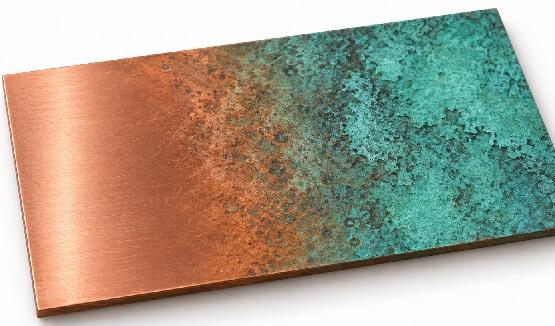
A patina is not automatically evidence of harmful material degradation. In many architectural applications, a stable patina is an accepted surface appearance. Nevertheless, localized corrosion can occur under deposits, in confined gaps, or in environments containing aggressive chemicals. Inspection and maintenance requirements should be based on service conditions rather than appearance alone.
Dezincification and Stress-Corrosion Cracking
Dezincification is a corrosion process in which zinc is selectively removed from susceptible brass, leaving a porous, weakened surface layer. It can compromise pressure-containing components and fittings in environments that promote the reaction. Suitable dezincification-resistant brass grades are available for certain water-contact applications.
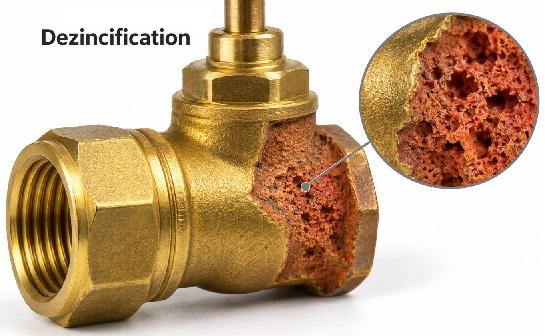
Some brass compositions may also be susceptible to stress-corrosion cracking when tensile stress and specific environmental conditions occur together. Reducing residual stress, selecting an appropriate alloy, and controlling the environment can help manage this risk.
Galvanic Corrosion
Galvanic corrosion can occur when copper alloys contact a dissimilar metal in the presence of an electrically conductive liquid. The rate and severity depend on the metal combination, exposed surface-area ratio, electrolyte, and operating conditions.
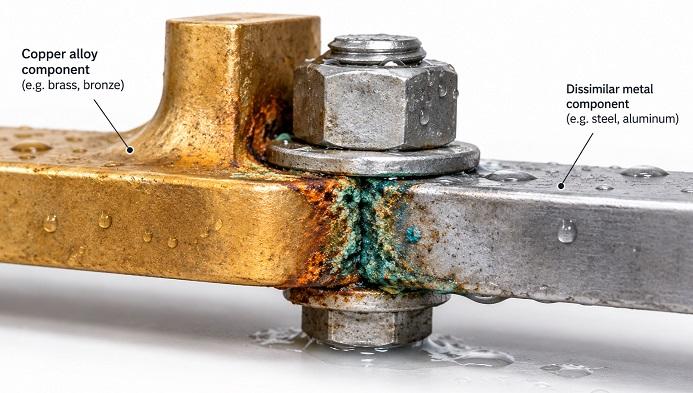
Copper alloys connected to steel, aluminum, or other metals may require isolation fittings, suitable coatings, careful material pairing, or other corrosion-control measures. The design should account for the entire assembly rather than assessing each material separately.
Surface Treatments
Copper alloys do not always require additional surface treatments, as many grades offer good corrosion resistance and suitable surface properties in their intended service environments. However, surface treatments may be applied to improve appearance, surface quality, wear resistance, corrosion protection, solderability, or electrical contact performance.
Common options include mechanical polishing, brushing, protective coatings, electroplating, and chemical surface treatments. The appropriate method depends on the alloy composition, application requirements, operating environment, and desired surface properties.
Magnetic Properties of Copper Alloy
Copper and most common copper alloys, including brass and bronze, are non-ferromagnetic. They are not strongly attracted to ordinary permanent magnets and do not normally retain significant permanent magnetization. This property makes them useful in electrical equipment, nonmagnetic components, and applications where magnetic interference must be limited.
However, non-ferromagnetic does not mean that a copper alloy cannot interact with a magnetic field. Copper's electrical conductivity allows changing magnetic fields to induce eddy currents within the material. These currents generate opposing magnetic effects and are relevant to electromagnetic braking, induction heating, and some nondestructive testing methods.
Magnetic behavior must be evaluated for the complete component rather than assumed solely from its copper content. Certain alloying elements, attached steel components, fasteners, coatings, or manufacturing contamination can influence the measured response. Where strict magnetic requirements apply, the finished assembly should be verified using an appropriate test method.
Applications of Copper Alloys
Copper alloys are used across a broad range of industries because their properties can be tailored to electrical, thermal, mechanical, and environmental requirements. Their established manufacturing processes and extensive material standards also support both high-volume production and specialized engineering applications.
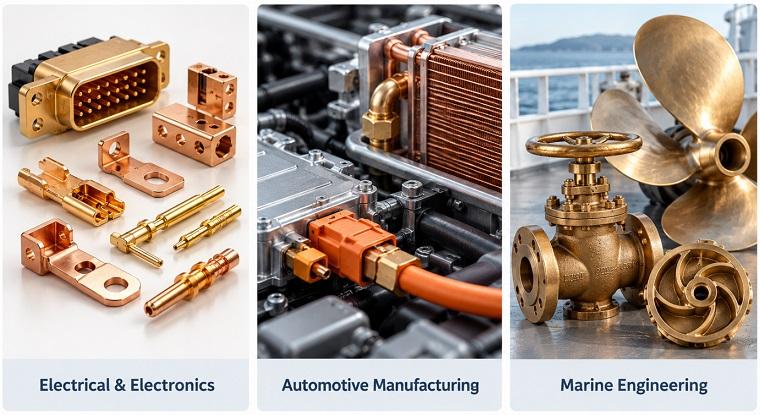
- Electrical and electronics: Copper alloys are used in connectors, terminals, switches, contacts, springs, and selected conductive components where strength and electrical performance must be balanced.
- Automotive manufacturing: Applications include electrical connectors, radiator and heat-transfer components, bushings, bearings, and selected precision fittings.
- Marine engineering: Copper-nickel alloys and aluminum bronzes are used for seawater piping, pumps, valves, propellers, and marine hardware.
- Plumbing and water systems: Brass fittings, valves, connectors, and copper alloy components are used in suitable water distribution systems, subject to applicable composition and drinking-water requirements.
- Industrial machinery: Bronze bearings, bushings, gears, wear components, and machined fittings support machinery exposed to friction and mechanical loading.
- Heat exchangers: Copper and selected copper alloys are used in condensers, cooling systems, heat-transfer tubes, and thermal management equipment.
- Construction and architecture: Brass and bronze are used in door hardware, decorative panels, fixtures, roofing details, and architectural components.
Manufacturing and Machining of Copper Alloy
Copper alloys can be manufactured into a wide range of shapes through casting, rolling, extrusion, drawing, forging, stamping, and CNC machining.
CNC Machining
CNC machining is widely used to produce copper alloy components with accurate dimensions, complex features, and controlled surface finishes. Brass grades such as C36000 are especially popular for precision turning because of their excellent machinability.
Pure copper and some softer copper alloys can be more challenging to machine because of their ductility and tendency to form built-up material on cutting edges. Proper tool selection, sharp cutting edges, appropriate feed rates and cutting speeds, effective chip evacuation, and a suitable coolant strategy can improve surface finish and dimensional consistency.
Casting
Casting is widely used to produce complex copper alloy components such as valve bodies, pump housings, bearing components, marine fittings, and decorative hardware. The molten alloy is poured into a mold and solidifies into the desired shape.
Casting can reduce material waste and machining time when components have complex geometries. Sand casting, permanent-mold casting, and other suitable methods may be used according to the alloy and required quality. Casting quality must be controlled to minimize porosity, inclusions, shrinkage defects, and other discontinuities.
Cost of Copper Alloy
The cost of copper alloys varies depending on alloy composition, raw material prices, product form, manufacturing requirements, and order quantity. Pure copper, brass, bronze, copper-nickel alloys, aluminum bronze, and beryllium copper can have significantly different material costs because they contain different alloying elements and require different production processes.
| Alloy Family | Relative Material Cost | Relative Machining Cost |
|---|---|---|
| Pure Copper | Moderate to high | High |
| Brass | Low to moderate | Low for free-machining grades |
| Tin Bronze | Moderate to high | Moderate to high |
| Aluminum Bronze | Moderate to high | Moderate to high |
| Copper-Nickel | High | Moderate to high |
| Silicon Bronze | Moderate to high | Moderate |
| Beryllium Copper | High to very high | Moderate to high |
When comparing copper alloy costs, buyers should consider the total cost of the finished component rather than the raw material price alone. Machinability, material waste, corrosion resistance, service life, maintenance requirements, and manufacturing efficiency can all affect the overall cost.
Conclusion
Copper alloys are versatile engineering materials that combine electrical conductivity, thermal conductivity, corrosion resistance, ductility, and a broad range of mechanical properties. Their many alloy families allow engineers to select materials for electrical systems, marine equipment, heat exchangers, plumbing, precision machining, industrial machinery, and architectural products.
Different copper alloys serve different purposes. C11000 is widely used where high electrical and thermal conductivity are important, C26000 offers useful formability, C36000 supports efficient precision machining, phosphor bronze provides valuable spring properties, aluminum bronze offers strength and corrosion resistance in suitable environments, and copper-nickel alloys are important in marine systems. Beryllium copper can provide very high strength and spring performance when appropriate processing and occupational safety controls are applied.
By understanding copper alloy types, grades, properties, and manufacturing methods, engineers and manufacturers can make informed material decisions and produce durable components for a wide range of industrial applications.