CNC Machining Service
Machined prototypes and production parts in as fast as 1 day. Request an online quote today.
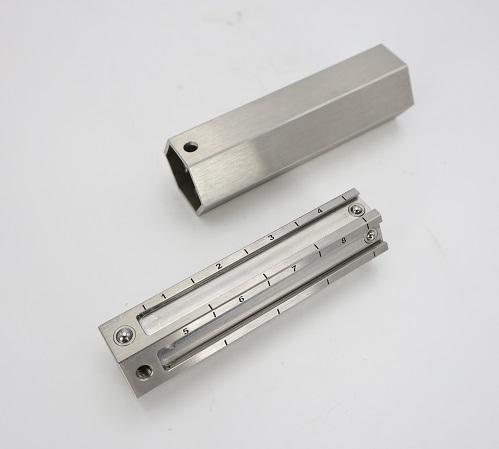
What is CNC Machining?
CNC machining, short for Computer Numerical Control machining, is a manufacturing process that uses computer-controlled machines to remove material from a workpiece and create precise parts. Unlike conventional machining, where an operator manually controls many machine movements, CNC machining uses programmed instructions to control the movement of cutting tools and other machine components.
CNC machining can be used to manufacture parts from materials such as metals, plastics, wood, composites, and engineering materials. Depending on the machine configuration and cutting tools, CNC equipment can perform operations including milling, turning, drilling, boring, tapping, threading, and contouring.
A typical CNC machining process starts with a digital design. Engineers or designers create a 2D drawing or 3D CAD model that defines the dimensions, geometry, holes, curves, threads, and other features of the required component. The design is then prepared using manufacturing software and converted into machine-readable instructions, commonly referred to as G-code and M-code.
The CNC controller interprets these instructions and coordinates the movement of the machine. The cutting tool follows the programmed toolpath while the workpiece is securely held in place. This allows manufacturers to produce components with consistent dimensions and repeatable quality.
CNC machining is widely used because it combines precision, repeatability, automation, and production flexibility. It can be used for prototypes and one-off components as well as high-volume production runs.
| Feature | CNC Machining | Traditional Machining |
|---|---|---|
| Machine control | Computer-controlled according to a programmed sequence | Mainly controlled manually by the operator |
| Repeatability | High when the machine setup and program are properly controlled | Depends more heavily on operator skill and consistency |
| Complex geometry | Suitable for complex profiles and multi-axis machining | More limited for complicated geometries |
| Automation | High | Relatively low |
| Production volume | Suitable for prototypes through high-volume production | Often practical for repair, maintenance, and low-volume work |
Advantages of CNC Machining
CNC machining offers several advantages over many traditional manufacturing methods. These benefits have made CNC technology an important part of modern manufacturing.
- High Precision: CNC machines can follow programmed coordinates accurately, making them suitable for components that require tight dimensional tolerances.
- Excellent Repeatability: Once a program has been properly developed and the machine is correctly set up, the same machining process can be repeated to produce consistent parts.
- Automation: CNC machines can perform many machining operations automatically, reducing the amount of manual intervention required.
- Complex Geometries: Multi-axis CNC machines can manufacture curves, contours, pockets, angled surfaces, and other complex features that may be difficult to produce manually.
- Improved Productivity: Automated machining can operate continuously for extended periods, helping manufacturers increase production efficiency.
- Reduced Human Error: CNC programs provide precise instructions for machine movement, reducing errors associated with manually controlling every machining operation.
- Flexible Production: Manufacturers can modify CNC programs and tooling arrangements to produce different parts without completely redesigning the manufacturing equipment.
- Consistent Quality: Automated toolpaths and controlled machining parameters help maintain consistent quality across production batches.
Despite these benefits, CNC machining also requires an initial investment in equipment, tooling, software, programming, and operator training. Proper process planning is therefore important to achieve the best balance between machining quality and production cost.
Applications of CNC Machining in Various Industries
CNC machining is used across a wide range of industries because it can manufacture components with different geometries, materials, dimensions, and tolerance requirements.
| Industry | Common CNC Applications | Typical Components |
|---|---|---|
| Aerospace | Precision structural and mechanical components | Brackets, housings, aircraft components, engine parts |
| Automotive | Production parts, prototypes, molds, and custom components | Engine parts, transmission components, shafts, brackets |
| Medical | Precision medical and surgical components | Surgical instruments, orthopedic components, equipment parts |
| Electronics | Enclosures, heat-management parts, and precision hardware | Housings, heat sinks, mounting components, connectors |
| Industrial Machinery | Mechanical components and replacement parts | Gears, shafts, fixtures, brackets, machine components |
| Robotics | Precision structural and motion-related components | Robot joints, mounting plates, arms, housings |
| Energy | Components for energy-generation and industrial systems | Valves, pump components, turbine parts, fittings |
CNC machining is particularly valuable when an industry requires accurate dimensions, reliable repeatability, complex shapes, or customized components. It can support both rapid prototyping and production manufacturing.
What materials can be used for CNC machining?
CNC machining can process a broad range of materials. The appropriate material depends on the mechanical requirements of the finished component, operating environment, weight, corrosion resistance, electrical properties, cost, and machining characteristics.
| Material | Key Characteristics | Common CNC Applications |
|---|---|---|
| Aluminum | Lightweight, corrosion resistant, and generally easy to machine | Aerospace, automotive, electronics, housings |
| Stainless Steel | Strong and corrosion resistant, with different grades offering different properties | Medical equipment, industrial components, food-processing equipment |
| Carbon Steel | Strong, durable, and available in many grades | Mechanical components, fixtures, structural parts |
| Brass | Good machinability and useful corrosion resistance | Fittings, connectors, valves, decorative components |
| Copper | Excellent electrical and thermal conductivity | Electrical components, heat-transfer components |
| Titanium | High strength-to-weight ratio and good corrosion resistance | Aerospace, medical, and high-performance components |
| Engineering Plastics | Lightweight and available with different mechanical, thermal, and chemical properties | Housings, prototypes, insulators, machine components |
Material selection should be considered together with cutting tool selection and machining parameters. Hard or heat-sensitive materials may require specialized tooling, appropriate cutting speeds, controlled feeds, coolant, and careful chip management.
CNC Machining Process: From Design to Finished Part
Producing a CNC-machined component involves more than simply placing a block of material into a machine. A successful manufacturing process requires coordination between design, programming, machining, inspection, and finishing.
- Part design: The component is designed using CAD software according to its functional requirements.
- Design review: The design is checked for dimensions, tolerances, material requirements, and manufacturability.
- Process planning: The manufacturer determines the machine, workholding method, cutting tools, machining sequence, and required operations.
- CAM programming: Toolpaths are generated based on the CAD model and manufacturing strategy.
- Program verification: The CNC program can be simulated and reviewed to identify potential collisions or machining problems.
- Machine setup: The workpiece and cutting tools are installed, and offsets are established.
- Machining: The CNC machine removes material according to the programmed toolpaths.
- Inspection: Critical dimensions and features are measured to confirm that the finished part meets specifications.
- Finishing: Additional processes such as deburring, polishing, anodizing, coating, or other surface treatments may be performed when required.
Careful planning at each stage can improve machining efficiency, reduce material waste, extend tool life, and minimize the risk of producing defective parts.
Related Services
Aluminum CNC Machining Service
Get precision-machined parts and rapid prototypes with fast turnaround times and competitive...
Related Blogs
Aluminum Alloy: A Complete Overview
Aluminum alloys are widely used in modern manufacturing because they combine low weight, good...
The Difference Between Titanium and Steel
Titanium and steel are widely used engineering materials with different combinations of...
Anodized Aluminum: A Complete Overview
This article provides a comprehensive overview of anodized aluminum, explaining its...
What Is Steel
Steel is one of the most widely used engineering materials in the world. It is a versatile metal...