Titanium CNC Machining Service
Get custom CNC machined titanium parts at competitive prices for various industrial applications, from prototypes to high-volume production, with precision machining capabilities.
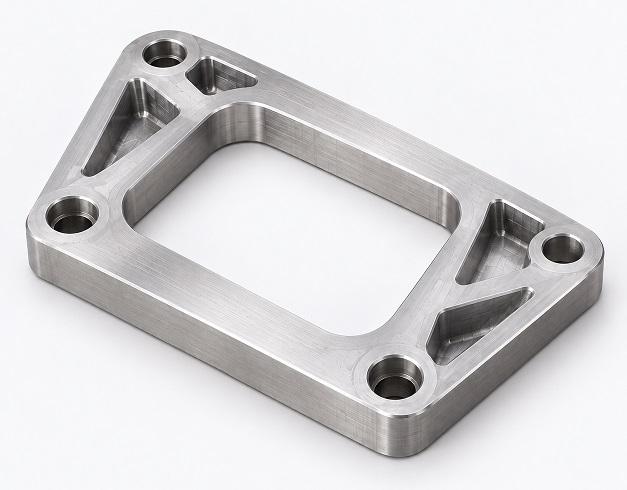
Titanium CNC Machining
Titanium is a high-performance metal widely used in CNC machining for its excellent strength-to-weight ratio, corrosion resistance, and biocompatibility. Its high strength, lightweight properties, and heat resistance make it ideal for precision components in aerospace, medical, automotive, and industrial applications. Although titanium is more challenging to machine than many other metals, advanced CNC machining processes can produce complex geometries and high-precision components.
Key Benefits
Excellent Strength-to-Weight Ratio
Titanium offers high strength at a relatively low weight, making it ideal for lightweight structural components in aerospace, automotive, and other demanding applications.
Excellent Corrosion Resistance
Titanium naturally forms a protective oxide layer, providing excellent corrosion resistance to seawater, chemicals, and other corrosive environments.
High Temperature Performance
Certain titanium alloys maintain good strength at elevated temperatures, making them suitable for aerospace engines and high-performance industrial components.
Excellent Biocompatibility
Titanium is highly biocompatible and resistant to bodily fluids, making it widely used for medical implants, dental components, and surgical instruments.
Good Fatigue Resistance
Many titanium alloys withstand repeated loading and cyclic stress, making them suitable for aerospace structures and high-performance mechanical components.
Excellent Durability
Combining high strength and corrosion resistance, titanium provides long-lasting performance for precision components in demanding operating environments.
Titanium Materials for Machining
We offer several commercially pure titanium grades and titanium alloys for CNC machining. Each material has distinct mechanical properties and performance characteristics to meet different application requirements.
Titanium Grade 2
A widely used commercially pure titanium grade, Grade 2 offers excellent corrosion resistance and good formability. It is commonly used in marine equipment, chemical processing, and industrial components.
Titanium Grade 5 (Ti-6Al-4V)
One of the most popular titanium alloys, Grade 5 offers excellent strength-to-weight ratio and corrosion resistance. It is widely used in aerospace, automotive, and medical components.
Titanium Grade 23 (Ti-6Al-4V ELI)
Grade 23 offers excellent biocompatibility, fracture toughness, and ductility. It is particularly suitable for medical implants, orthopedic devices, and precision surgical components.
Titanium Grade 9 (Ti-3Al-2.5V)
Grade 9 provides a good balance of strength, corrosion resistance, and formability. It is commonly used for aerospace tubing, hydraulic systems, bicycle frames, and sporting equipment.
Titanium Grade 12
Grade 12 offers excellent corrosion resistance, particularly against crevice corrosion in certain environments. It is commonly used for heat exchangers, chemical processing equipment, and industrial piping.
Titanium Grade 4
Grade 4 is the strongest commercially pure titanium grade, combining high strength with excellent corrosion resistance. It is suitable for medical, marine, and chemical processing components.
The following table compares the typical mechanical properties of commonly machined titanium grades.
| Titanium Grade | Tensile Strength (MPa) | Yield Strength (MPa) | Elongation (%) | Hardness (HB) | Density (g/cm³) | Young's Modulus (GPa) |
|---|---|---|---|---|---|---|
| Grade 2 | 345 | 275 | 20 | 160 | 4.51 | 105 |
| Grade 5 (Ti-6Al-4V) | 895 | 828 | 10 | 334 | 4.43 | 114 |
| Grade 23 (Ti-6Al-4V ELI) | 860 | 795 | 10 | 300 | 4.43 | 114 |
| Grade 9 (Ti-3Al-2.5V) | 620 | 483 | 15 | 250 | 4.48 | 105 |
| Grade 12 | 483 | 345 | 18 | 200 | 4.51 | 103 |
| Grade 4 | 550 | 480 | 15 | 250 | 4.51 | 105 |
Titanium CNC Machining Challenges
Titanium machining requires specialized processes and careful parameter control. Our CNC machining processes are designed to address these challenges while maintaining dimensional accuracy and surface quality.
Low Thermal Conductivity
Titanium has relatively low thermal conductivity, causing heat to concentrate near the cutting zone during machining. Optimized cutting parameters and effective coolant delivery help reduce heat and extend tool life.
High Cutting Forces
Titanium alloys can generate significant cutting forces and are prone to tool wear. Rigid setups and optimized cutting strategies help ensure consistent machining results.
Tool Wear Control
Titanium's chemical reactivity at elevated cutting temperatures can accelerate tool wear and material adhesion. Suitable carbide tools and controlled cutting conditions help maintain tool life and machining quality.
Applications
Titanium CNC machined parts are widely used across industries that require high strength, low weight, corrosion resistance, and reliable performance under demanding conditions.
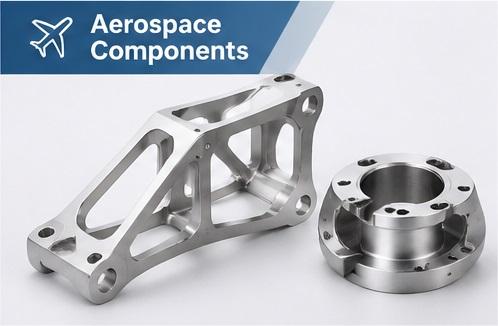
Aerospace Components
Titanium is widely used for aircraft structures, engine components, brackets, and fasteners, offering high strength while reducing overall weight.
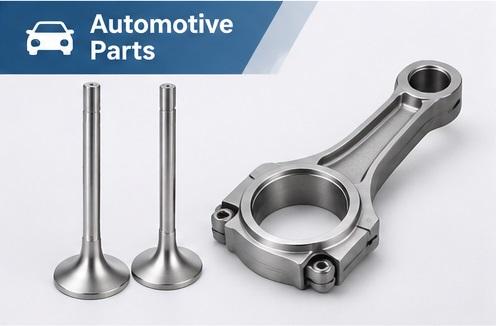
Automotive Parts
CNC-machined titanium is used for engine valves, exhaust components, fasteners, and suspension parts in high-performance vehicles.
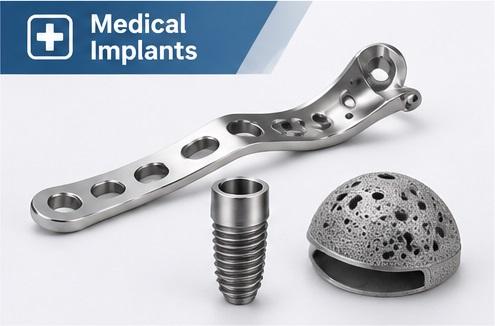
Medical Implants
Titanium's biocompatibility makes it ideal for dental implants, bone plates, orthopedic screws, surgical instruments, and medical devices.
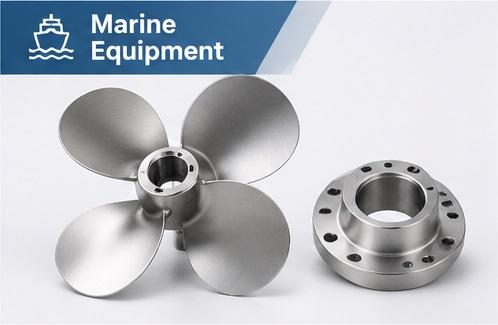
Marine Equipment
Titanium's seawater corrosion resistance makes it suitable for marine hardware, underwater equipment, fasteners, and propeller components.
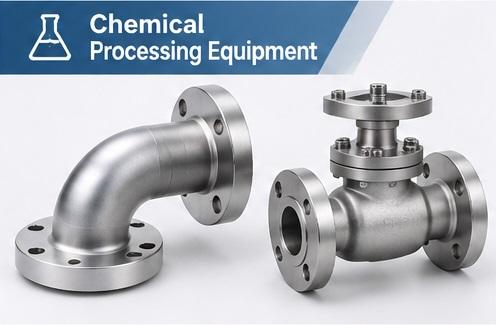
Chemical Processing Equipment
Titanium is used for valves, pumps, fittings, and heat exchanger components exposed to corrosive chemicals and harsh environments.
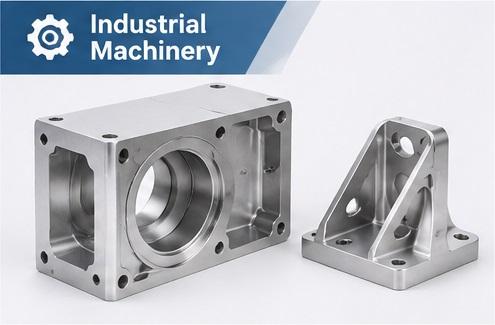
Industrial Machinery
CNC-machined titanium parts are used for pump components, precision fixtures, fasteners, and specialized industrial equipment.
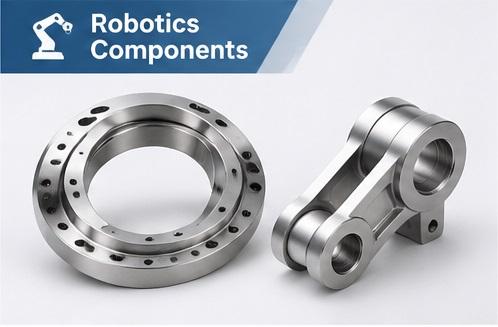
Robotics Components
Lightweight titanium components are suitable for robotic arms, precision joints, mounting brackets, and structural parts.
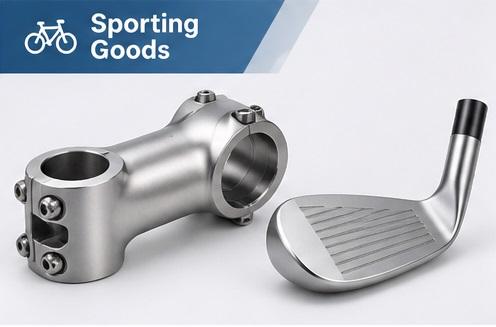
Sporting Goods
Titanium is used for bicycle components, golf equipment, outdoor gear, and high-performance sporting accessories.
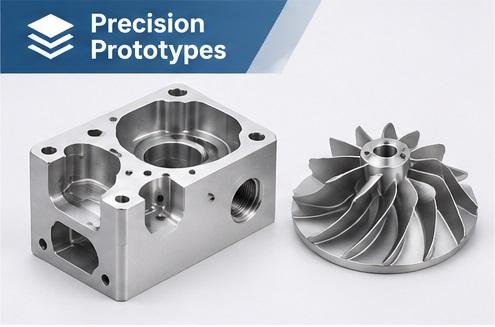
Precision Prototypes
CNC machining produces accurate titanium prototypes for functional testing, product development, and engineering validation.
Surface Finishes
After CNC machining, titanium components can undergo additional surface treatments to improve their appearance, corrosion resistance, wear performance, and functional properties.
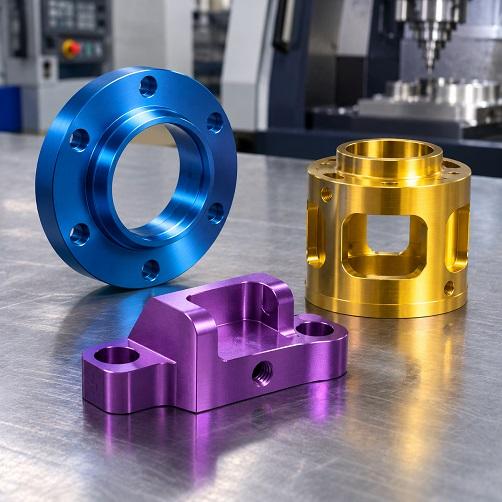
Anodizing
Titanium anodizing uses an electrochemical process to create a controlled oxide layer, producing different colors through variations in oxide thickness.
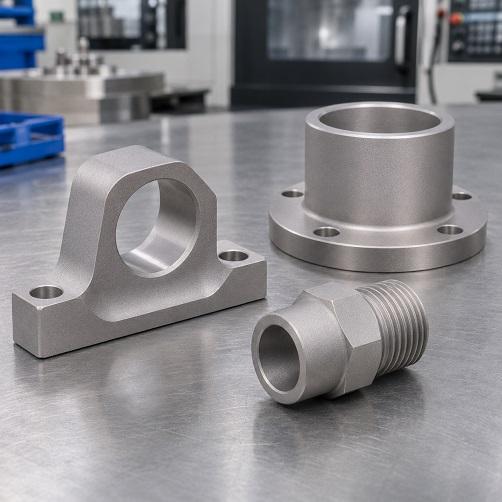
Bead Blasting
Bead blasting creates a uniform matte surface appearance by removing visible machining marks and reducing surface irregularities.
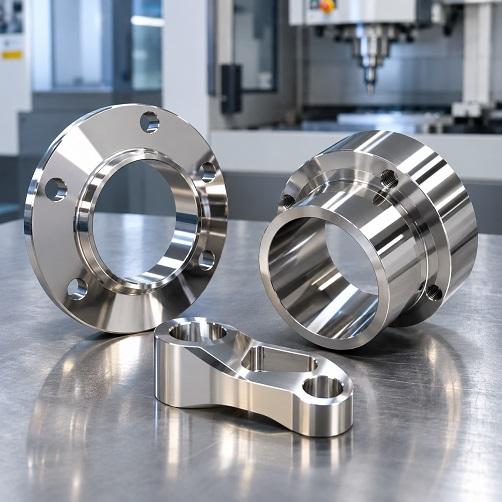
Polishing
Mechanical polishing produces a smoother, more reflective surface by reducing surface roughness and machining marks.
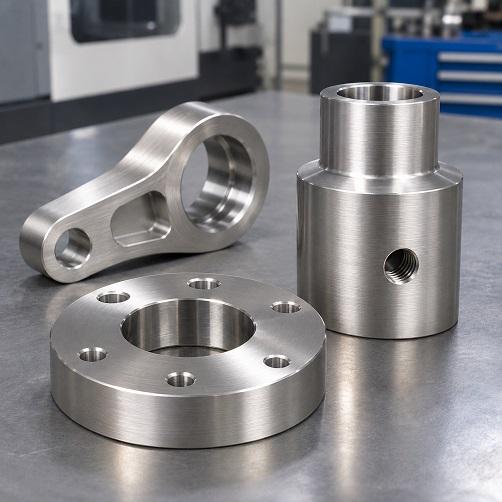
Brushing
Brushing creates a consistent directional surface texture that gives titanium components a satin appearance.
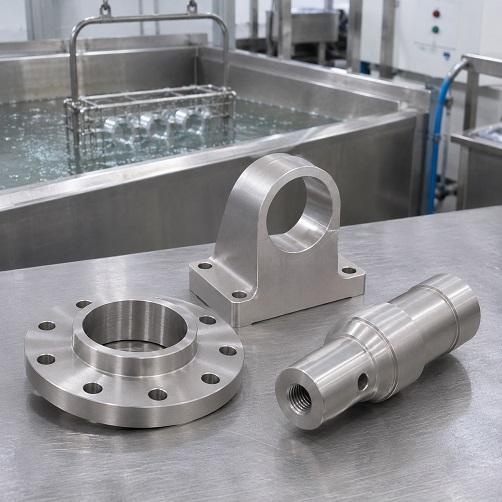
Passivation
Passivation treatments help remove surface contaminants and support the formation of a clean, stable passive surface.
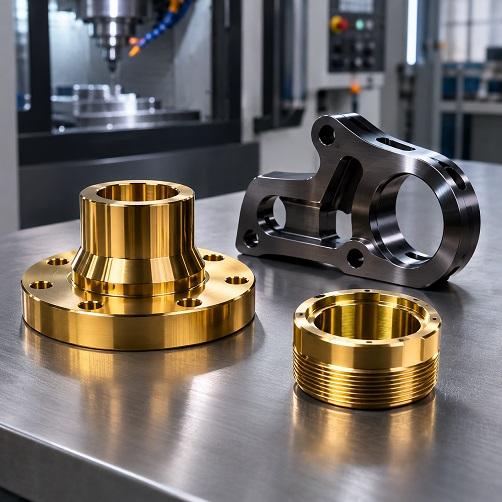
PVD Coating
Physical Vapor Deposition (PVD) applies a thin functional coating to the titanium surface to improve wear resistance, surface hardness, or appearance.
Our CNC Machining Capabilities
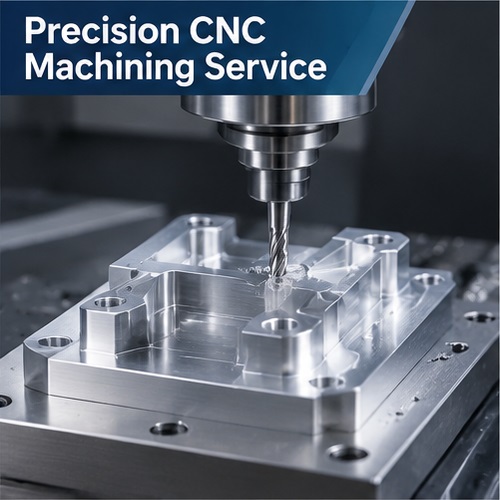
Precision CNC Machining Service
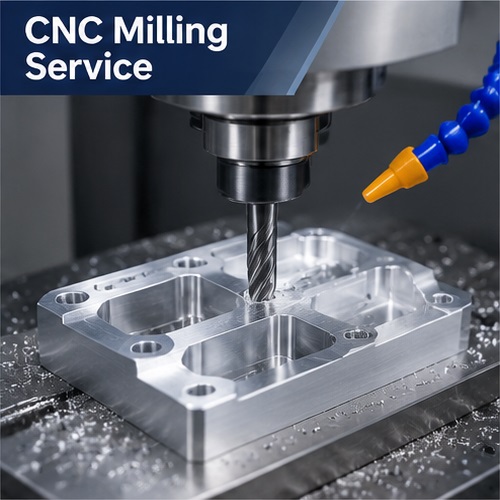
CNC Milling Service
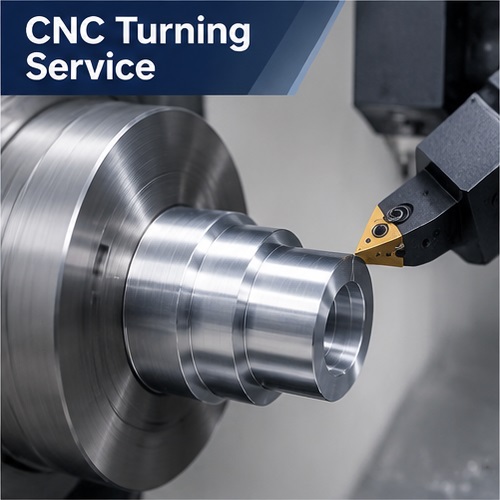
CNC Turning Service
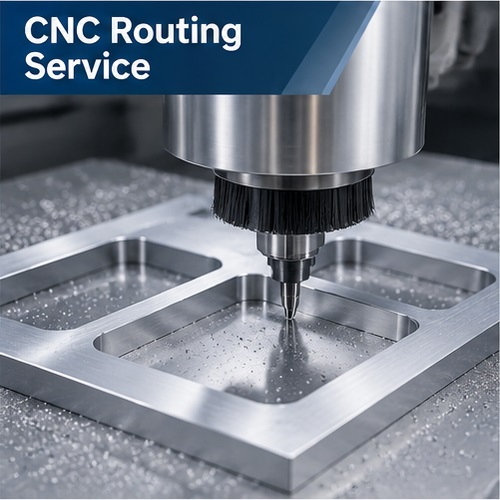
CNC Routing Service
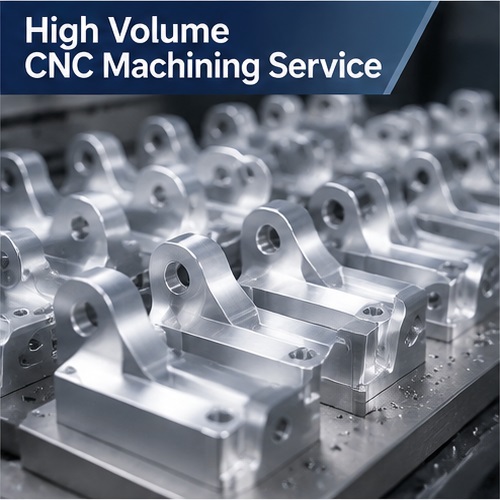
High Volume CNC Machining Service
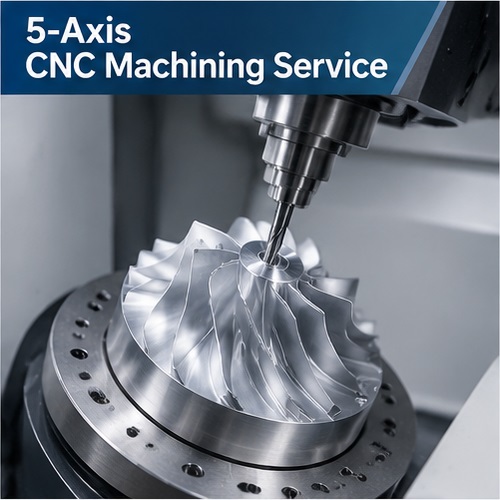
5-Axis CNC Machining Service
CNC Machining Tolerances
Our CNC machining services provide reliable dimensional accuracy and consistent part quality. The tolerances listed below represent minimum tolerances achievable under ideal conditions. Actual achievable tolerances depend on part dimensions, geometry, material, machining process, and other manufacturing requirements.
| Parameter | Part Size | General Tolerance | Tight Tolerance |
|---|---|---|---|
| Linear Dimensions | 0–100 mm | ±0.10 mm | ±0.05 mm |
| Linear Dimensions | 100–300 mm | ±0.15 mm | ±0.10 mm |
| Linear Dimensions | 300–500 mm | ±0.20 mm | ±0.15 mm |
| Hole Diameter | 0–100 mm | ±0.10 mm | ±0.05 mm |
| Hole Diameter | 100–300 mm | ±0.15 mm | ±0.10 mm |
| Angular Dimensions | Any Size | ±1° | ±0.5° |
| Flatness | Up to 300 mm | 0.10 mm | 0.05 mm |
| Flatness | 300–500 mm | 0.20 mm | 0.10 mm |
| Surface Roughness | — | Ra 3.2 μm | Ra 1.6 μm |
Tighter tolerances may be achievable upon request. Please ensure that all required tolerances are clearly specified on your technical drawings.
Examples of Our CNC Machined Parts
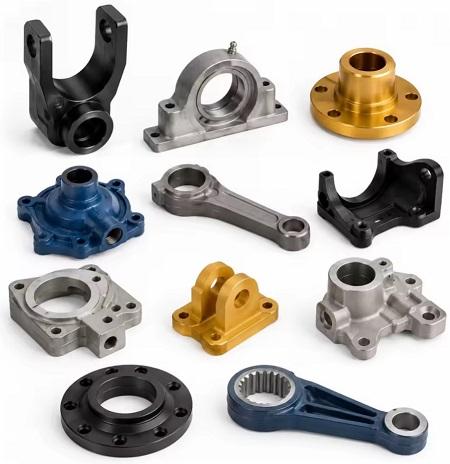 Precision Custom Titanium Turbocharger Accessories Parts
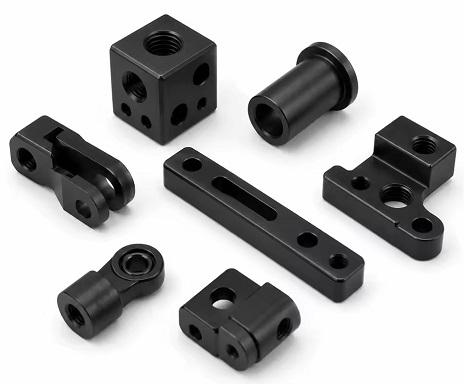 Titanium CNC Milling Valve Block Connector Parts
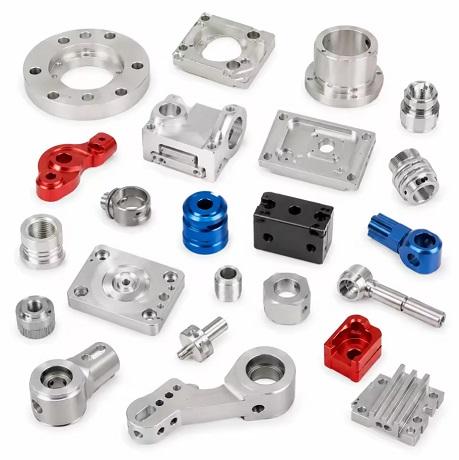 Titanium CNC Milling Parts for Battery Box and Industrial Adapter
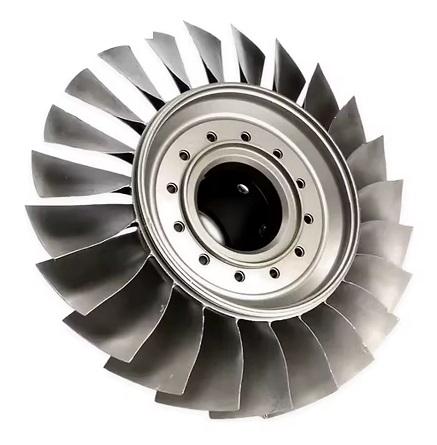 5 Axis CNC Machining Silver Titanium Turbine Blisk
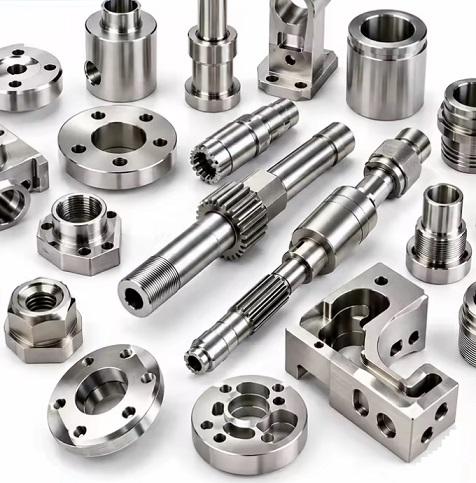 Titanium CNC Turning Components for Custom Motor Mount Gear Housing
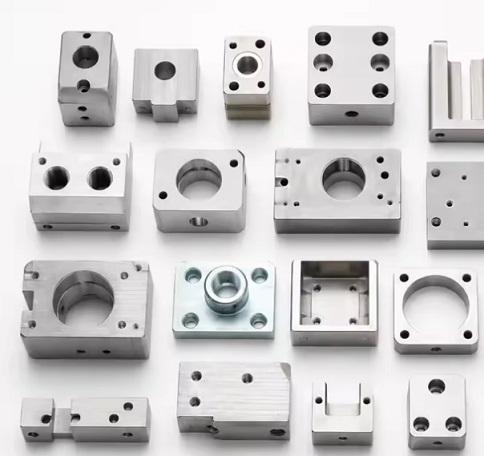 Titanium Housing Bracket Parts in Medical Device
What Our Customers Say
HYM will have our business as long as Ivy is there. This order was only a sample before mass production but were confident the mass production will go well. Ivy communicated and confirmed every detail with the engineers and finance team to ensure we got exactly what we desired and so that our customers will be happy.
looking forward to working with Ivy and HYM in the future.
My customer needed 300 pieces quickly. Thank you for the fast turnaround and excellent quality.
Read MoreEvan has been one of the best sales people I have had the pleasure of working with on Alibaba, he is quick with communication, he is understanding and his willingness to ensure customer satisfaction in quality of product is outstanding. the company is efficient in completing orders and has made some very nice looking parts for us over our business relationship. Highly recommend!
Read MoreJerry and I have been working very closely over the past few months to design and develop a new product for my company. I would highly recommend Jerry and his company as their work is high quality and several revisions to my prototype product have improved over time and finally arrived at best result!
Read MoreAbsolutely superb supplier. We deal with Jerry who is always professional and polite, nothing seems to be too much trouble for this supplier and they always provide samples before final production.
Read More
From the start Joey spearheaded this order perfectly. Asking questions and making sure our concerns are answered. He knew quality and time was of importance. He delivered on his promise.
I would definitely order my metal parts from this company again and again.
Thanks
Frequently Asked Questions
Expedited production may be available in as little as 3 business days for prototypes or simple parts. If you have a tight deadline, please let us know when requesting a quote so we can assess whether we can accommodate your request. We will do our best to meet your requested timeline.
If you don't have CAD drawings, you can email us at engineer14@hym-metalproducts.com with physical samples or detailed product specifications, including dimensions and material requirements.
Our team will review your requirements and provide a quotation. Once the details are confirmed and your order is approved, we can proceed with production and delivery.
Related Services
CNC Machining Service
Get custom CNC machined parts and rapid prototypes with fast turnaround times and competitive pricing.
Aluminum CNC Machining Service
Aluminum is one of the most widely used materials for CNC machining. Get custom CNC machined...
Stainless Steel CNC Machining Service
Get precision stainless steel CNC machining services for custom parts and prototypes. Choose...
Related Blogs
The Difference Between Titanium and Steel
Titanium and steel are widely used engineering materials with different combinations of...
Anodized Aluminum: A Complete Overview
This article provides a comprehensive overview of anodized aluminum, explaining its...
Aluminum Alloy: A Complete Overview
Aluminum alloys are widely used in modern manufacturing because they combine low weight, good...
18-8 vs 201 Stainless Steel: What's the Difference
18-8 and 201 stainless steel are two commonly used austenitic stainless steel materials with...